
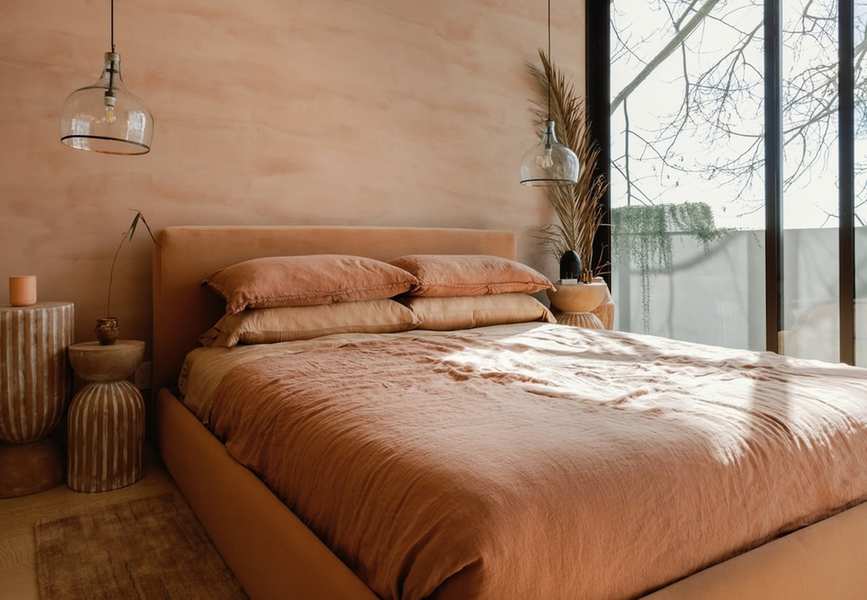
If your bedroom seems cramped or cluttered, the answer may lie in smarter design choices rather than more square footage. The arrangement of your furniture, the flow of the room, and the scale of your lighting can significantly affect how spacious the area feels.
We often admire those beautifully designed spaces: a chic Parisian apartment, a cozy yet well-organized bedroom, or a light-filled area that feels open despite its size. The secret is in the thoughtful details, not just the dimensions.
To create a more expansive feel, it's essential to focus on how the space functions and the atmosphere it creates. A key step? Eliminate anything that hinders that flow.
Quick Tweaks to Make Your Bedroom Feel Larger
While subtle, these adjustments can transform your perception of space. If your bedroom feels too small, consider these effective changes:
1. Keep at least one area open. A room appears larger when not every corner is utilized for something.
2. Remove unnecessary furniture. If it's not essential, it clutters the visual space.
3. Opt for fewer, well-proportioned items. Oversized furniture can quickly make a room feel smaller.
4. Maintain clear surfaces. Not completely bare—just free of non-essential items.
5. Choose lighting that enhances roominess. Think about slimmer lamps or sconces that don’t overwhelm surfaces.
6. Draw the eye upwards. Utilize artwork, vertical lines, or higher curtain placements to create an illusion of height.
7. Allow space beside your bed. Even a small gap can contribute to a more open layout.
8. Use a tonal color scheme. When colors blend, the eye moves smoothly, making the room feel larger.
9. Strategically place mirrors. They should reflect light and not just occupy wall space.
10. Keep clear sightlines from the door. What you see first impacts the perception of spaciousness.
These small but impactful shifts follow the principles designers use to create balanced, inviting spaces. I spoke with experts to gather their insights on optimizing small bedrooms. Grab your notepad!
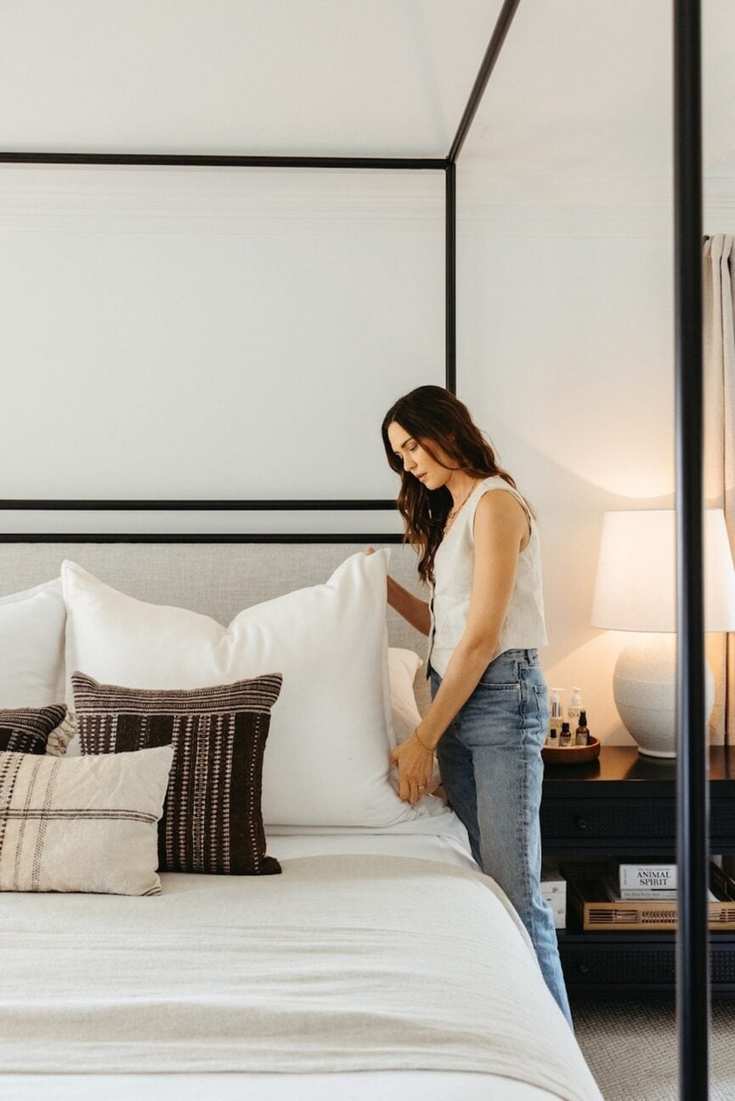
9 Designer-Approved Tricks to Expand Your Bedroom's Feel
1. Start With Less Than You Think
The quickest way to make a cozy bedroom feel larger is by removing non-essential items.
It may seem obvious, yet many spaces struggle with overcrowding—trying to fit in extra chairs, surfaces, or decor that don't serve a purpose. As a designer emphasizes, "less is more" in a bedroom.
If it doesn't support sleep, storage, or comfort, it adds unnecessary visual clutter.
Strip down to what you genuinely use—a bed, a spot for essentials, and functional lighting. Everything else should be intentional.
A bedroom feels more spacious when it focuses solely on its primary purpose.
2. Rethink Your Furniture's Size
In compact bedrooms, the issue often lies in furniture scale rather than quantity.
A standard queen bed might feel necessary, but if it leaves little room to move, it's counterproductive. This also applies to bulky nightstands and large dressers. Creating space on just one side of the bed can enhance the room's openness.
One designer refers to this as “space engineering”—making choices that foster room around your furniture instead of simply filling the area. Sometimes, opting for a smaller bed or multifunctional pieces is all it takes.
3. Use Color Wisely
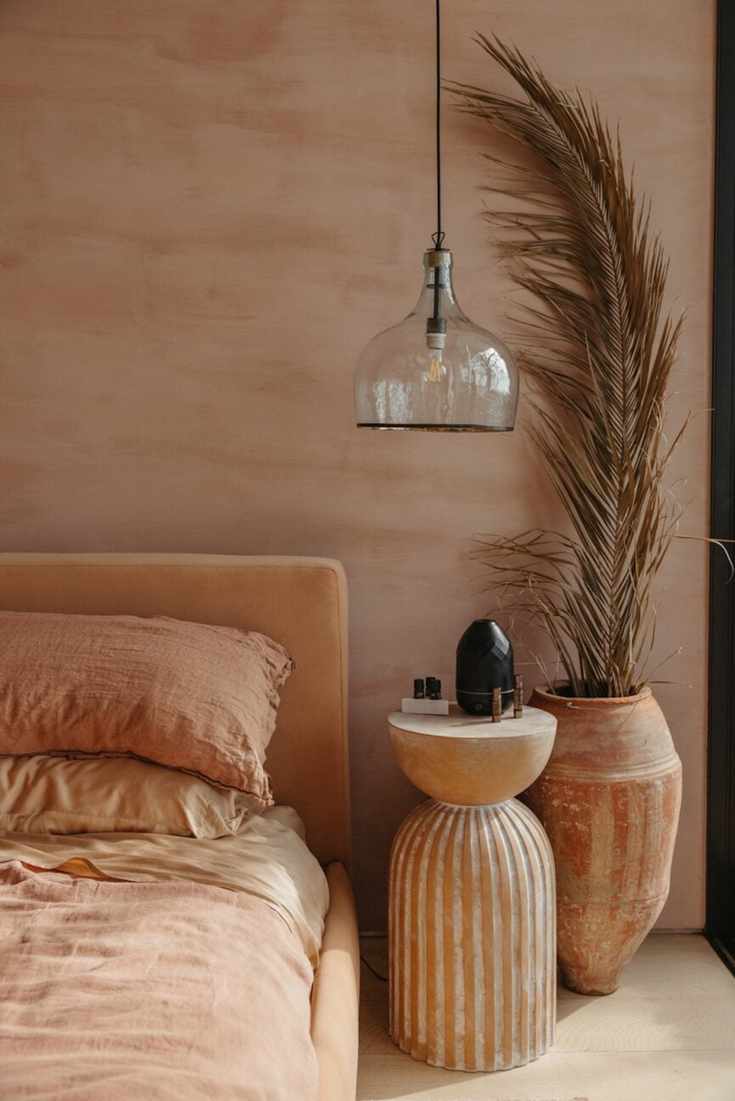
Color influences not just the look but also the feel of a room. In smaller spaces, many opt for all white in hopes of creating a sense of expansion. However, leaning into deeper, saturated colors can actually enhance coziness, making the room feel more intentional.
Consistency is key. A cohesive color palette—be it light and subtle or rich and layered—helps the eye flow through the space, contributing to a sense of openness.
4. Keep Sightlines Unobstructed
Your first view upon entering the bedroom sets the overall tone. If sightlines are blocked by large furniture or clutter, the room will feel smaller. An open path allows even a compact space to feel significantly more expansive.
Designers aim to create clear visual entry points. The less effort your eye has to exert to understand the space, the larger it seems.
5. Direct Attention Upwards
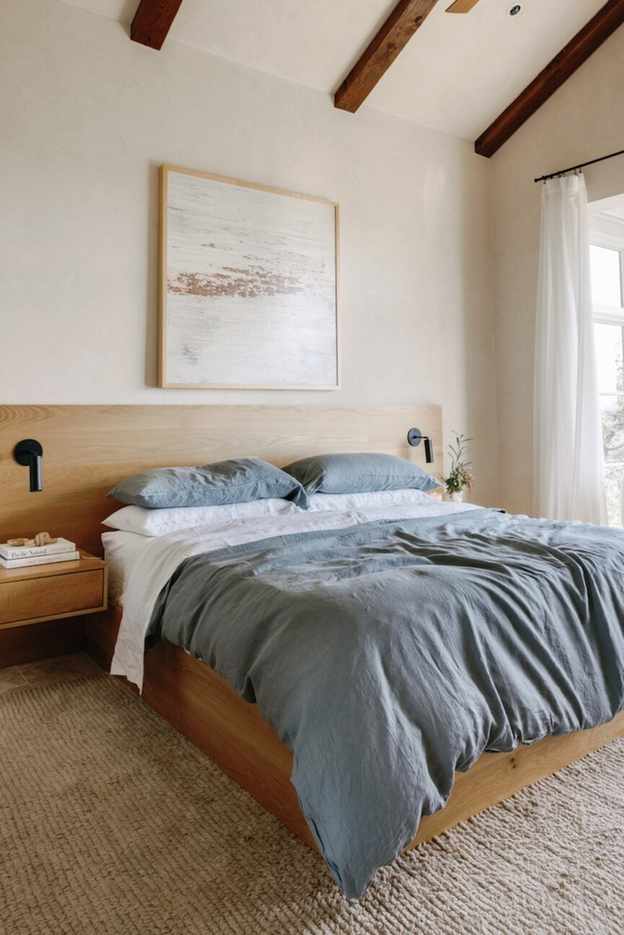
To create a greater sense of space, shift where the eye is drawn. When everything is at the same level—low furniture and art—the room can feel cramped. Designers counteract this by utilizing vertical space to foster a feeling of expansion.
This could mean hanging artwork higher, increasing the headboard’s visual height, or mounting curtains closer to the ceiling to elongate walls. As one designer notes, strategic art placement can help “extend the headboard” and alter the room's perception.
A simple trick, but effective: when your gaze goes up, the room opens.
6. Use Mirrors Thoughtfully
Mirrors are often suggested for small spaces, but how they're positioned matters more than mere presence.
A well-placed mirror can reflect natural light, extend sightlines, or create depth. Random placements, however, merely clutter the wall. The goal should be to enhance what already exists.
7. Select Versatile Pieces
In a limited space, every item should be functional. Adding more furniture isn't the solution—it's about smart selections. Items with multiple uses help you achieve your needs without overwhelming the room.
Suggestions include placing a dresser next to the bed to serve as a nightstand or using bed frames with built-in storage to reduce the need for additional furniture.
Cozey
From $975 at Cozey
Casa Zuma x Woven
$795 at Casa Zuma
Quince
Solid Wood and Natural Rattan 1-Door Nightstand
$400 at Quince
8. Be Deliberate With Lighting
Lighting affects how spacious a room feels more than most realize. Bulky lamps and fixtures can dominate a surface, tightening the atmosphere. Choose sleek lighting—slimmer lamps or wall-mounted sconces—to give your furniture room to breathe.
Placement matters too. Thoughtful lighting distribution softens the room's edges and minimizes visual clutter. If neglected, even a well-designed space can feel cramped.
Casa Zuma x Woven
$245 at Casa Zuma
Casa Zuma x Woven
$395 at Casa Zuma

9. Design for a Cohesive Feel
Editing your space is just part of the equation. Knowing when it feels complete is equally important.
Even minimal spaces can seem unfinished. The difference lies in how elements interact. When a room feels resolved, your gaze isn’t darting between items or searching for missing elements; it can settle comfortably.
Designers achieve this sense of completion through intentional choices: curtains that frame the room, a rug grounding the bed, and a mirror reflecting light. Not additional items—just the right ones, strategically placed.
What Makes a Bedroom Feel Smaller?
Rooms often feel small not because of their size but due to too many elements competing for attention. When every surface is cluttered, every corner is filled, and furniture is slightly oversized or out of place, it can create a cramped atmosphere—even if there’s enough physical space.
Designers focus on identifying what the room can do without. Once your eye has space to roam—where it can rest—the entire room feels more open.
This post was last updated on April 8, 2026, to include new insights.