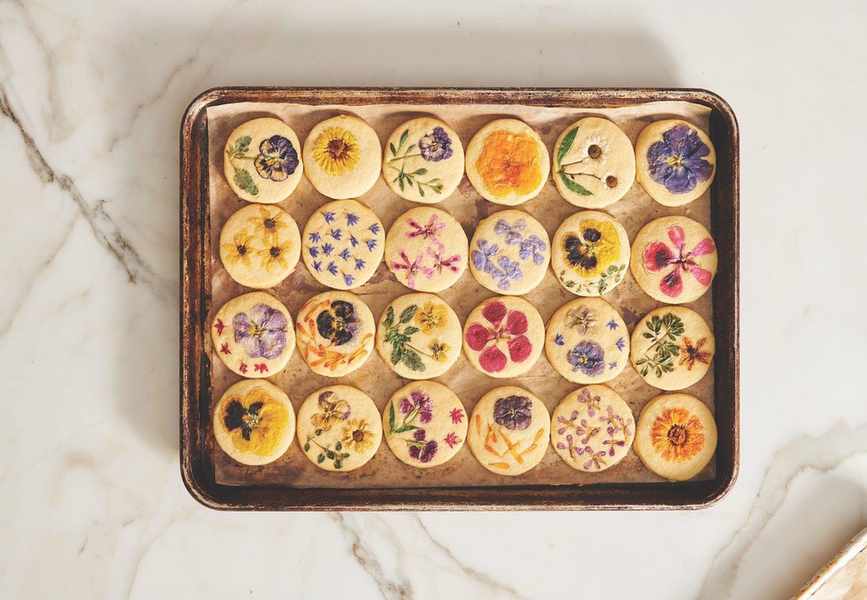
“The world laughs in flowers,” Emerson once said, and I believe this sentiment resonates with many culinary artists. I first encountered the enchanting creations of a talented chef at a retreat in Northern California years ago. Her dishes were not only delicious but also exuded a delightful joy and visual appeal. In her kitchen, food transforms from mere sustenance into a celebration of beauty.
Upon receiving her cookbook, Eat Your Flowers, I eagerly explored the vibrant pages. From Kale Caesar with Caper Flower Vegan Dressing to Raw Cashew Floral Cheesecake, it’s evident that her goal is to inspire creativity in the kitchen. She highlights the myriad ways nature’s bounty enhances both flavor and nutrition.
To celebrate the recent launch of her cookbook, she graciously shared her signature recipe: Flower-Pressed Shortbread Cookies. These cookies are as tasty as they are stunning. Read on for her expert tips on making these floral delights and incorporating botanicals into your baking.
For me, food is art and should be experienced with all the senses.
Eat Your Flowers by Loria Stern
Shop NowYour culinary creativity invites us to experience food in a sensory way. What inspired this approach?
I've always believed that life should be savored through all our senses. Our emotions are deeply influenced by sensory experiences, and that’s what makes art resonate. For me, food is an art form to be relished with every sense.
You mention that your upbringing in Ojai shaped your love for nature and cooking. How can we adopt a more mindful, nature-focused culinary lifestyle?
Nature can be appreciated in countless settings. Whether it’s the desert, mountains, lakes, parks, or coastal cliffs, we should carve out time in our busy lives to connect with nature, wherever we find ourselves.
Your book and culinary style showcase boundless creativity. What simple ways can we draw inspiration from our food?
There are several approaches. First, try mastering different recipes and then explore variations by adding unique ingredients. My book features many foundational recipes that allow for endless flavor combinations. Second, focus on a seasonal ingredient and experiment with dishes that highlight it.
What are some easy ways to incorporate flowers into our cooking?
I highly recommend visiting your local farmer’s market to meet organic vegetable growers. Many of them cultivate edible flowers, which attract pollinators and deter pests. My advice is to connect with farmers and inquire about purchasing their edible flowers; they’ll likely be thrilled to sell them to you!
Which flowers do you enjoy using in your cooking and baking?
This is a tough choice! I love using rose petals, calendula, bachelor buttons, violas, and pansies. These flowers add vibrant color to baked goods.
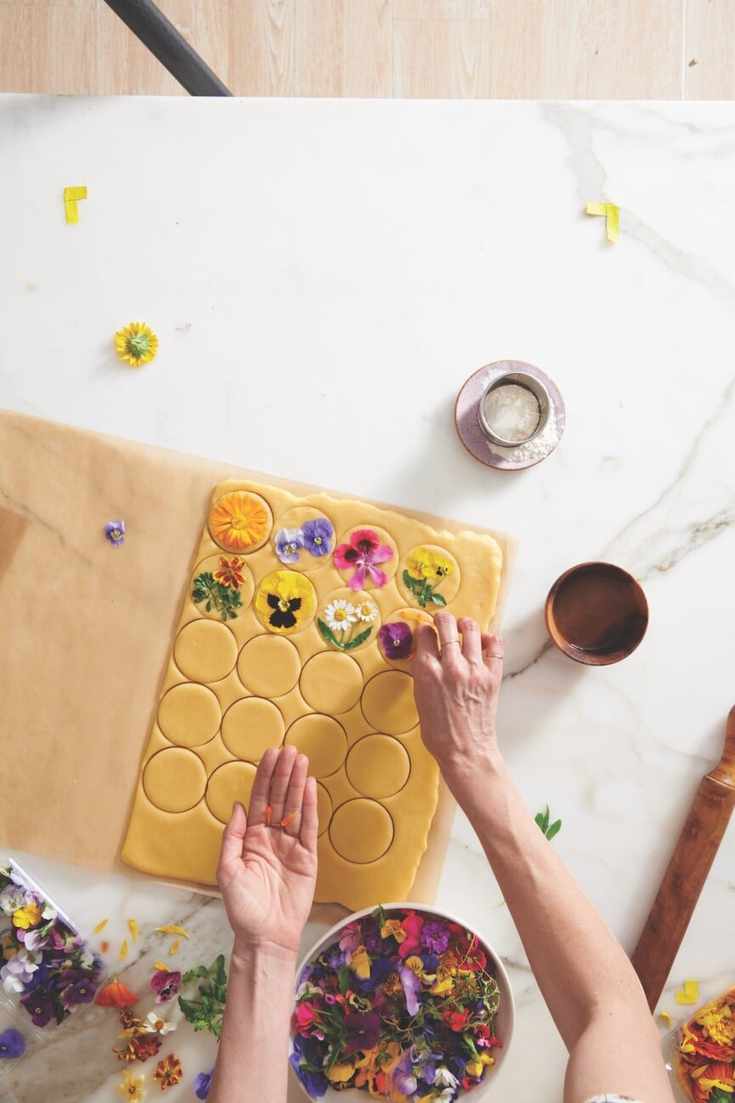
Expert Tips for Crafting Shortbread Flower Cookies
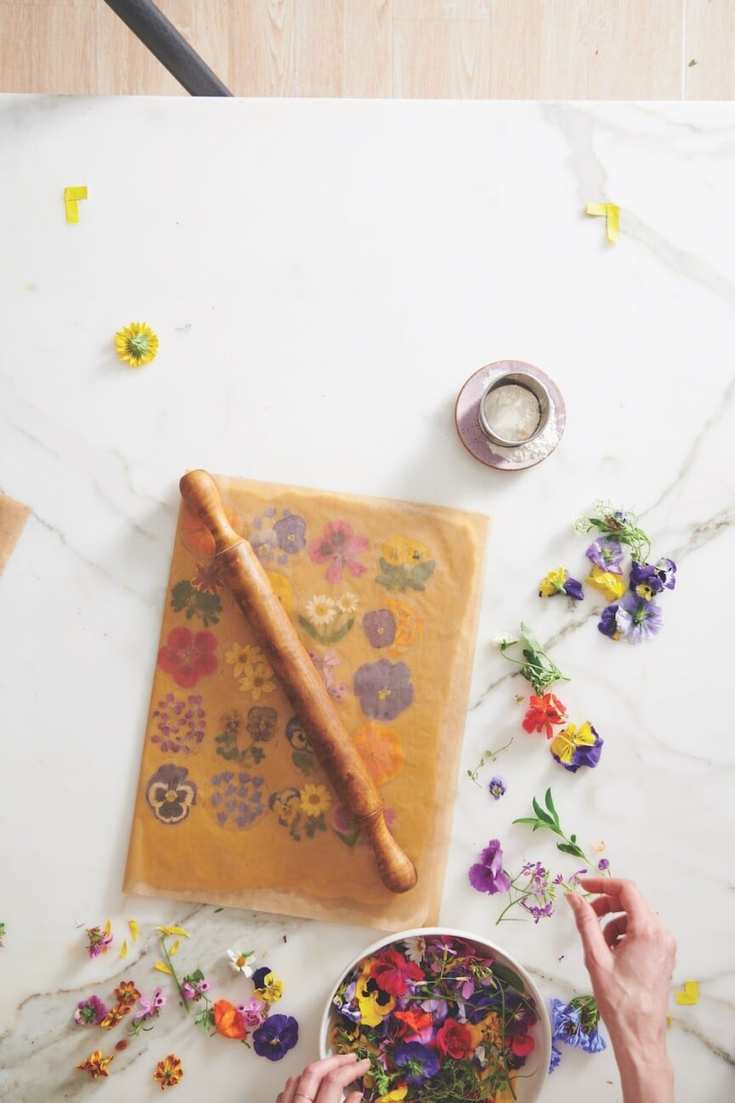
The rich shortbread dough beautifully absorbs the flavors of edible flowers and herbs. For example, begonia offers a tart apple-like flavor, while viola enhances sweetness. In the recipe below, I use various botanicals, such as pea tendrils for a fresh look, hibiscus, and maple leaves for a seasonal touch. Feel free to experiment with your favorite flowers and herbs! Just remember, using entire flowers can overwhelm the cookie’s flavor, so opt for petals and smaller blooms.
Edible flowers were often used in Victorian times, where cookies were baked, and crystallized flowers were affixed with egg whites. I prefer pressing and freezing the botanicals into the dough before baking, which not only preserves the flowers better but simplifies the process and allows for vegan options, using a plant-based cookie recipe. Adding fruit powders and spices to the dough also enhances flavor and visual appeal.
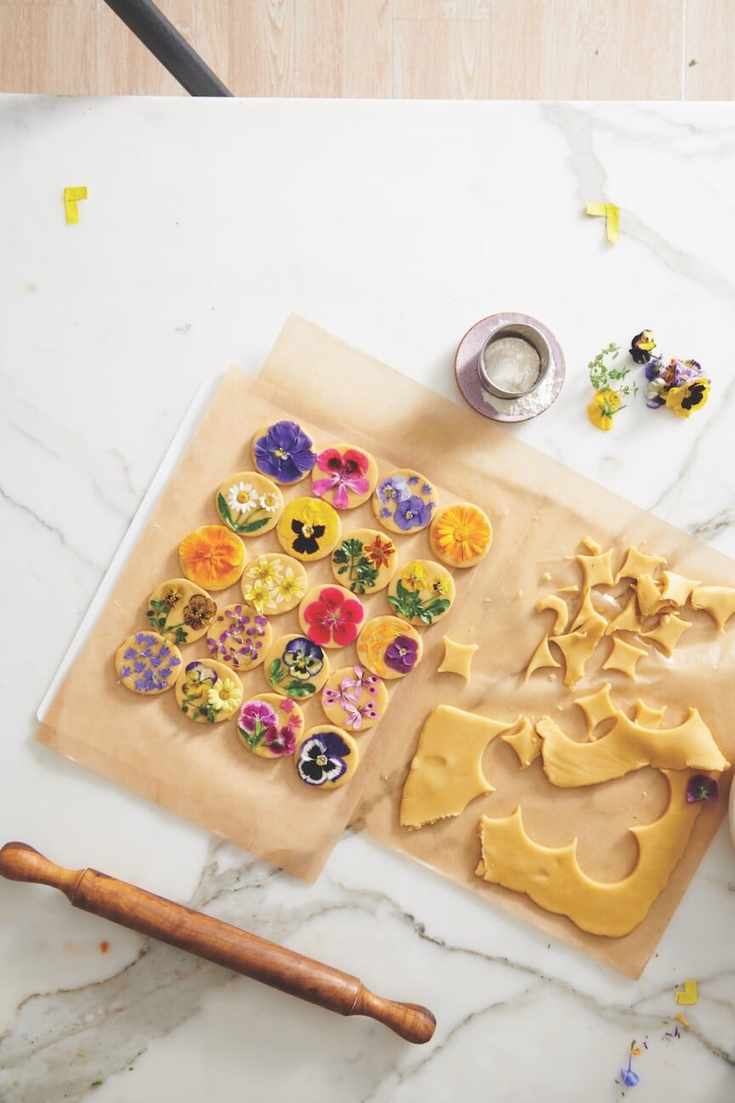
Decorating Your Shortbread Flower Cookies
Flavor Combinations
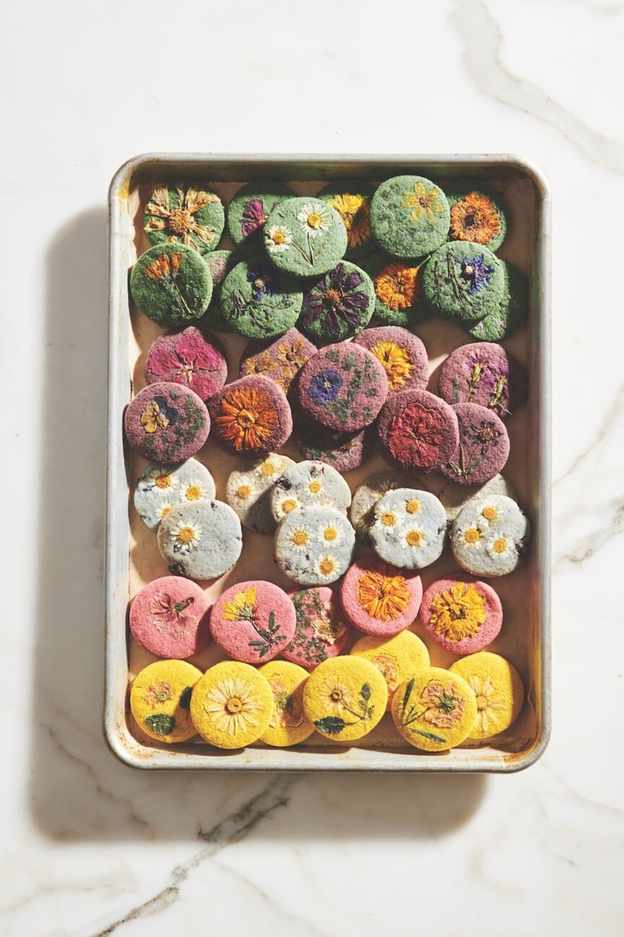
Explore these simple yet delightful flavor variations for your shortbread dough! Choose pressed botanicals that harmonize with the dough's color; contrasting hues can create striking effects.
MATCHA ALFALFA: Blend ¼ cup (20 g) matcha powder into the flour for an even color before mixing.
TURMERIC LEMON: Incorporate 1 tablespoon lemon zest and fresh lemon juice instead of vanilla extract. Mix in 3 tablespoons (15 g) ground turmeric powder into the flour for a uniform hue.
RASPBERRY ROSE: Substitute rose water for vanilla extract. Replace ½ cup (63 g) of flour with ½ cup (50 g) raspberry powder for an even mix.
BLUEBERRY: Swap blueberry extract for vanilla extract and use ½ cup (63 g) of flour with ½ cup (50 g) blueberry powder, plus an additional ¼ cup (32 g) flour with ¼ cup (20 g) blue spirulina or butterfly pea powder. Stir until evenly mixed and add ½ cup (13 g) freeze-dried blueberries as the dough comes together.
CHARCOAL: Add 3 tablespoons (15 g) activated charcoal powder to the flour and mix thoroughly.
Decorations
Let the seasons inspire your cookie decorations with these ideas.
FALL: Instead of vibrant flowers, press edible maple or hibiscus leaves into your dough.
WINTER: Use bright herbs like carrot tops or thyme, along with freeze-dried pink peppercorns to create festive decorations.
 Print
PrintDescription
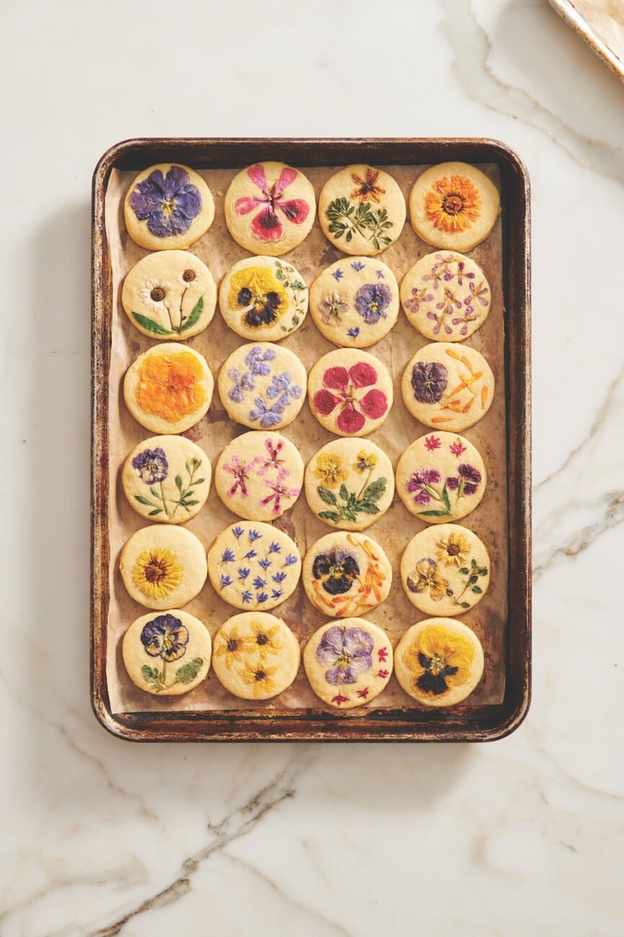
This recipe marks the beginning of it all! These charming cookies launched my culinary journey. Delightfully sweet with a hint of salt, my signature cookies are as enjoyable to create as they are to share. Using a variety of colorful flowers gives the impression of pages from a pressed flower book.
Ingredients
- 1 1/2 cups (3 sticks/339 g) unsalted butter at room temperature
- 1 1/3 cups (300 g) granulated sugar
- 2 teaspoons kosher salt
- 3 large egg yolks
- 2 tablespoons (25 g) pure vanilla extract
- 4 cups (611 g) all-purpose flour
- 2 cups mixed edible flower petals and tender herbs
- Cane sugar, for sprinkling
Instructions
- Prepare two flexible cutting mats with parchment paper.
In a stand mixer with a paddle attachment, combine butter, sugar, and salt on medium speed for 1-2 minutes until blended. Add yolks and mix. Incorporate vanilla and then flour, mixing on low until a ball forms, roughly 5 minutes.
Transfer the dough to a large sheet of parchment paper, top with another sheet, and roll to 1/4 inch thick. Remove the top layer, cut with a 3-inch round cookie cutter, and decorate with edible flower petals. Replace the top parchment and gently roll to secure the flowers. Use an offset spatula to move the cookies to a parchment-lined cutting mat. Reroll and repeat with remaining dough.
Freeze the unbaked cookies on flexible mats for 12-24 hours to maintain their color during baking.
Preheat the oven to 350°F, placing the rack in the middle. Line a sheet pan with parchment.
Arrange cookies on the pan, leaving 1/4-inch spacing. Bake for 9 minutes, rotate the pan, and bake for an additional 8 minutes until the edges turn golden. Cool on a rack and sprinkle with cane sugar. Enjoy!
Store in an airtight container in the fridge for up to 3 weeks or freeze for 2 months.
From EAT YOUR FLOWERS by Loria Stern. Copyright 2023 by Loria Stern. Published by William Morrow, An imprint of HarperCollins Publishers.