
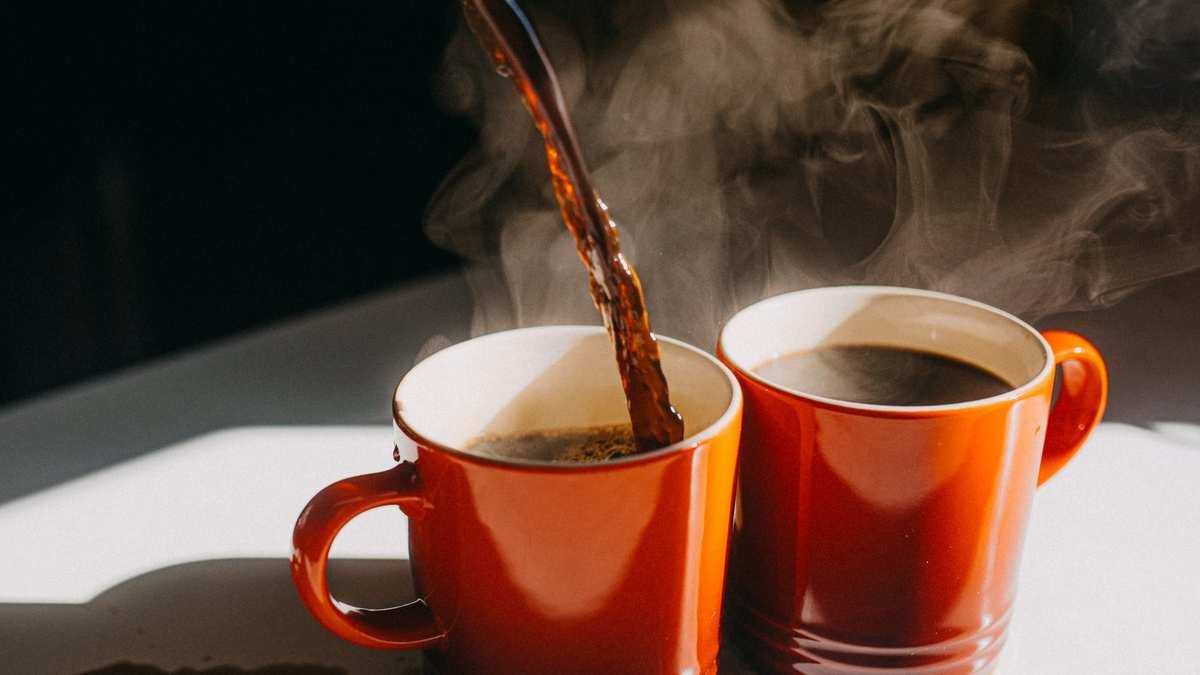
If you're passionate about home brewing, you might find yourself choosing between French press and pour-over coffee. Both methods have stood the test of time, creating rich, artisanal flavors. But what sets them apart?
As a barista with hands-on experience, I've explored the top French presses and the best pour-over coffee makers available. Each technique provides a distinct brewing experience and flavor profile. Interestingly, French presses aren't limited to coffee—you can also craft cold brews, infused oils, and even sangria!
Let's break down the key differences between French press and pour-over coffee, focusing on which method might enhance your morning routine.
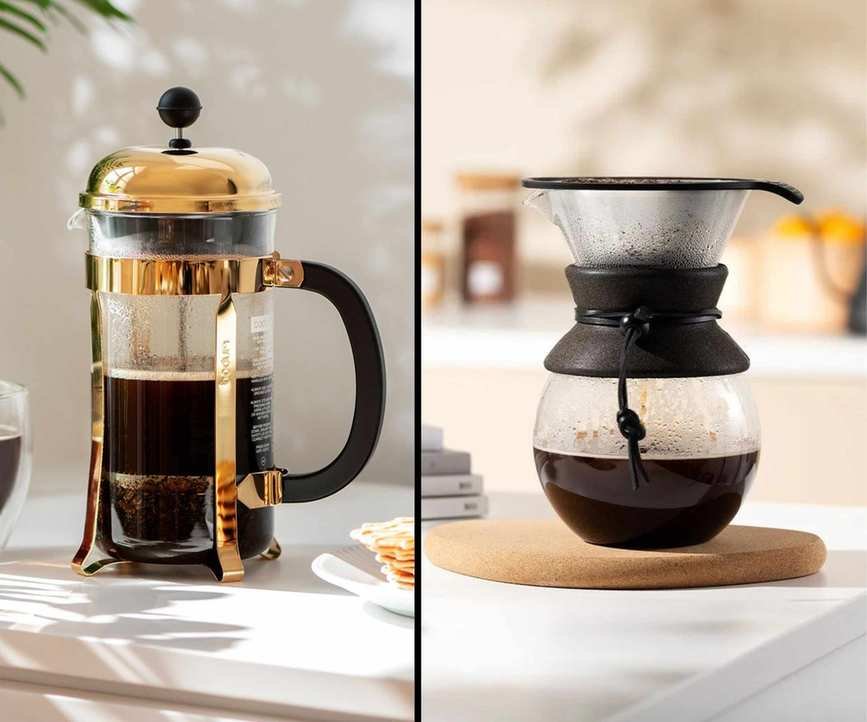
Bodum French Press vs. Pour Over
Side-by-Side Comparison
Here's a quick comparison of both methods. I'll provide more details on equipment, brewing steps, flavor notes, costs, and personal favorites below.
Swipe to scroll horizontally| French Press | Pour Over | ||
|---|---|---|---|
| Equipment | A French press and kettle | A pour-over dripper, filter, and kettle | |
| Brewing Process | Immersion | Infusion | |
| Coffee Beans | Best with rich, chocolatey dark roasts | Ideal for lighter, specialty roasts | |
| Flavor Profile | Bold and intense | More subtle | |
| Ease of Use | Simple and forgiving | Requires patience | |
| Clean Up | Can be messy with grounds and oils | Generally easier since filters can be discarded | |
| Cost | Low ongoing costs | May need extra equipment and filters | |
| Total Time | 5-15 minutes based on quantity | 5-15 minutes |
Required Equipment
To brew French press coffee, you'll need a French press (or cafetière), ground coffee, and a kettle.
For pour-over coffee, gather a pour-over maker, ground coffee, paper filters (or a metal filter), and a kettle. A gooseneck kettle is often recommended for better control during pouring.
Using a timer can also help achieve the perfect brew.
Brewing Techniques
The French press method involves immersion brewing, taking up to fifteen minutes. Begin by adding coffee grounds to the carafe, then pour hot water (around 200°F) over them. Let the mixture steep for three to eight minutes, then press the plunger down to separate the grounds. Allow some time for the coffee to settle to avoid a gritty finish.
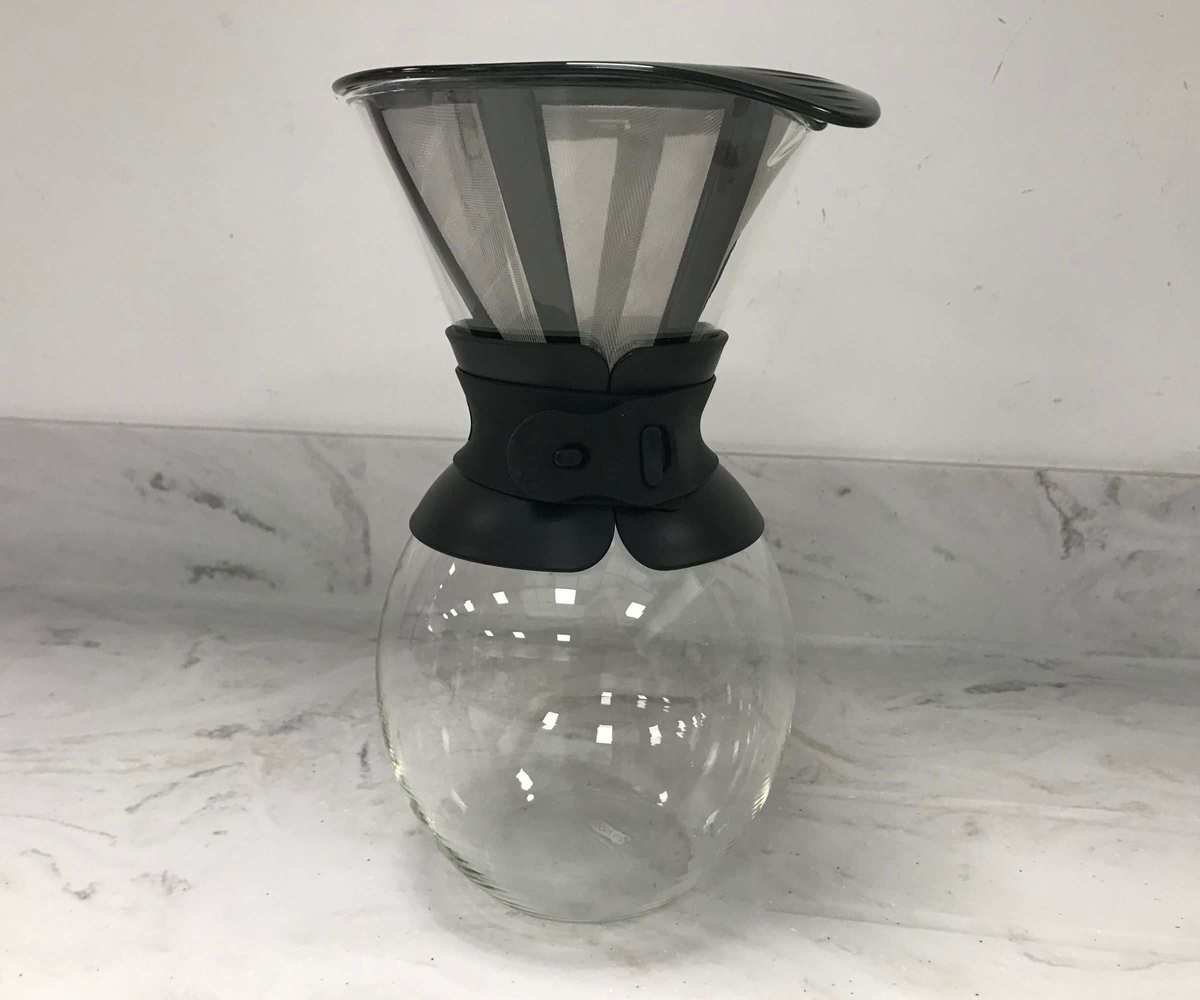
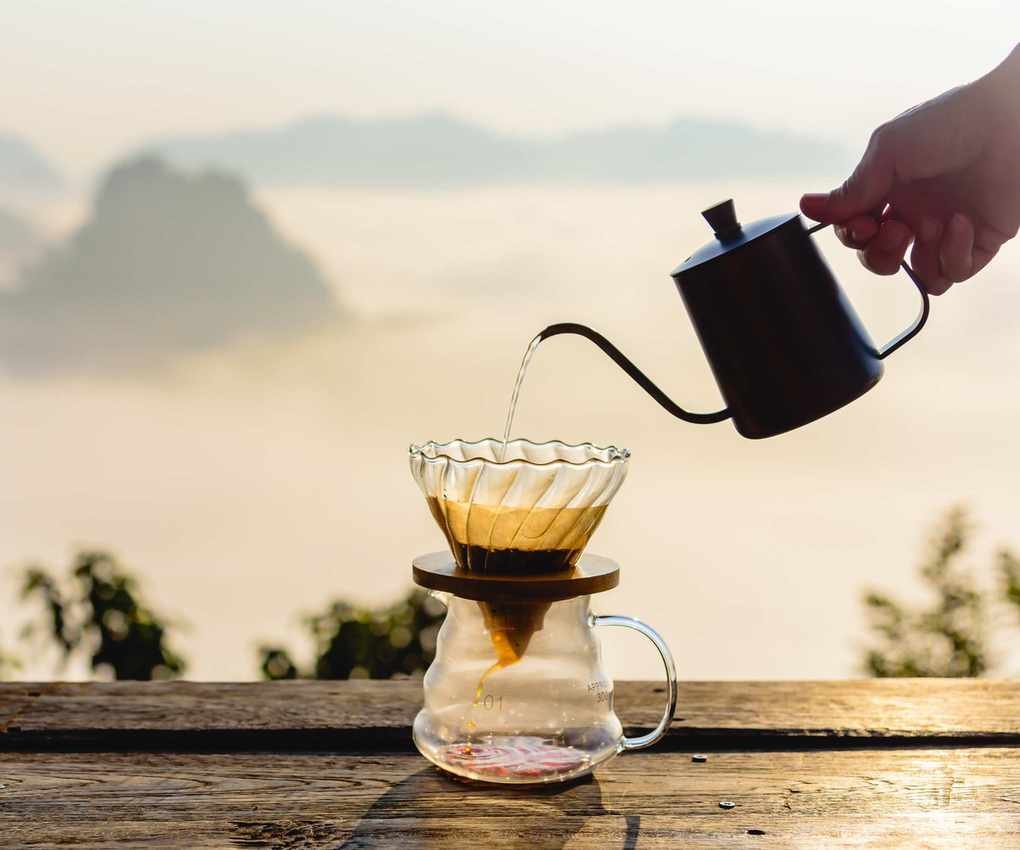
In the pour-over method, the process is similar, but you'll use a paper filter. Place the filter in the dripper, add coffee grounds, and pour hot water in a circular motion. This allows the water to extract flavors thoroughly before filtering into the carafe.
For both techniques, start with a small amount of water to let the grounds bloom for 30 seconds. This helps create a solid base for the brewing process.
Convenience Factor
Using a French press tends to be more straightforward, making it a great choice for busy mornings.
Pour-over takes more care with the need for steady pouring and filter management. It requires your attention throughout the brewing time, which can be a meditative experience, especially for those who appreciate the ritual.
Flavor Experience
While it might be slightly gritty at the bottom, the French press method produces a robust coffee that pairs well with dark, chocolatey roasts. This immersion technique retains oils, giving a rich, full-bodied taste, although it can lead to a more acidic profile. Recent discussions have raised concerns about its health effects, but it's generally safe unless cholesterol is a concern.
If you prefer a lighter brew, the pour-over method is preferable. The paper filter removes many oils, resulting in a cleaner, more complex cup. This method shines with lighter and specialty roasts, highlighting their nuanced flavors.
Cleaning Up

Cleaning a French press requires some care, especially with the plunger. Don't leave it in the coffee for too long to avoid a bitter taste. Use warm, soapy water to clean the carafe and plunger. For more tips, check out my article on cleaning French presses.
Cleaning a pour-over coffee maker is straightforward. Just discard the filter and rinse the carafe. Both methods are typically dishwasher-safe and can fit easily in compact kitchens.
Cost Considerations
Both coffee makers are reasonably priced, usually ranging from $20 to $150. Pour-over setups may incur additional costs due to filters, so keep that in mind.
Additionally, if you want a gooseneck kettle for precise pouring, that's another cost to factor in. Overall, both methods are cheaper than owning an espresso machine, as they don't require pods or electricity.
Top French Press Choice
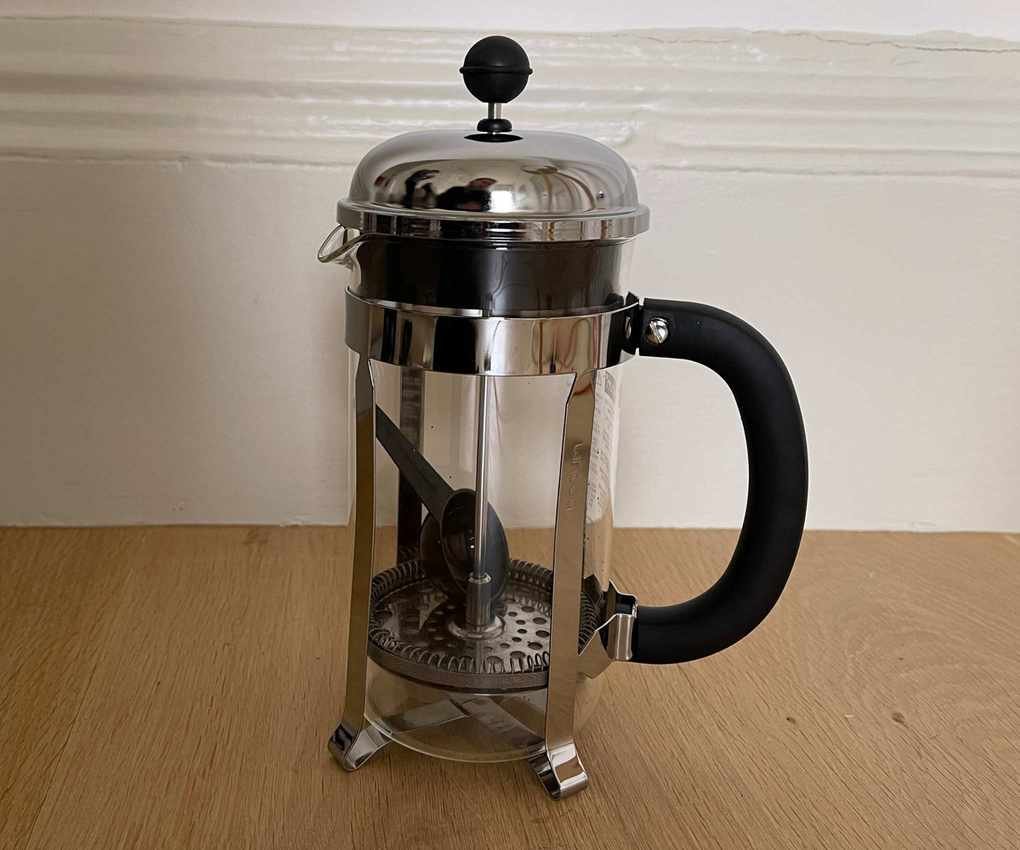
Bodum Chambord French Press
Stylish and timelessOur review highlights:
Specifications
Size: 12 oz, 17oz, 34oz, 51ozMaterial: stainless steel and glass
Filter: double filter
Dishwasher safe: yes
Pros
+Modern design+User-friendly
+Double filter reduces graininess
Cons
-Glass is fragile and not heat-retentiveThis model ranked second in our evaluation of the top French presses. It's affordable without compromising on quality. The design is compact for storage and features a double filter to minimize stray grounds. Though it's not as insulating as some, its glass allows for easy monitoring of your brew.
For a more thorough filter, consider the Espro model, which outperformed this one in our tests. Nonetheless, I appreciate the visibility and design of the Bodum.
Explore my full review of the Bodum Chambord French Press.
Best Pour-Over Selection
Bodum Pour-Over Coffee Maker
A refined introduction to pour-oversOur review highlights:
Specifications
Size: 17 ozMaterial: Borosilicate glass
Dishwasher safe: no
Dimensions: 6.3 x 8.5 x 5.3 inches
Pros
+Reusable filter+Cost-effective
+Eco-friendly (no paper waste)
Cons
-Water flows too quickly through the filter, impacting flavorThis is a unique pour-over option using a stainless steel filter instead of paper, making it more sustainable. It's budget-friendly and can serve 3-4 people at once.
However, the built-in filter doesn't yield the same smooth taste typical of paper filters. Some users have noted the spout shape can lead to spills, which could be a concern for those with mobility issues.
Check out my full review of the Bodum Pour-Over.
Which One to Choose?
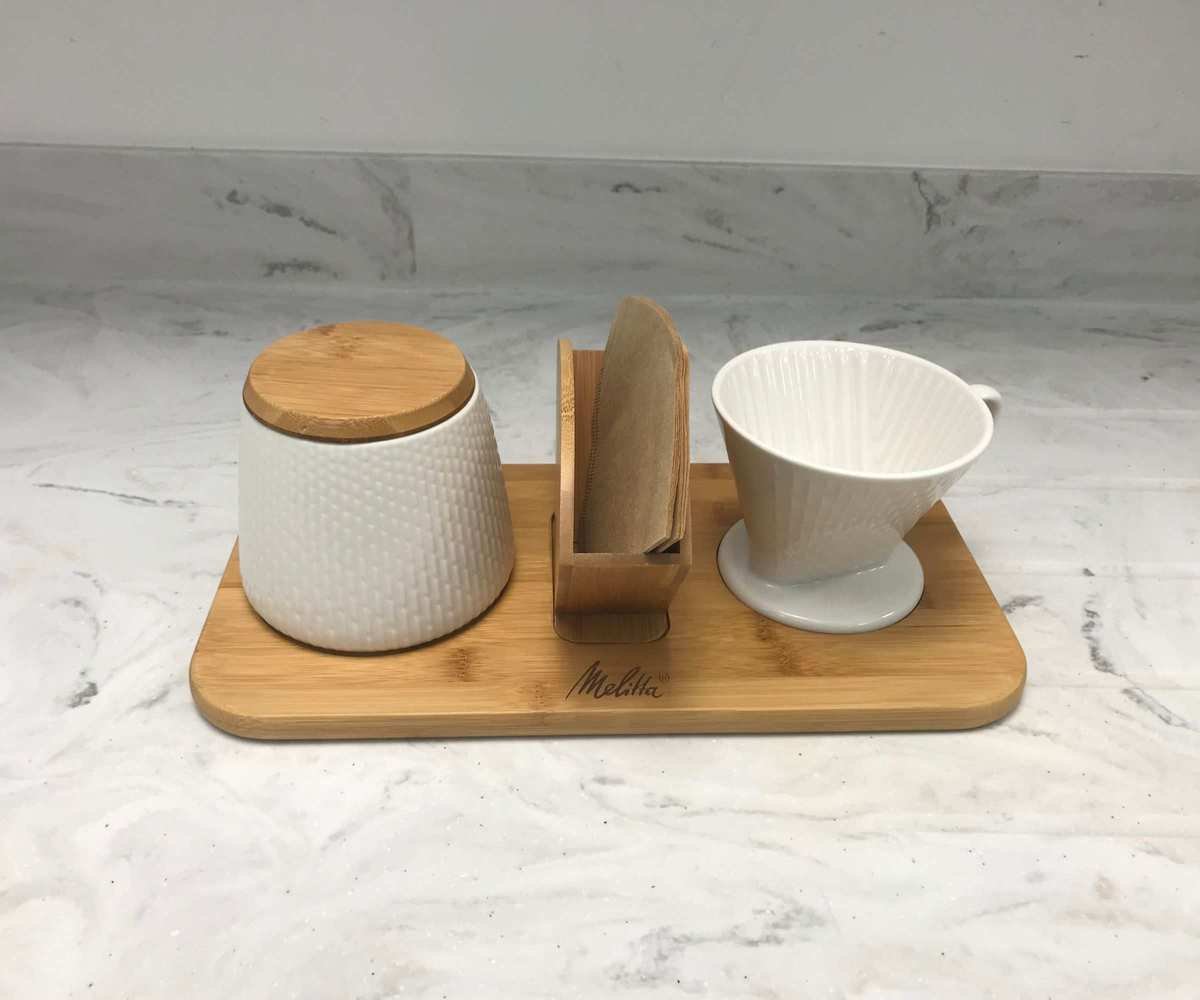
Ultimately, the choice is yours. If you enjoy bold, rich flavors, opt for the French press. If you appreciate a lighter, more refined experience, a pour-over might be the way to go.
Frequently Asked Questions
Should I choose a French press or pour-over coffee maker?
Both options are excellent for those with limited space. They are compact, quieter than espresso machines, and portable without needing electricity or plumbing.
Do I need coffee pods for a French press or pour-over?
No, that's one of the great advantages of these coffee makers—you won't need to buy coffee pods.
What's the taste difference between French press and pour-over coffee?
The French press yields a stronger, fuller flavor, while pour-over is lighter, resembling traditional filtered coffee.
Do I need to adjust my coffee grind for French press and pour-over?
Yes, grind sizes differ slightly. French press requires a medium-coarse grind to prevent bitterness, while pour-over benefits from a medium-fine grind for optimal extraction. You can buy pre-ground coffee or invest in a grinder for custom grinding. The top coffee grinder is the Fellow Ode Grinder, perfect for pour-over.
Back To Top


