When tackling deep cleaning at home, the tools you use often get overlooked. Bacteria and grime can accumulate on your cleaning supplies, making them less effective and undermining your hard work.
By adopting a few easy habits, you can keep your cleaning tools in top shape between uses, ensuring they remain effective longer.
From storage solutions to maintenance strategies, here are some essential cleaning tips to consider.
Essential Tips for Cleaning Supplies
According to Rocky Vuong, owner of a cleaning service, "The cleanliness of your tools directly impacts their effectiveness. Keeping your supplies clean promotes a healthier space and extends their lifespan."
1. Clean, Rinse, and Dry Regularly

Different cleaning tools have unique care requirements based on their usage. Each time you use a tool, a quick clean to remove loose dirt can significantly improve its performance. Schedule deeper cleaning sessions regularly to disinfect thoroughly.
Always adhere to the manufacturer's instructions, especially when diluting cleaning solutions for safe sanitization.
Care for Microfiber Cloths, Sponges, and Mop Heads
After Each Use: To minimize bacteria on reusable items like microfiber cloths, sponges, or mop heads, soak them in warm water mixed with a small amount of mild detergent. Gently agitate to lift dirt and oils. Let them soak for 15 minutes, massage the material, then wring them out.
For a quick sponge refresher, Jennifer Rodriguez, a hygiene expert, suggests microwaving wet sponges for 2 minutes daily or running them through the dishwasher.
Deep Cleaning: For thorough cleaning, soak in a bleach solution or wash on a hot cycle in the machine. If using a machine, add your usual detergent and a cup of baking soda to eliminate odors.
Arm & Hammer Pure Baking Soda, 4 lb | $2.73 at Walmart
Using baking soda is an eco-friendly, effective method for achieving a clean and fresh-smelling home, making it a great addition to your cleaning supplies.
Vacuum Cleaner Care
"Many overlook cleaning their vacuum cleaners, especially the filters," says Natalie Wise, a natural cleaning expert. The filters and canisters in modern vacuums require regular maintenance.
Regular Filter Cleaning: "Most filters are easy to wash by hand in the sink with a drop of dish soap. Rinse thoroughly and allow them to air dry before reinserting. Clean them about once a month and replace them every three months," Natalie advises.
HEPA Filter Cleaning: If your vacuum contains a HEPA filter, it needs regular cleaning and replacement at least every six months. Tap it against the trash can to release debris, then rinse with water only—no soap.
Canister Cleaning: "I prefer cleaning canisters in a bathtub or utility sink to avoid a mess," Natalie explains. Add a drop of dish soap, scrub with a brush, rinse well, and let air dry. Clean these every one to three uses or when full.

Keeping Brooms Fresh
1. Before cleaning, shake your broom outside to release loose debris stuck in the bristles.
2. Fill a bucket with warm water and mild detergent, then soak the broom for a few minutes.
3. While submerged, use another brush to gently scrub the bristles.
4. Rinse the bristles when clean.
5. Optionally, use a hose to wash through the bristles for any leftover debris.
Maintaining Dusters
1. After use, take your duster outside and shake it well.
2. Mix dish soap with warm water in a bucket for a cleaning solution.
3. Dip and swirl the duster in the soapy mixture to saturate.
4. Let it soak for a few minutes before wringing it out.
Caddy and Spray Bottle Maintenance
"Regularly clean caddies and buckets to eliminate dirt and bacteria," recommends an operations manager at a cleaning service.
"Use warm, soapy water with a scrub brush for both the inside and outside of the caddy, rinse thoroughly, and let air dry."
"Don't forget to clean spray bottles to avoid residue and bacteria buildup. Wash them with warm, soapy water, rinse well, and air dry for optimal performance."

2. Ensure Proper Drying

Angela Rubin from a cleaning company states, "Allowing cleaning supplies to dry thoroughly before storage is crucial to preventing mold and mildew growth."
"Utilize drying racks for sponges and cloths, and hang mops and brushes upside down for proper airflow." Wring out soaked items and consider a delicate drying cycle for items like sponges. Whenever possible, air dry outside in the sun.

3. Importance of Proper Storage
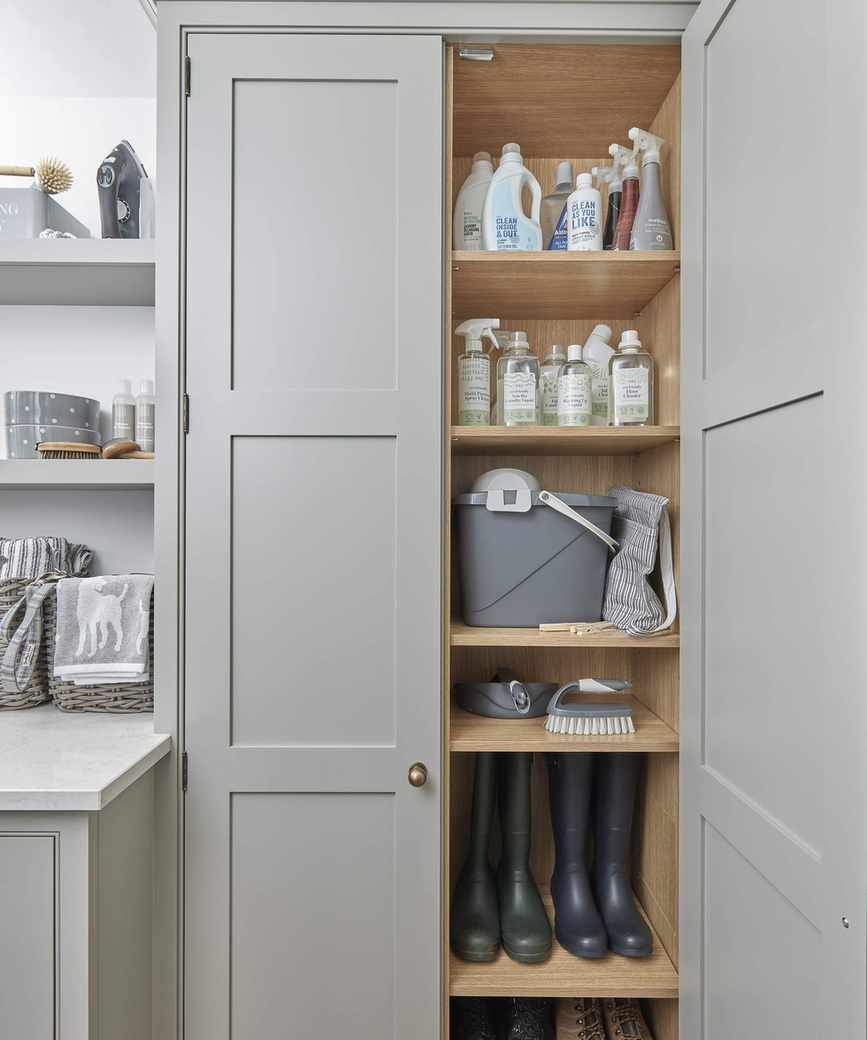
Storage plays a vital role in keeping your cleaning supplies organized, hygienic, and effective.
"Separate supplies for different areas to avoid cross-contamination," suggests Angela. Use color-coded cloths or labels to designate tools for specific rooms. This practice helps maintain cleanliness and minimizes germ spread.
Invest in sturdy, easy-to-clean non-porous containers like plastic bins or caddies. Avoid cardboard or fabric, as they can retain moisture and bacteria.
"Store supplies in a dry, well-ventilated area," emphasizes Karina. "Humidity encourages bacterial growth, so a clean, dry space away from moisture and sunlight is ideal."
"Hang mops, brooms, and dusters to prevent floor contact and allow air circulation," adds the CEO of a carpet cleaning service.
"Store liquid cleaners in their original, tightly sealed containers to prevent spills and evaporation. Regularly check for leaks or damage in your storage area."
Favori Storage Caddy | $36.99 at The Container Store
This cleaning caddy makes it easy to transport your supplies around the house, streamlining your cleaning process.
DYMO Label Maker
Was $64.47 | Now $53.99 at Amazon
This portable label maker helps you keep track of your cleaning supplies.
4. Consider Professional Cleaning Services
For the best results, think about scheduling professional maintenance for your cleaning supplies, suggests Karina.
A cleaning service can thoroughly inspect your tools, clean them, and recommend maintenance or replacements. This helps prolong the lifespan of your supplies and ensures they stay effective.
While you can replace items like mops easily, investing in professional care for more expensive tools such as steam cleaners and vacuums might save you money in the long run.
Finally, Rocky Vuong advises against waiting until supplies are worn out. Regularly replace sponges, cloths, and scrubbers to ensure they remain effective and hygienic. Dispose of disposable items like wipes and sponges frequently to avoid bacteria buildup.