Heucheras, also known as coral bells or coral root, are enchanting plants that thrive in lightly shaded spots in your garden.
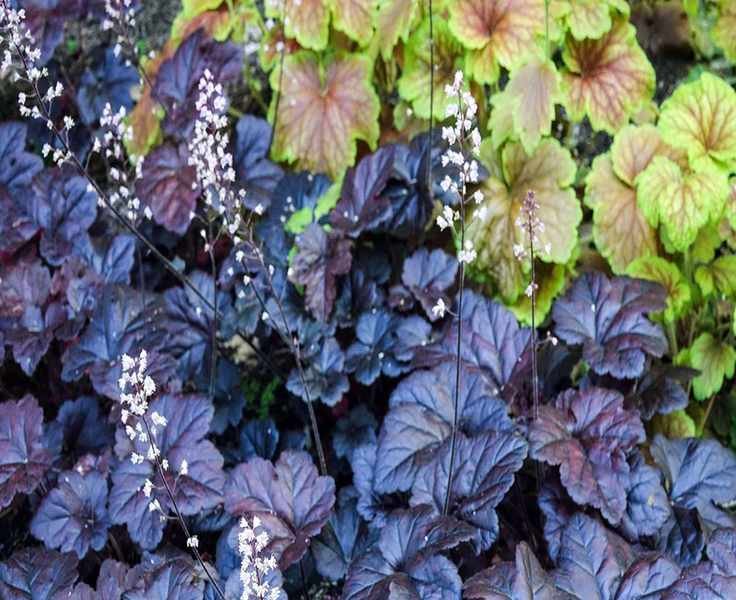
These hardy perennials boast vibrant foliage in colors ranging from bright green to deep burgundy, complemented by elegant bell-shaped flowers in shades of pink, cream, and white.
Closely related to tiarellas (foamflowers), some varieties are hybrids called Heucherellas, which also display a wonderful range of colors worth exploring.
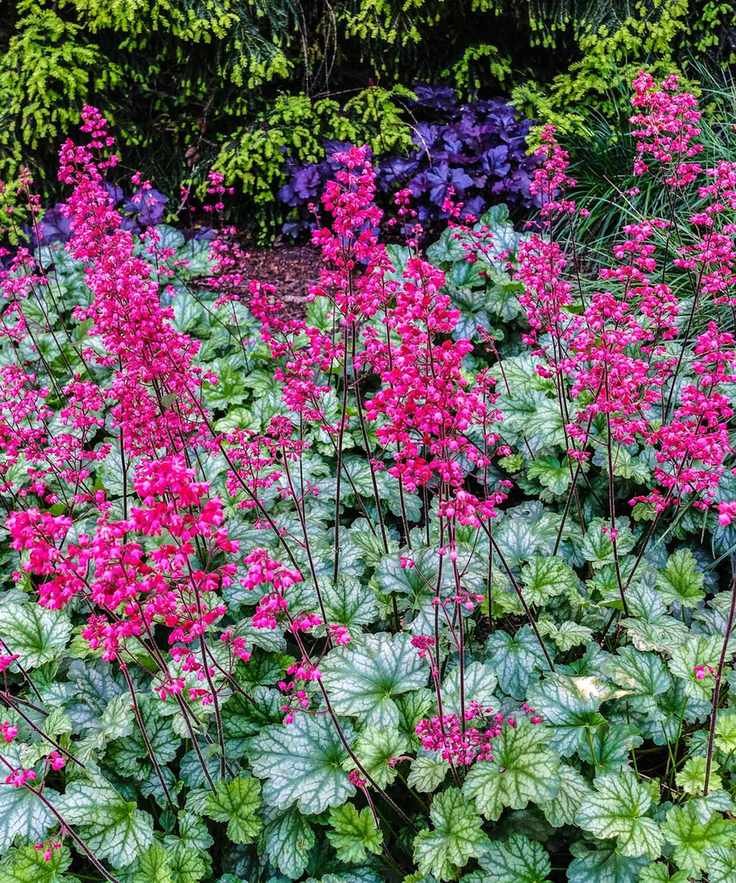
Heuchera 'Paris' features striking marbled green leaves with tall cerise flower stems.
Heucheras: Quick Facts
- Growing Difficulty: Relatively easy
- Type: Hardy perennial, evergreen in many zones
- Height: 10-30 inches
- Growth Rate: Moderate
- Soil Preference: Acidic, neutral, slightly alkaline
- Ideal Location: Part shade
- Planting Season: Early spring to early fall
- Blooming Season: Spring and summer
- Foliage Duration: Year-round in most regions
- Hardiness Zones: USDA Zone 4
- Scientific Name: Heuchera
- Common Names: Coral bells, coral root
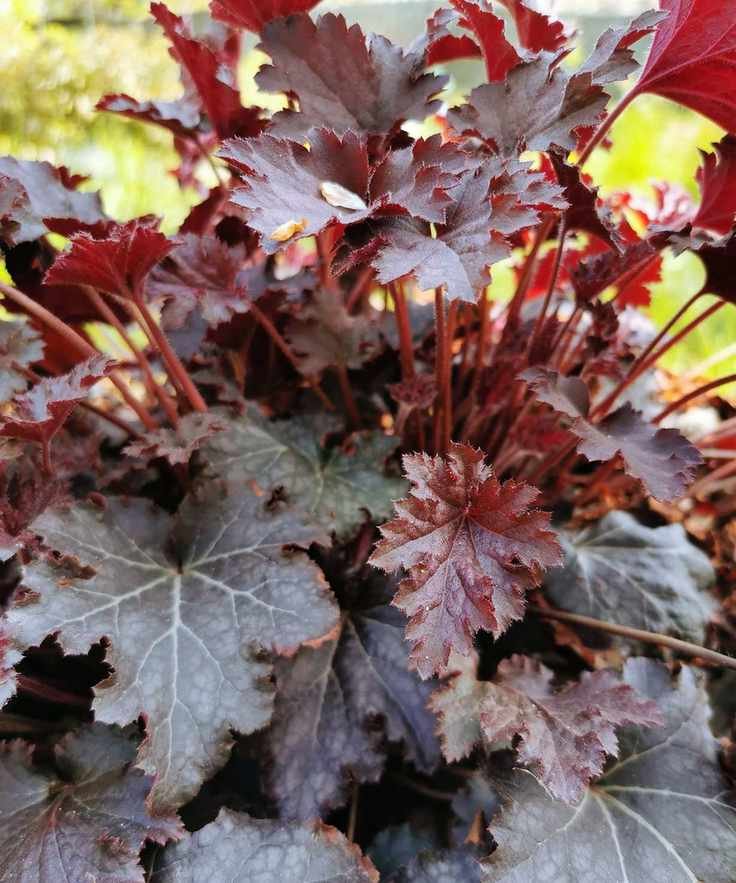
Heuchera 'Purple Palace' remains a beloved vintage choice.
Optimal Conditions for Heucheras
Heucheras thrive in rich, well-drained soil or containers filled with quality potting mix, like Wonder Soil, available on Amazon.
They work well in low-maintenance borders but dislike overly wet conditions. If your soil retains water, consider planting in pots or enhancing drainage with grit and well-rotted manure, such as Wholly Cow on Amazon.
Heucheras prefer neutral to slightly acidic soils and can tolerate a bit of lime. Their attractive foliage adds color throughout the year, making them ideal for shaded gardens, though they favor dappled sunlight rather than deep shade.
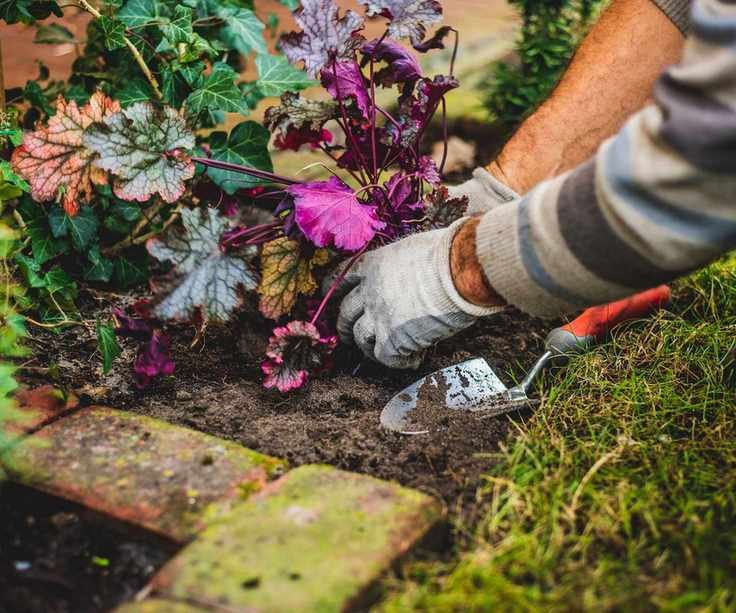
Plant heucheras in sunny or dappled shade with well-draining soil.
Planting Heucheras: Timing and Technique
Plant heucheras between May and September in borders, containers, or hanging baskets. Their evergreen leaves make them suitable for winter displays, and they can also be incorporated into living walls.
To plant, follow these steps:
- Soak pots in water for 30 minutes before planting. Dig a hole matching the depth and slightly wider than the pot.
- Add a bit of fertilizer like Burpee Organic Plant Food or bone meal, mixing it at the bottom of the hole.
- Remove the heuchera from the pot, gently loosening any tightly bound roots.
- Place the plant in the hole and backfill with soil. Firm it down to eliminate air pockets, then water thoroughly.
For containers and baskets, use a gravel mulch, like this decorative grit topping on Amazon, to retain moisture and deter pests.
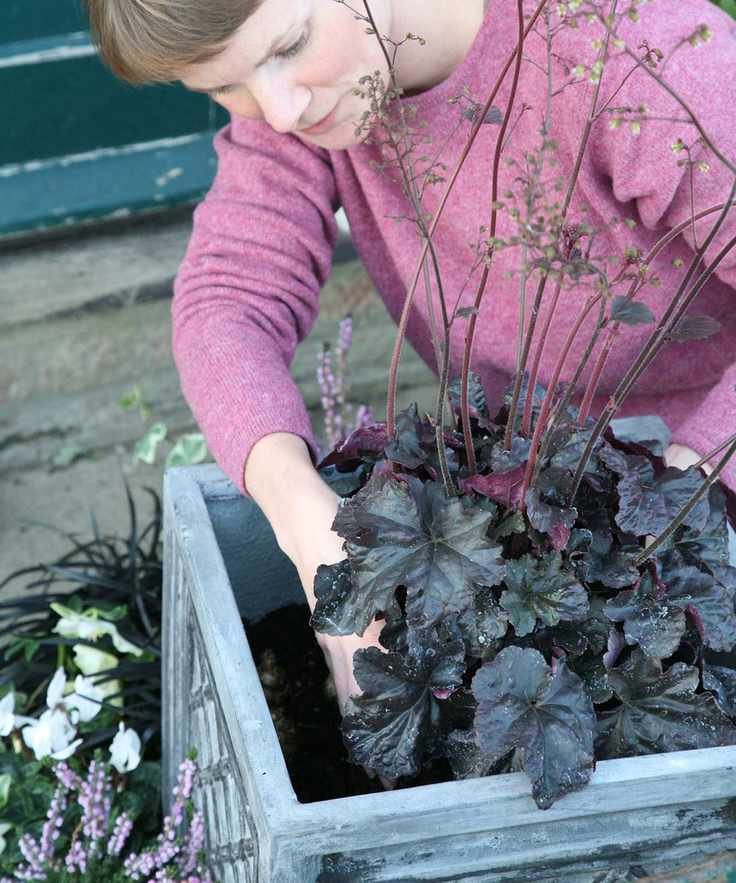
Heucheras make a stunning display in containers, either alone or in combination.
Heuchera Maintenance Tips
Heucheras are low-maintenance, requiring minimal care after planting. Keep the soil moist during establishment and deadhead faded flowers.
Avoid wetting the leaves to prevent fungal diseases. Cut off any infected leaves to stop the spread. Established plants generally need watering only during dry spells.
Winter frost can cause 'frost heaving,' where plants are pushed out of the ground. To mitigate this, apply organic mulch in the fall to insulate the soil.
As spring arrives, feed with a general fertilizer like Miracle Gro Shake n Feed. Water it in and mulch again.
For varieties with small flowers, cut the blooms below the foliage level to maintain appearance. In early spring, prune back all top growth to promote fresh growth.
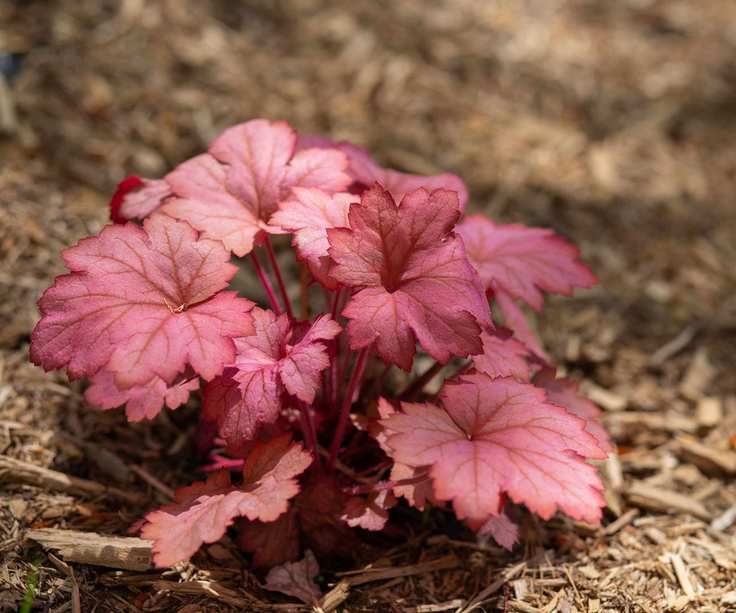
In fall, mulch heucheras with wood or bark chips or well-rotted compost.
Propagating Heucheras
As heucheras mature, they can develop woody centers that affect growth and appearance. To rejuvenate the plant and create new ones, divide in early spring. This is straightforward and yields clones of the parent plant.
- Dig up the heuchera clump and take healthy side shoots, ensuring each has leaves and roots.
- Pot the divisions in nutrient-rich soil mixed with grit or perlite, like this coarse option from xGarden on Amazon.
- Keep them warm and shaded, maintaining damp compost until roots develop.
- Dispose of the old, woody plant or compost it.
Alternatively, remove side crowns from mature plants in late summer and pot them until they are ready to be planted outside or into larger pots.
These can be planted later the same year in warmer regions or the following spring in colder areas. If needed, keep young plants in a greenhouse over winter, watering sparingly.
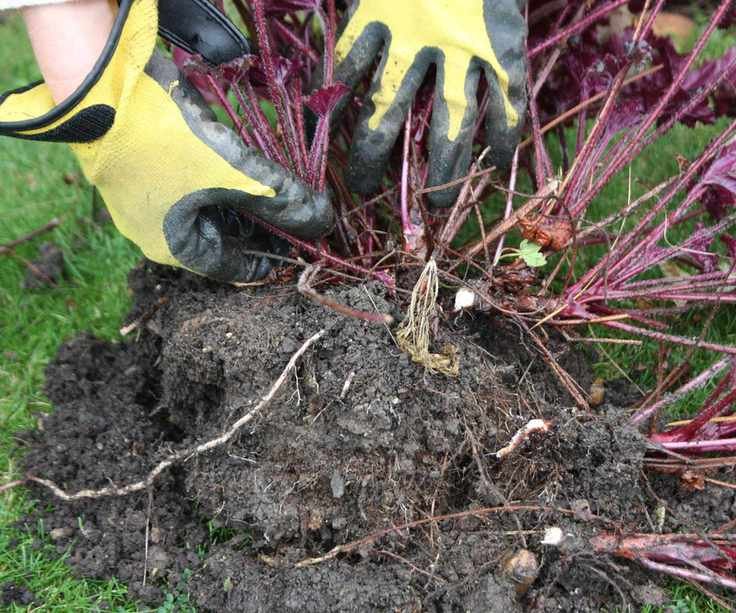
Divide older heuchera clumps by carefully detaching side shoots and potting them.
Common Issues with Heucheras
Heucheras may face a few challenges. If planted in too sunny a location, their leaves can scorch. If this occurs, transplant them to a shadier spot or relocate planters away from direct sunlight.
In containers, combine them with other shade-loving plants and avoid sun-loving varieties.
Fungal issues like heuchera rust can manifest as brown spots on the leaves and orange pustules underneath. Prevent rust by selecting healthy plants and ensuring good airflow. Remove any infected leaves immediately and avoid wetting the foliage during watering.
If rust persists, consider using a fungicide spray, such as Bonide spray on Amazon. Follow instructions carefully.
Pest Management for Heucheras
The black vine weevil, or taxus weevil, is a common pest. Adults chew leaves, while the grubs damage the roots, often going unnoticed until wilting occurs.
To manage infestations, you may need to discard affected plants and soil. Alternatively, consider biological treatments such as nematodes, like those from BioLogic Scanmask on Amazon. These beneficial eelworms are safe around children and pets and can be applied throughout the growing season.
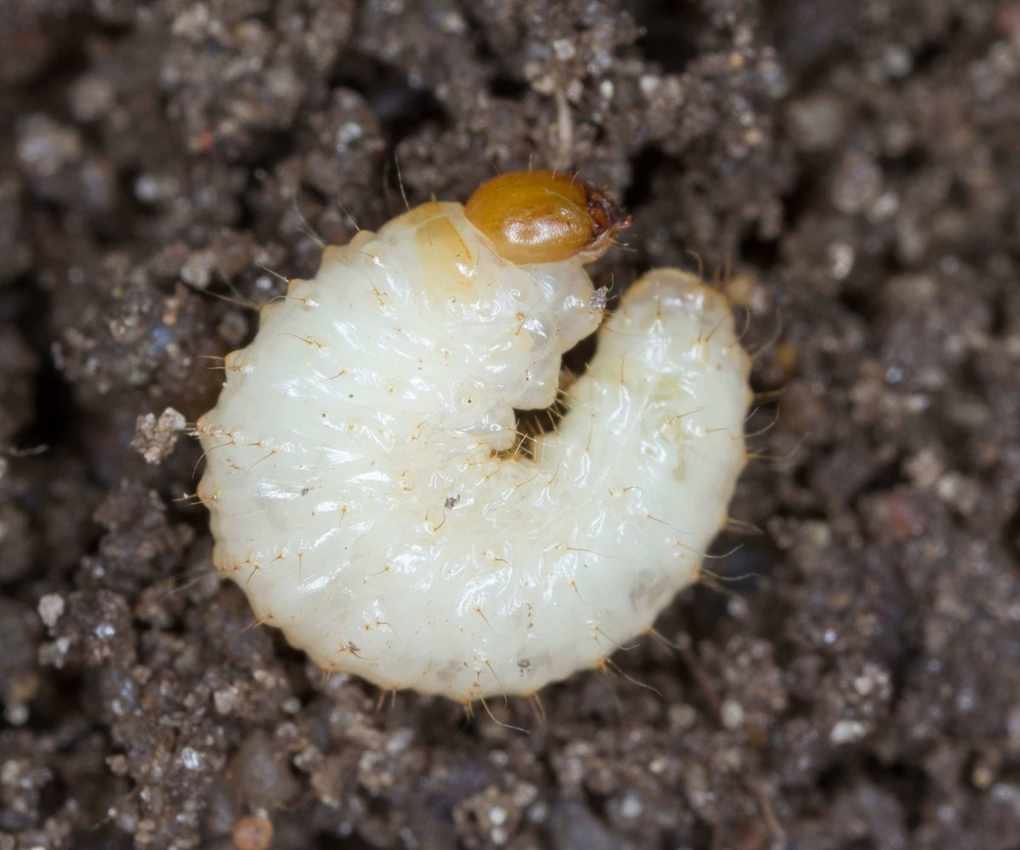
Black vine weevil larvae cause significant unseen damage to roots.
FAQs
Are Heucheras Resistant to Deer?
Research from the New Jersey Agricultural Experiment Station has shown that heucheras are seldom severely damaged by deer, placing them in a category of relatively deer-resistant plants.
Why Should Heuchera Flowers Be Cut Off?
Heucheras often produce small flowers that, while attractive to pollinators, can detract from the stunning foliage. Snipping these flowers off while still in bud is recommended, ensuring that the stems remain hidden below the foliage.
Use narrow-bladed garden snips, like this pair by Vivosun on Amazon, for precise cutting.
However, some varieties with larger flowers should be left intact.
What Should I Do If My Heuchera Is Rising Out of the Ground?
This is common and indicates that the plant needs attention. To remedy this, dig it up in spring or late summer, improve the soil, and replant, ensuring the woody stems are below ground level.
Alternatively, you can divide the plant into sections, each with leaves and roots, and replant them directly or grow them in pots.
Heucheras are long-lived and versatile, pairing beautifully with many plants. Their vibrant foliage complements tropical varieties like canna lilies and makes them excellent ground cover options.
These colorful plants also enhance shaded gravel gardens and modern planting designs.