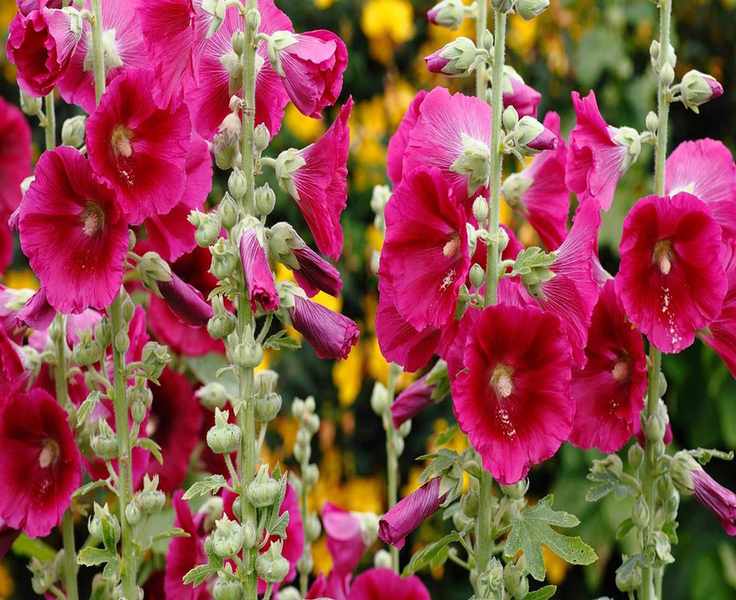
Hollyhocks are a delightful sight, often found brightening up sunny garden walls with their lush, satin-like petals. These charming plants are a staple in English garden designs, available in a spectrum of colors, including rich purples and soft lemons.
Starting hollyhocks from seeds is quite simple, though you can also find them as plug plants or in larger pots at local garden stores. Typically biennial, hollyhocks usually won't flower their first year, but can reach impressive heights—up to 9ft—by the second year, according to gardening specialist John Negus. Due to the common occurrence of hollyhock rust, a fungal issue, even the perennial types are often treated like biennials and removed before they show signs of declining health. 'However, I've seen clusters blooming beautifully year after year, even if they look a bit worn,' shares John.
Regardless, they make wonderful additions to the back of garden borders, can complement fences beautifully, or thrive in deep pots for patio displays. Plus, pollinators like bees and butterflies are drawn to the single-bloom varieties.

With over 50 years of experience as a gardening journalist, John frequently addresses reader inquiries in Amateur Gardening magazine. He has authored four books and has delivered numerous horticulture talks.
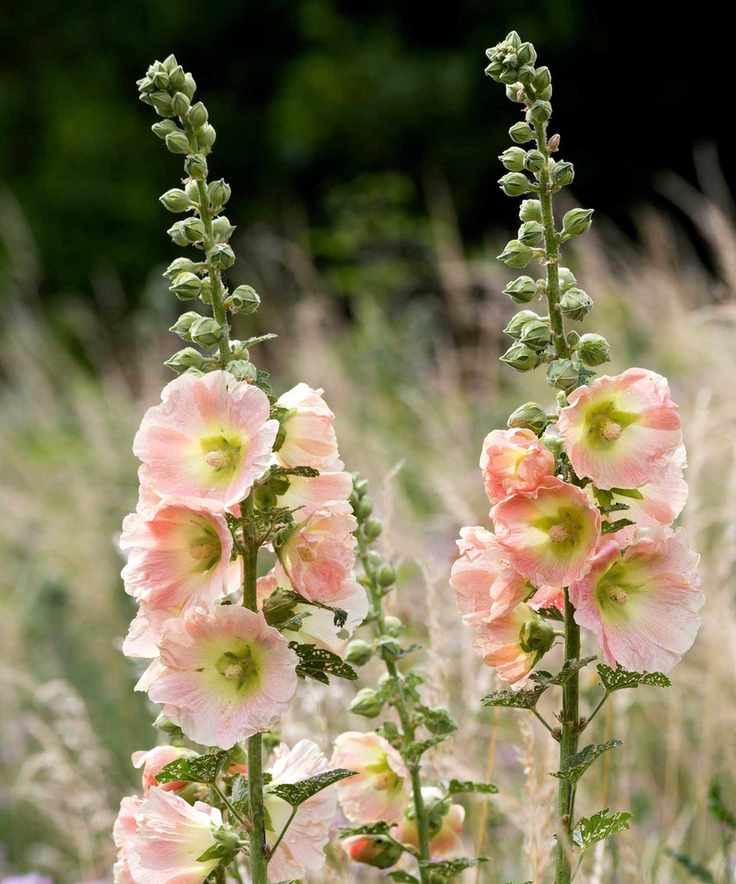
Hollyhocks attract numerous pollinating insects
(Image credit: Westend61 / Getty Images)
Key Facts About Hollyhocks
- Growing Difficulty: Easy
- Plant Type: Hardy biennials or short-lived perennials
- Mature Height: Up to 9ft
- Preferred Soil: Fertile and well-drained
- Ideal Sunlight: Full sun
- Planting Time: Early summer or fall
- Bloom Season: Summer to fall
- Hardiness Zones: USDA 3-8
- Scientific Name: Alcea
- Common Name: Hollyhock
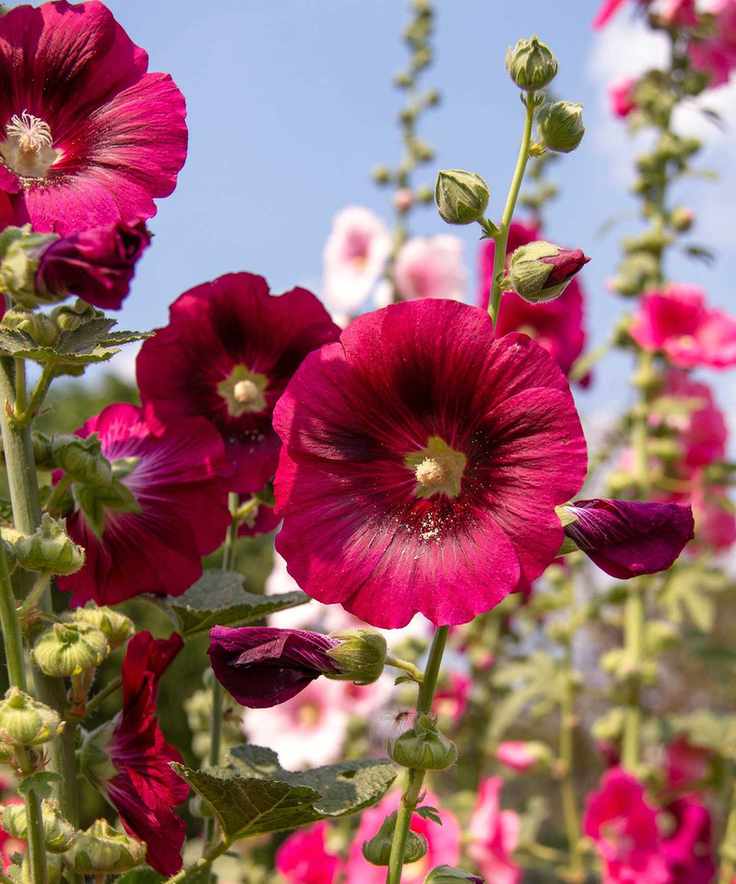
Flowers come in various shades, depending on the type
(Image credit: Raulersongirlstravel / iStock / Getty Images Plus)
Finding the Right Spot for Hollyhocks
Pastel varieties, like 'Peaches 'n Dreams' hollyhocks from Nature Hills, fit perfectly in a cozy, romantic garden alongside delphiniums, peonies, and sweet peas. For a more dramatic flair, bold-colored varieties like the 'Chaters Pink' hollyhock from Burpee adds vibrant, textured blooms.
For optimal results, consider a few key factors when selecting a location. 'Hollyhocks flourish in well-drained soil enriched with compost or organic materials,' advises gardening expert Tony O'Neill. 'They can adapt to various pH levels, but slightly alkaline soil is best.'
These plants thrive in sunlight and prefer a sheltered area to protect their tall stems from strong winds.

Tony O'Neill is a gardening expert, author, and educator dedicated to simplifying gardening techniques. He inspires many through his popular YouTube channel and website, guiding individuals to cultivate flourishing gardens.
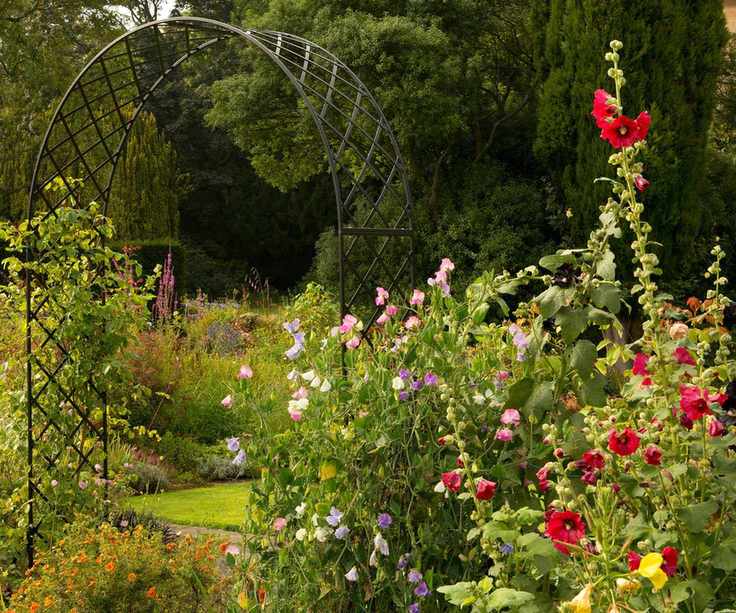
Hollyhocks complement informal, cottage-style gardens
(Image credit: Ellen Rooney / Alamy Stock Photo)
Planting Hollyhocks: Timing and Technique
As per the Royal Horticultural Society, it's best to pot plug plants into larger 4-inch containers to develop a strong root system. When ready to move outdoors, typically in early summer or fall, space them about 24 inches apart. These hardy plants can withstand cold without protection.
Enhance the soil by mixing in garden compost prior to planting, and water thoroughly afterward. 'Due to their height, hollyhocks often need some support to remain upright,' adds Tony. 'Using soft ties with sturdy stakes or bamboo canes can help withstand wind damage.'
Seeds can be sown indoors during spring or directly into the ground in early summer.

Some hollyhock varieties display a pom-pom-like look
(Image credit: Tom Meaker / iStock / Getty Images Plus)
Caring for Your Hollyhocks
With proper support in windy areas and monitoring for common issues, hollyhocks are relatively low-maintenance.
Once established, they are quite drought-resistant. 'Hollyhocks prefer deep watering at the roots rather than a light sprinkle from above,' says Tim Graham from YardandGardenGuru.com.
Applying fertilizer in spring helps enhance blooming, with a balanced slow-release option around an NPK ratio of 10-10-10 being recommended by Tony. The NPK breakdown is typically found on the product label.
After flowering, trimming the stems can tidy up their appearance. Use sharp, clean pruning tools for this. However, allow seeds to develop and mature first if you wish to collect or encourage self-seeding.
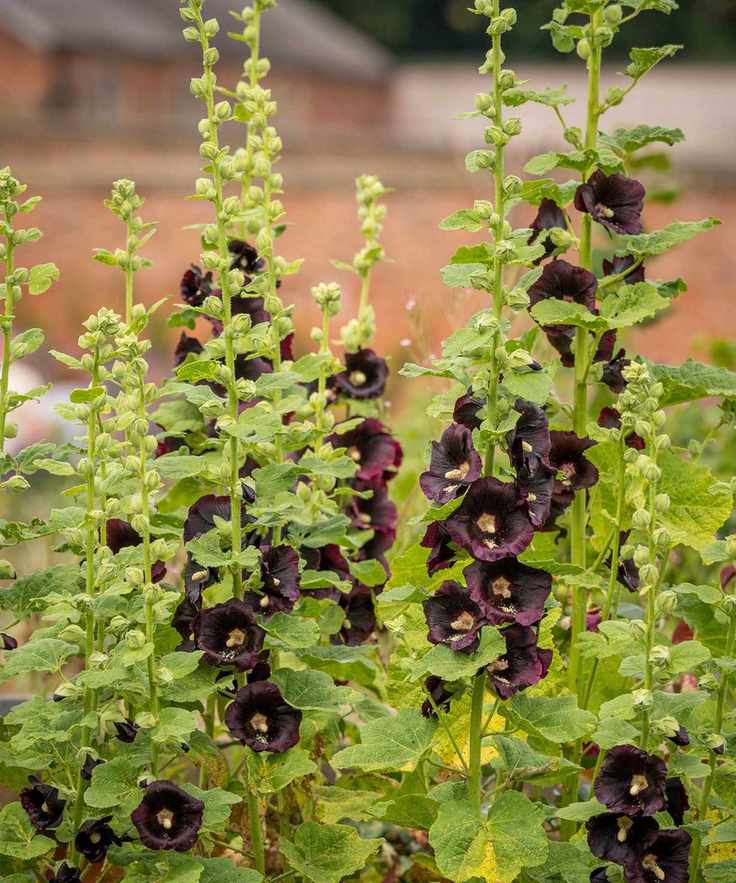
These dark flowers can add a dramatic touch to any garden
(Image credit: Bailey-Cooper Photography / Alamy Stock Photo)
Propagating Hollyhocks
If your hollyhock has developed multiple shoots at its base, you can propagate by division in spring, when the soil is warming up and the plant has begun to grow again.
'Carefully lift it and separate it into several rooted sections,' advises John Negus. 'Replant them in nutrient-rich soil.'
Alternatively, you can gather seeds for propagation. They self-seed readily, but to control their placement, collect the seeds when they turn brown and easily detach from the pod. Store them in a cool, dark, dry place, like a sealed jar.
Sow seeds in spring by sprinkling them on the surface of a filled 4-inch pot with seed compost, covering them with a quarter-inch of grit. 'Water thoroughly and seal the pot in a plastic bag,' advises John, and then place it in a warm, light-filled area. Seedlings should sprout within a few weeks.

Collect hollyhock seeds for replanting
(Image credit: izzzy71 / iStock / Getty Images Plus)
Common Issues with Hollyhocks
Hollyhocks often face rust, along with pests like slugs and caterpillars. Fortunately, you can manage these naturally by handpicking them and attracting more birds to your garden.
It's also essential to remember that hollyhocks are not deer-resistant; these animals will happily munch on the flowers.
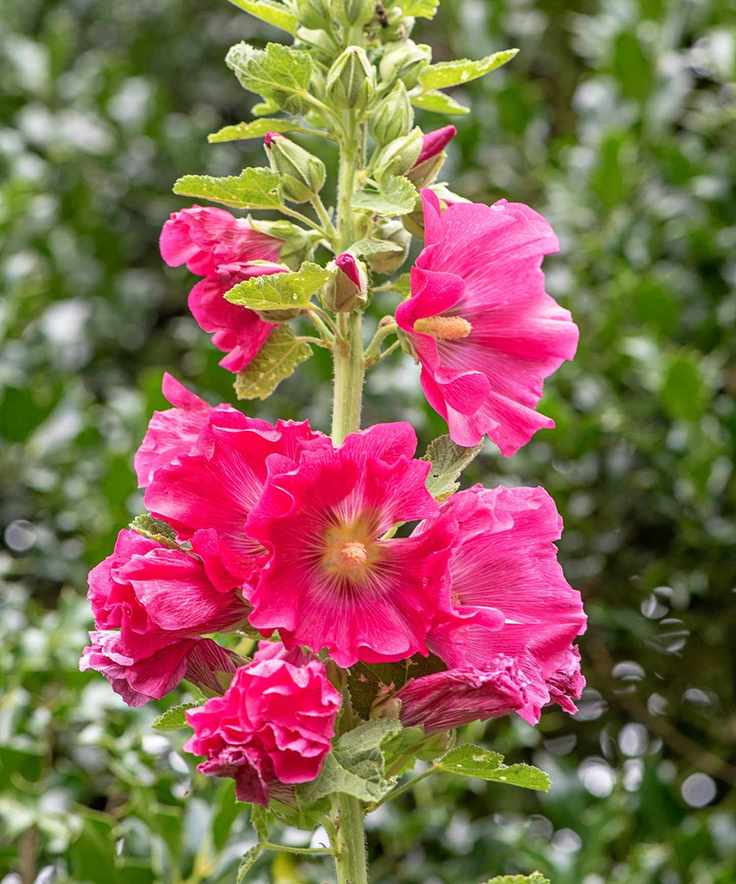
Watch for pests when cultivating hollyhocks
(Image credit: Jacky Parker Photography / Moment / Getty Images)
FAQs
Can Hollyhocks Thrive in Pots?
Absolutely! Hollyhocks can flourish in pots, making attractive additions to patios and courtyards. Just ensure the containers are tall enough for their long taproots.
Provide support and place them in a sunny location. Water pots more frequently than garden-planted hollyhocks, as soil in containers dries out faster. Using pot feet, like these non-slip UFelice options from Amazon, can prevent waterlogging.
Why Aren't My Hollyhocks Blooming?
It's normal for many hollyhocks grown from seed not to bloom in their first year, often just producing leaves. Don't worry—if healthy, they should yield plenty of flowers the next year.
Lack of blooms may also result from insufficient water during establishment or inadequate sunlight.
While they may not last indefinitely, hollyhocks are definitely a worthwhile addition for a vibrant summer display. They're straightforward to grow from seed, low-maintenance, and can even be used to beautify an unattractive garden wall. Plus, they make beautiful cut flowers for arrangements.