Hydrangeas are cherished for their vibrant flowers and can thrive in pots, adding beauty to any container garden. Compact varieties allow for cultivation even in limited spaces.
To successfully grow hydrangeas in pots, focus on a few crucial factors. Selecting the right variety, using a spacious pot, and maintaining consistent watering and fertilizing are essential.
When planning to grow hydrangeas in pots, ensure they're placed in a sheltered, shady area. In colder climates, be ready to relocate the pot to a protected spot during winter.

A spacious pot is crucial for hydrangea growth.
Planting Hydrangeas in Containers
The ideal time to plant hydrangeas in containers is spring or fall. Since hydrangeas develop extensive root systems, choose a pot that's at least 24 inches wide with adequate drainage holes. A smaller container may require repotting within two to three years.
Gardening expert John Negus suggests hydrangeas prefer fertile, well-draining soil. He recommends using a potting mix rich in loam, such as SunGro Black Gold Natural and Organic Garden Compost Blend.
If you're growing blue-flowered varieties, opt for ericaceous compost to maintain their vibrant hue. Avoid using old garden soil, as it retains excess moisture, which is detrimental to hydrangeas.
Plant the hydrangea at the same depth as it was in its nursery pot, lightly packing soil around the root ball. Water thoroughly after planting.

With over 50 years in garden journalism, John frequently answers reader queries in Amateur Gardening magazine and has authored several books on horticulture.
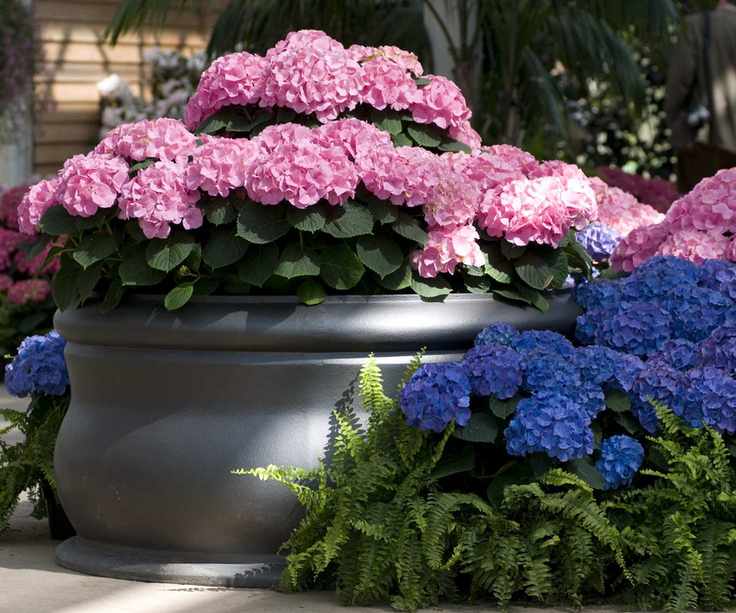
A large pot can sustain a hydrangea for years.
Caring for Potted Hydrangeas
Hydrangeas thrive in dappled shade, making a spot that receives morning light but is shaded from intense afternoon sun ideal. They naturally flourish under tree canopies in woodland settings.
Gardening expert Anne Swithinbank notes that hydrangeas can suffer in exposed areas prone to late frosts and strong winds, which can damage their roots. Avoid east-facing spots where morning sun may harm frosted new growth.
Check moisture levels regularly and water the plants thoroughly, particularly during hot spells. For watering hydrangeas, aim for at least twice a week, using your finger to assess soil moisture.
Since potting compost typically provides nutrients for only the first six weeks, mix in some homemade compost or slow-release fertilizer at planting time. Consistent feeding is vital.
Anne recommends applying a layer of mulch in spring, followed by bi-weekly feedings with a high-potassium fertilizer, like Organic Healthy Grow Tomato Garden Plant Food, from early June until flowering ends. Late applications can promote weak growth before winter.
Pruning is essential for hydrangeas, whether in pots or in the ground. Understanding your hydrangea type is key to proper pruning techniques. For mophead and lacecap types, prune in late winter or early spring, removing old flowerheads above a pair of buds.
Having trained at Kew Gardens and worked as a freelance horticulturist since 1986, Anne also writes for Amateur Gardening and has been a panelist on BBC Radio 4's Gardeners' Question Time for 27 years.

Consistent fertilization keeps hydrangeas blooming each year.
Winter Care for Potted Hydrangeas
During colder months, hydrangeas need protection, especially in harsh US hardiness zones, where winterizing becomes crucial. The roots of potted plants are more exposed to cold temperatures.
John recommends keeping plants in sheltered areas and wrapping them with fleece during freezing weather. Remove the fleece when temperatures rise.
In mid-spring, once frost threats have passed, you can move the plants back outside.
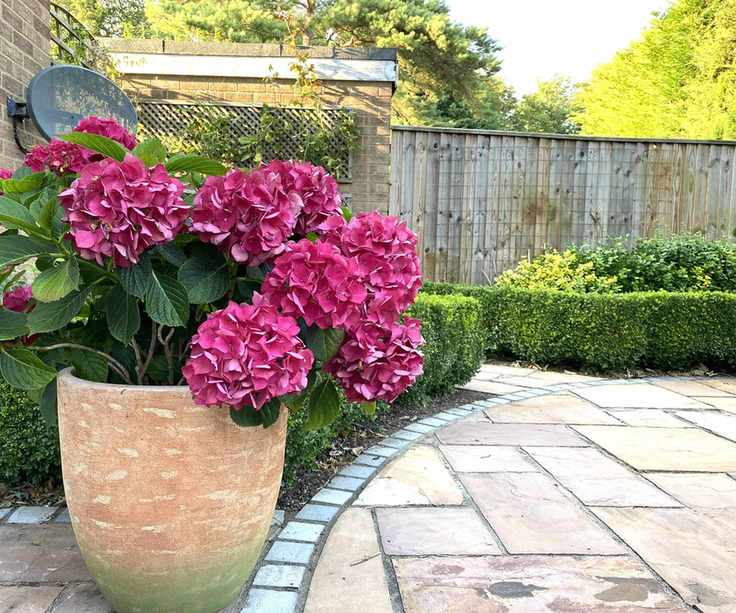
A sheltered position by a wall can shield plants from cold winds.
Best Hydrangeas for Containers
Dwarf varieties are ideal for pots, making them perfect additions to small gardens or container displays. These compact types typically reach about three feet tall, reducing the risk of becoming top-heavy.
One excellent choice is the 'Bobo' variety, which grows to 2-3 feet and produces impressive 12-inch white blooms.
Another option is the 'Invincibelle Limetta', a dwarf version of the popular 'Annabelle' that features lime green flowers aging to jade and blooms from early summer to fall.
Frequently Asked Questions
Are hydrangeas happier in pots or in the ground?
Generally, hydrangeas prefer growing in the ground, but they can flourish in containers with proper care. Containers dry out faster, making attentive watering crucial. Choose the right variety and maintain a consistent watering and fertilizing routine for beautiful blooms.
Should I deadhead hydrangeas in pots?
Deadheading hydrangeas is vital for promoting growth, whether in pots or in the ground. Remove spent blooms throughout the growing season to encourage new flowers. Cease deadheading in mid-fall to allow old blooms to protect next year's buds during winter.
Can hydrangeas grow large in pots?
Hydrangeas can thrive in pots, but their size will depend on the variety and pot size. Dwarf types are best suited for containers, while larger varieties typically require ground planting. If space allows, larger hydrangeas grow better in soil.
How do you keep hydrangeas blue in pots?
To maintain blue flowers, hydrangeas need acidic soil with a pH of 5.2 to 5.5. Regularly test soil pH, as levels above 5.5 can shift blooms to purple-blue. Use ericaceous compost or add sulfur or aluminum sulfate to adjust pH levels.
If you lack ground space, growing hydrangeas in pots is a fantastic way to enjoy their beauty. With various compact types available, you're sure to find one that fits your garden style.
Care for your hydrangeas with adequate watering, feeding, and winter protection, and they'll reward you with stunning blooms season after season.