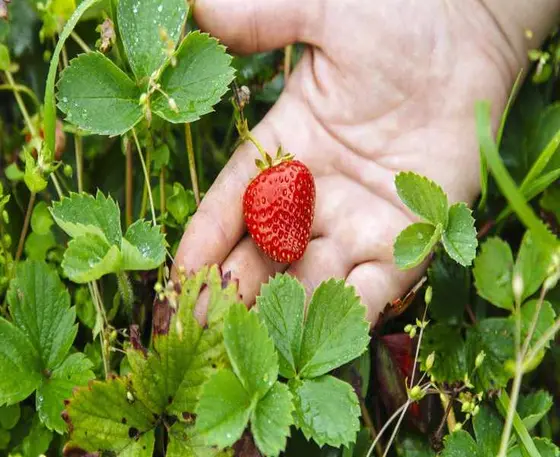
Q. I've noticed spots on my strawberry plant leaves and gray mold on the fruit. What could be causing this, and how can I prevent it?
A: Strawberry plants are vulnerable to various bacteria, viruses, and fungi that can impact all parts of the plant, including fruits, flowers, leaves, and roots.
When cultivating strawberries, early detection and removal of affected areas can help preserve your entire crop. Key strategies include avoiding overcrowding, practicing crop rotation, and ensuring optimal conditions for growth.
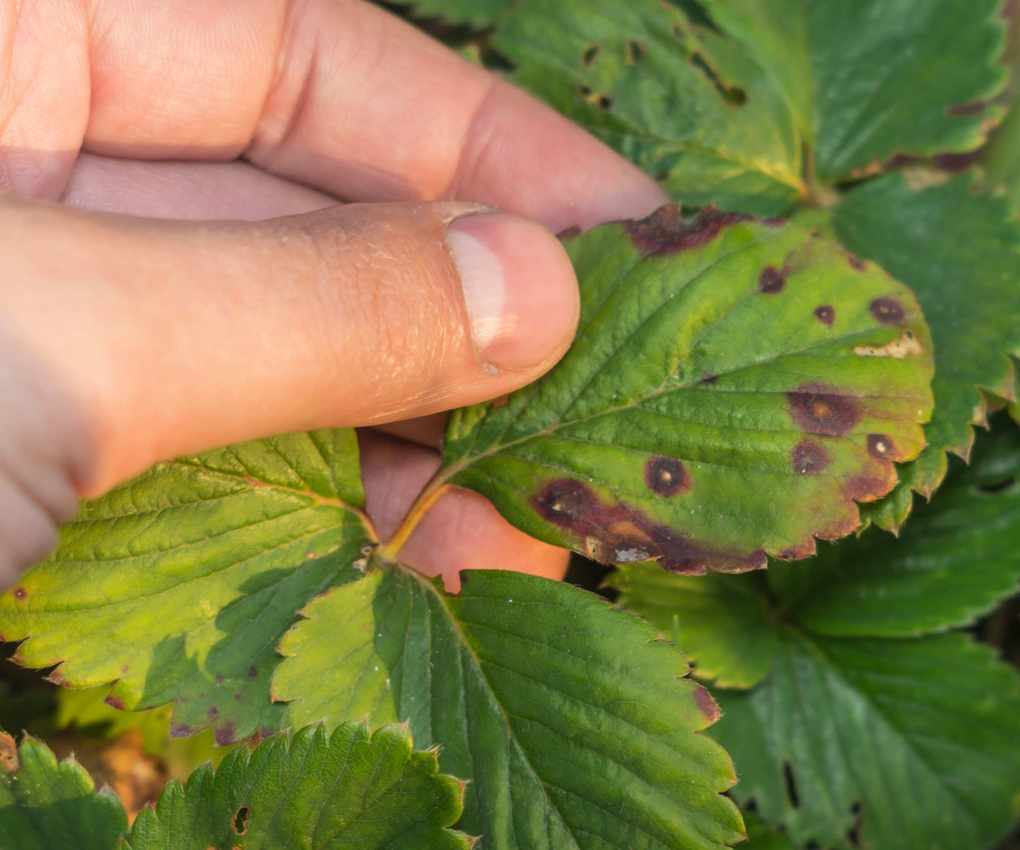
Leaf spot appears as small spots on strawberry leaves
Common Strawberry Diseases and Their Symptoms
Strawberry leaves can indicate several common diseases, such as leaf spot, black spot, verticillium wilt, and leaf blight. Yellowing or browning leaves often signal a problem.
According to Dick Zondag, a garden expert, 'Yellow spots that turn black quickly indicate leaf diseases. The best prevention is morning sunlight to dry leaves early and minimize disease.'
- Leaf spot: Appears as small round spots that may merge over time. This fungal issue usually occurs in late spring and is primarily cosmetic, not affecting the fruit, though it can survive winter on the plant and spread through splashing rain or overhead watering.
- Strawberry black spot: This distinct fungal disease presents as small black spots on leaves or sunken brown spots on ripening fruit.
- Leaf blight: Identified by reddish blotches that develop into V-shaped lesions on leaves. It can infect runners and diminish future yields.
- Verticillium wilt: This disease affects leaves, causing older ones to wilt and new growth to stunt. Infected plants won't produce fruit, and the disease can persist in soil for up to 20 years.
- Gray mold or botrytis: A prevalent issue characterized by fuzzy gray mold on fruits. It thrives in temperatures between 58 and 72˚F and can spoil the fruit. Dick Zondag advises picking fruit as it ripens to control gray mold, as mature fruit is more susceptible to mold, especially in damp conditions.
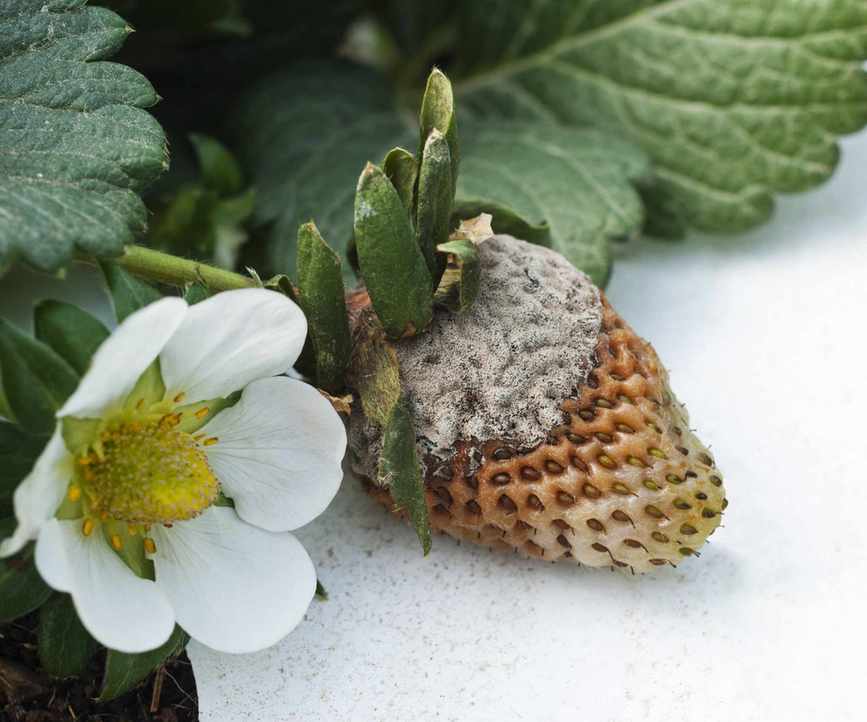
Strawberries with fuzzy gray mold must be discarded
Preventing Strawberry Diseases
Effective prevention of strawberry diseases involves minimizing stress on the plants. While weather conditions are uncontrollable, you can manage planting practices to ensure healthy growth.
Mary Jane Duford, a gardening expert, recommends planting strawberries in well-draining soil, avoiding waterlogged areas, and ensuring at least 6-8 hours of direct sunlight daily.
Once planted, maintain proper watering and care. Drip irrigation is beneficial, as it keeps moisture in the soil rather than wetting the foliage. Additionally, mulching with straw or organic materials helps retain moisture and suppress weeds.

Christy Wilhelmi, a gardening author, emphasizes the importance of removing diseased leaves to prevent further spread. Keeping plants healthy through proper watering and fertilization can help avoid issues like powdery mildew without resorting to chemicals.
While some organic fungicides exist, maintaining proper spacing and regularly tidying strawberry beds can create an environment less conducive to disease, reducing the need for fungicides.
When gray mold appears, promptly remove infected berries to prevent spreading. Regular inspections are crucial, especially in wet conditions. Picking strawberries at the right time can help prevent over-ripening, which increases susceptibility to gray mold. Discard any affected fruit and dead plant material, and ensure to clean strawberries harvested near infected areas.
Viruses like verticillium wilt can linger in the soil for years, so practicing crop rotation is essential. Avoid planting new strawberries in areas where old ones were grown, and also steer clear of spots previously occupied by tomatoes, peppers, potatoes, roses, or grapes, as they share vulnerabilities.
Purchase strawberry plants from reputable sources to ensure they're virus-free. Avoid accepting plants from others that may be infected or propagating from runners of diseased plants. Resistant varieties exist, although none are immune to blight.

Strawberries are a delightful addition to any garden, thriving in the ground or in pots, and can flourish indoors or in greenhouses. Despite their susceptibility to pests and diseases, attentive management and observation can effectively mitigate major issues. Regular harvesting provides an excellent opportunity to spot and address problems early.