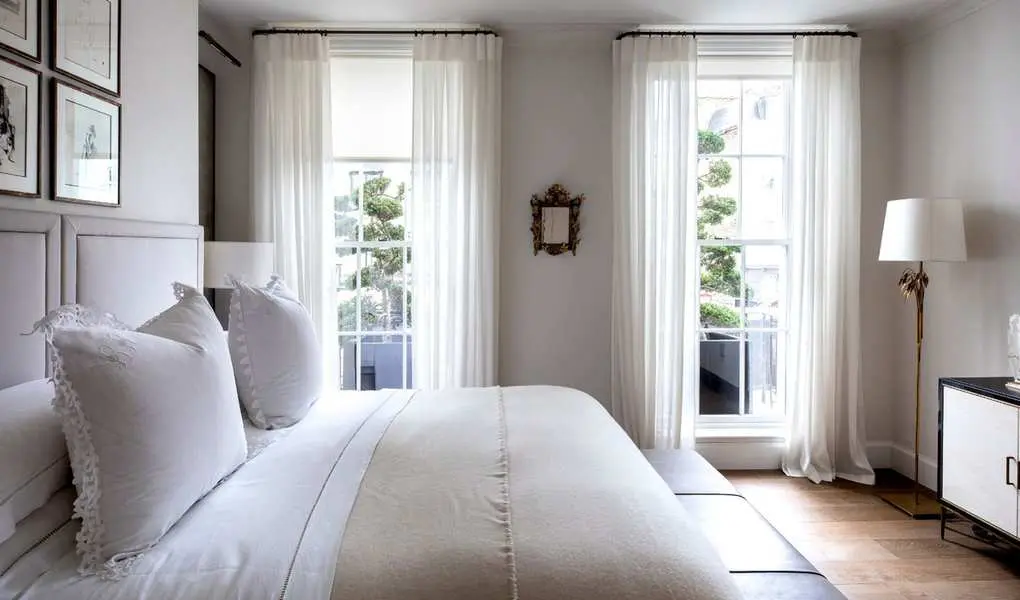
Choosing white paint for your home might seem straightforward, but it's a complex task. The variety of shades within the white spectrum means selecting the ideal paint requires careful consideration.
From cool, crisp whites to warm, creamy ivories, this color can have surprising depth. Understanding how to select the right shade can prevent your walls from appearing yellow, which is a common issue.
Sue Kim, a color marketing director, emphasizes that the perception of white paint relies heavily on two factors: the natural light in a room and the paint's undertone. White paint can adapt to its surroundings, reflecting light and colors from nearby objects.
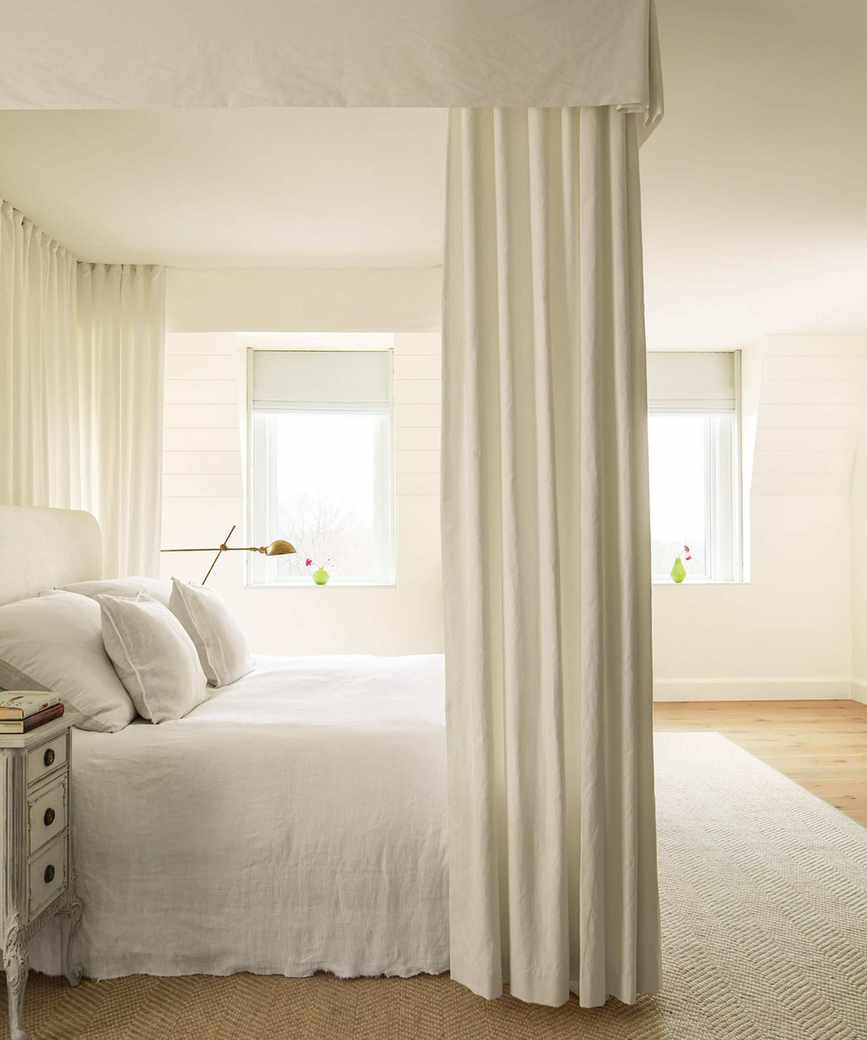
A serene all-white bedroom features a harmonious blend of wall color, drapery, and bedding, creating a tranquil environment.
When searching for a white that won't lean yellow, consider the amount and type of natural light your space receives before anything else.
Helen Shaw, a marketing director, notes that south-facing rooms receive warm sunlight, allowing whites without noticeable undertones to shine. Whites with elements of cool gray, blue, or violet can neutralize the warm light, ensuring the room feels fresh instead of overly creamy.
For those looking to avoid yellow undertones, Helen recommends several paints. Options like Chantilly Lace OC-65 maintain brightness, while Decorator's White OC-149 offers a subtle gray hint, creating a soft off-white. In north-facing spaces, warmer whites with undertones of red, pink, or peach, like Opulence 879, help create a balanced glow throughout the day.
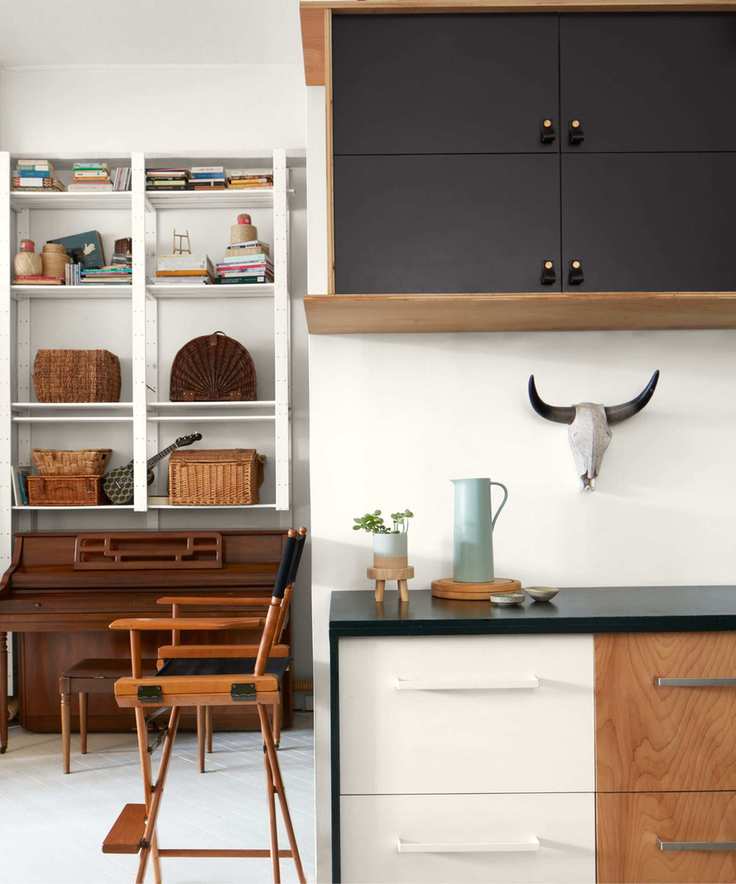
This eclectic kitchen showcases a striking black and white aesthetic, beautifully complemented by wooden accents.
Arianna Barone, a color marketing manager, adds that surrounding elements significantly influence how white paint appears. If you notice yellow undertones, consider exploring cooler white options, including White Heron OC-57 and Horizon OC-53.
When selecting a white paint, don't forget about artificial lighting as well. Arianna suggests using lightbulbs with a higher Kelvin temperature to mimic daylight. This cooler light can help manage the paint's appearance.
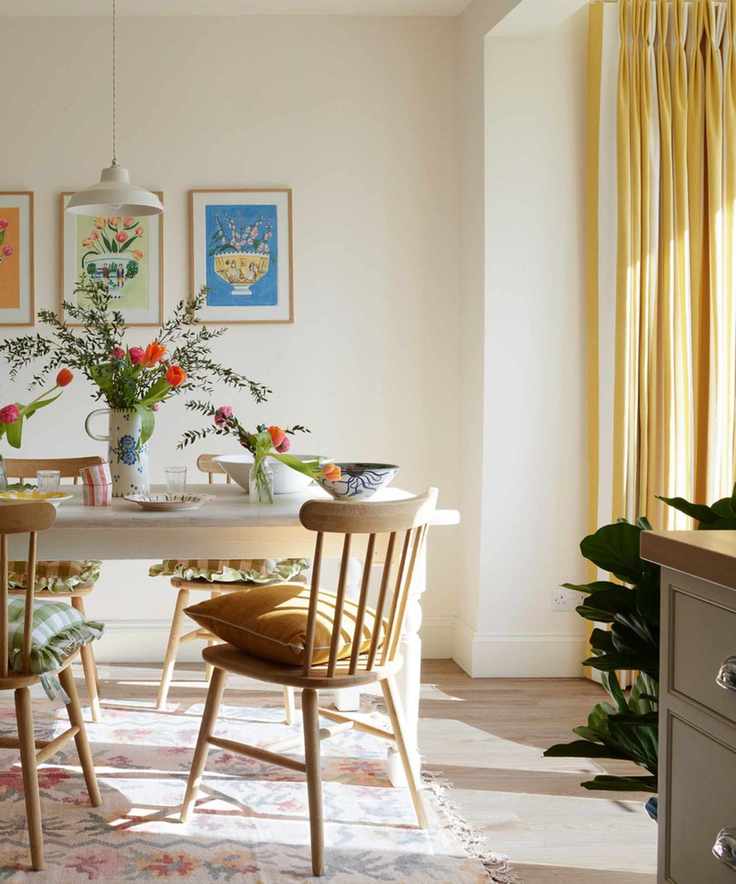
This Scandi-style dining room features a simple white palette, enhanced by wooden furniture and vibrant artwork.
Determining how white paint will look in your space can be challenging. With numerous options available, distinguishing between undertones can be tricky.
Tash Bradley, an interior design director, suggests an effective technique for identifying undertones. Place your paint sample next to a pure white sheet of paper; this will highlight whether the paint leans yellow, pink, or gray, aiding in your decision-making process.
Remember, white doesn't exist in isolation. Other elements in your room—like flooring, furniture, and decor—will impact how a white appears. For a fresh, modern look, pairing whites with cooler undertones alongside natural materials can create balance.
Sampling is crucial. Whites can be very sensitive to light and surroundings. It's best to test paint samples in various locations and times throughout the day. For instance, west-facing rooms might pick up warmer hues in the evening, which can make warmer whites appear more creamy. Ultimately, selecting the right white paint involves understanding undertones, light variations, and how your room's elements interact.

A laundry room adorned with white paint achieves a clean and refreshing look.
A well-chosen white room can feel inviting. Ruth Mottershead, a creative director, explains that white is incredibly versatile, serving as a bold main color or a subtle accent.
In south-facing rooms with bright, warm light, warmer whites may appear yellowish. Ruth recommends French Grey Pale or Flint for a more neutral effect, as these shades can mitigate the yellow tones. Conversely, in north-facing rooms, slightly warmer whites like Silent White can appear more neutral.
For a crisp finish, Shirting offers a bright white without harsh blue undertones, perfect for minimalist styles, while Loft White presents a softer alternative, suitable for both contemporary and classic designs.
Choosing white paint is indeed more complex than it appears. Factors like natural light and decor play a significant role in your selection process.
Arianna suggests that before painting, assess the overall lighting. If it tends to lean warm, the cooler whites may be a better fit, while warmer whites can brighten gloomier, shadowed areas.