Keeping your pots and pans organized is vital for maintaining an efficient kitchen that operates smoothly. Searching through cabinets for that elusive large frying pan is a waste of time and definitely doesn't contribute to a peaceful cooking atmosphere.
Managing your cookware can be a challenge due to their size and bulkiness; however, it's essential to give them a proper place in your kitchen as they're frequently used items. A well-organized kitchen not only makes your cookware easily accessible but also simplifies putting them away after use, leading to a neat and functional space.
Organizing Your Cookware
Although it may seem overwhelming at first, implementing an effective storage system for your pots and pans will save you both time and effort down the line. Here’s a detailed guide with expert tips to help you perfectly organize your cookware.
1. Evaluate Your Current Inventory
Before establishing any organizational methods, take the time to empty your cabinets and assess what you actually have.
“Begin by removing everything and laying it out on a surface — this allows you to see exactly what you possess and helps you determine which storage solutions might suit you best,” suggests professional organizer Lucy Mansey, known as the ‘Marie Kondo of Britain’ among her celebrity clientele.
2. Determine Your Essentials
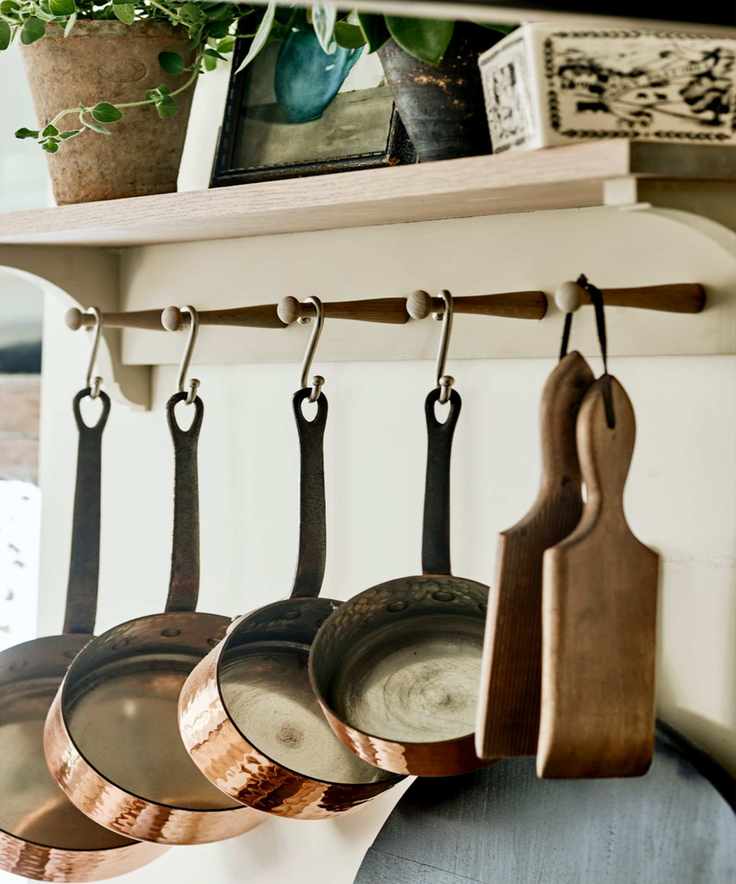
Unless you’re a professional chef, it’s likely that your collection of pots and pans is larger than necessary. For instance, owning three frying pans when you only utilize one can be counterproductive — it's simply clutter. A thorough decluttering session will help you retain only the items you actually use.
“Having a pot that's the perfect size won’t enhance the flavor of your food, so be decisive,” says Emma Cowburn, kitchen designer at Harvey Jones. “A smaller cookware set is easier to store and keep organized.”
In addition to eliminating duplicates, consider items that can serve multiple purposes to simplify your collection. For example, cast-iron pots that transition from oven to table or Pyrex dishes that can be used for baking and storing.
3. Store Infrequently Used Cookware Separately
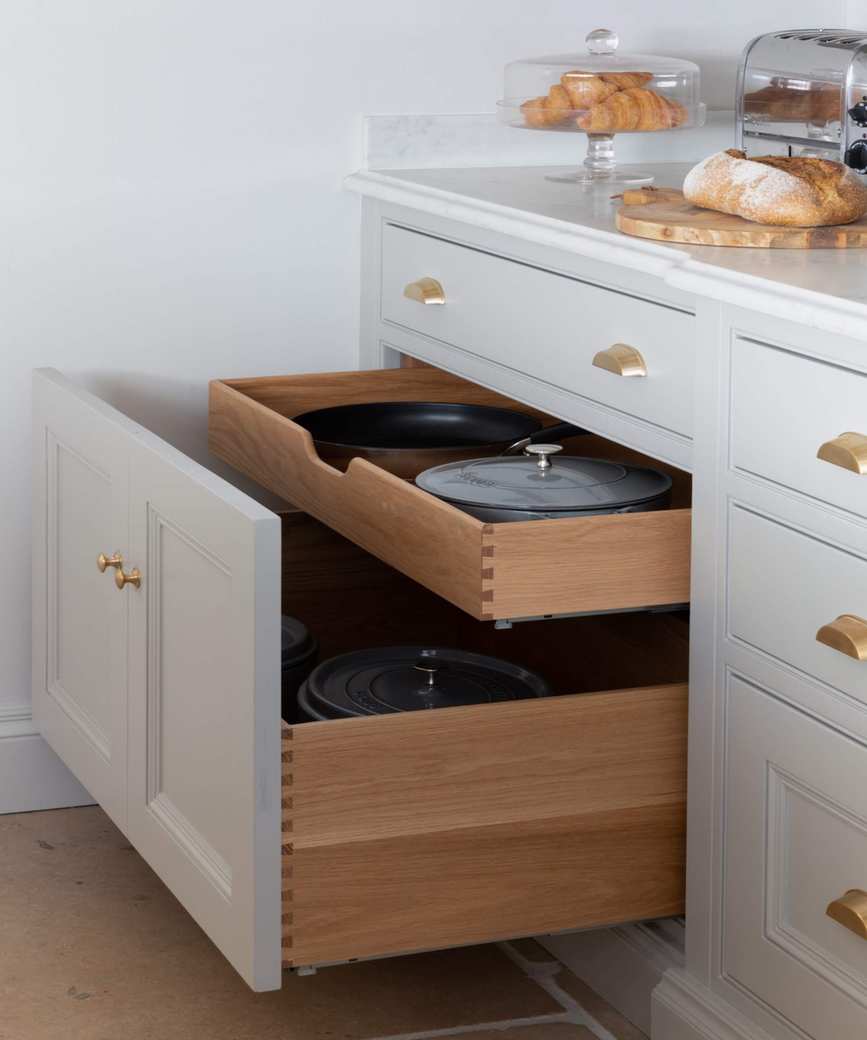
As you sort through your items, you might encounter pots and pans that aren’t used daily but are still valuable, like large casserole dishes or baking trays for entertaining.
There's no rule stating all kitchen storage must be located in the cooking area, so consider alternative locations for these items, especially if you’re looking for small kitchen storage solutions or organizing your pantry. “I keep my bulky crockpot in a sideboard in the dining room adjacent to my kitchen,” shares Alexandra, co-founder and interior designer at Clairrow. “It’s not a daily necessity, and this frees up valuable storage space in my kitchen.”
4. Place Cookware Near the Cooking Zone
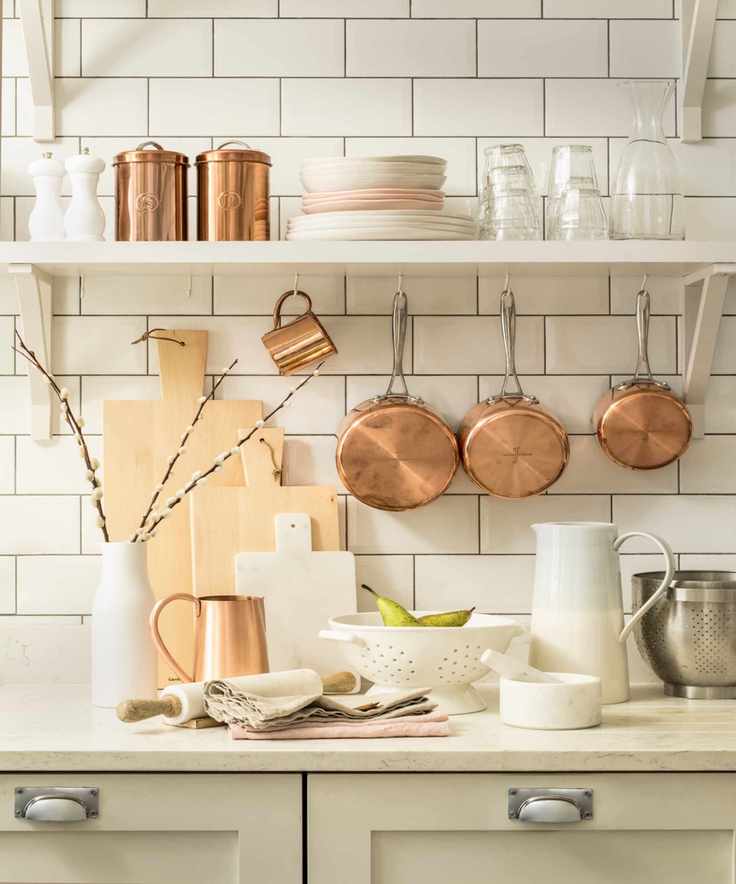
Strategically positioning your pots and pans is crucial. Whether stored in drawers or cabinets, keeping them close to the stove allows for easy access while cooking, reducing unnecessary trips back and forth and enhancing the overall flow of your kitchen. If you prefer, you can hang some cookware or place them on shelves for even quicker access; just be sure to relocate any stored on countertops as part of your kitchen organization efforts.
While rethinking your kitchen layout, also consider moving non-cooking items like dishes, glassware, and utensils away from your pots and pans. This arrangement is especially beneficial for entertaining, allowing multiple people to work in the kitchen without bumping into each other.
5. Utilize a Deep Drawer
A wide, deep drawer can provide a single, easily accessible space for all your pots and pans, making it far more convenient than searching through a cabinet — especially since you’ll be reaching for them almost daily.
“Drawers are really useful for organizing and storing your cookware. Our Suffolk collection features graduated drawer units that allow you to store lids in the shallow top drawer and larger pots in the deeper drawer below,” explains Stephanie Nix, kitchen designer at Neptune.
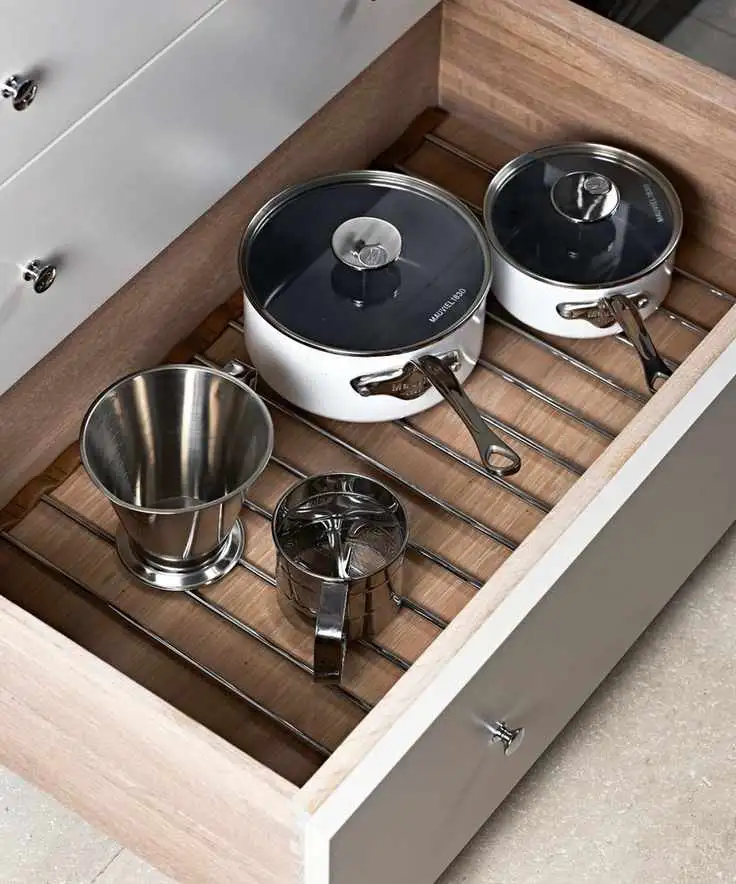
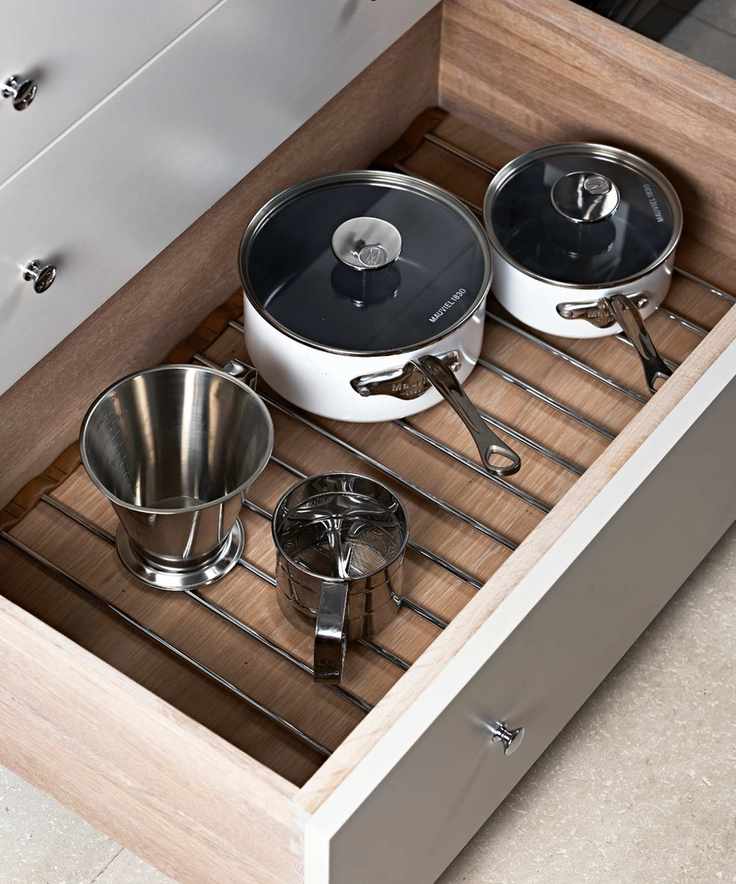
Properly organizing kitchen drawers for pots and pans can greatly enhance functionality. To prevent rattling when opening and closing the drawer, consider installing an internal pan rack to keep each item separated and easily accessible. Vertical and horizontal racks are available, allowing you to maximize your drawer space efficiently.
Additionally, lining the bottom of the drawer can reduce noise and protect your pots and pans from scratches. A pegboard liner is a clever solution, allowing you to adjust the dowels to separate various cookware types and keep everything organized.
6. Optimize Corner Cabinets
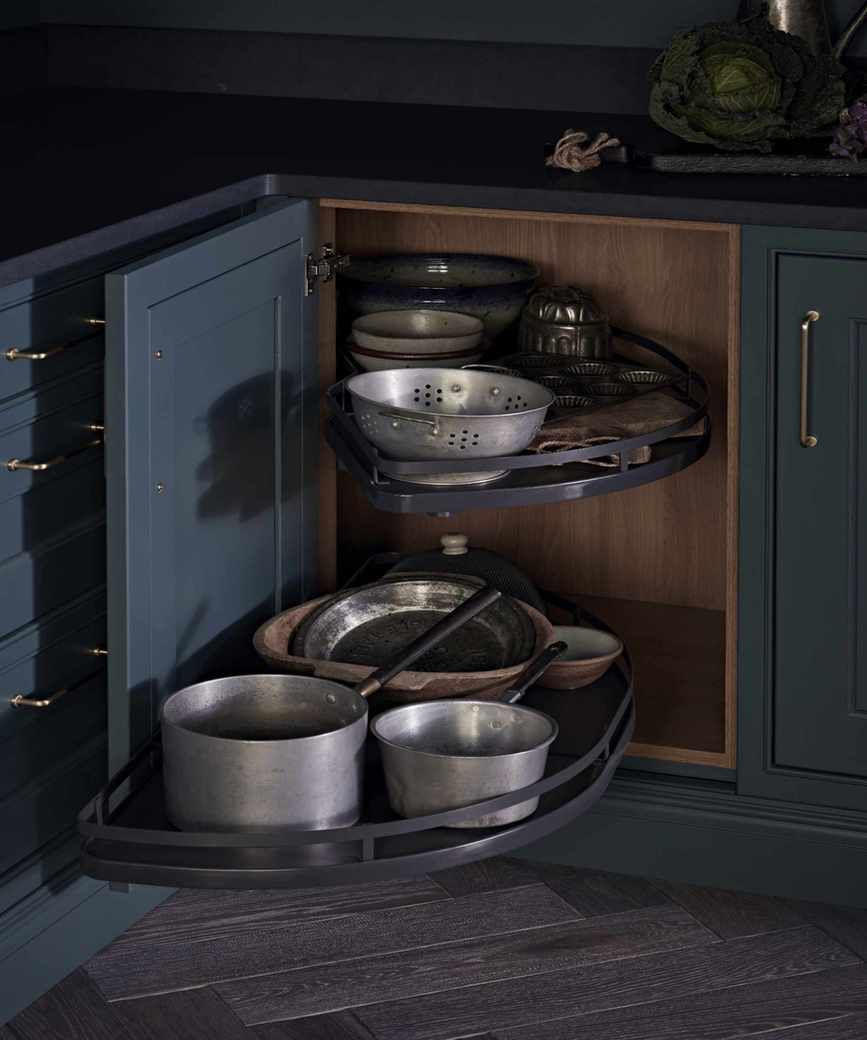
Organizing corner cabinets for pots and pans can be particularly challenging, as they can be difficult to access. However, with the right kitchen cabinet solutions, these spaces can become some of the most efficient storage areas for your cookware.
“Using racks that slide in and out of the cabinet when you open the door maximizes space while minimizing heavy lifting from awkward angles, making it easier to access larger pots and pans,” says Graeme Smith, Head of Retail and Commercial Design at Life Kitchens.
7. Arrange by Size on Open Shelving
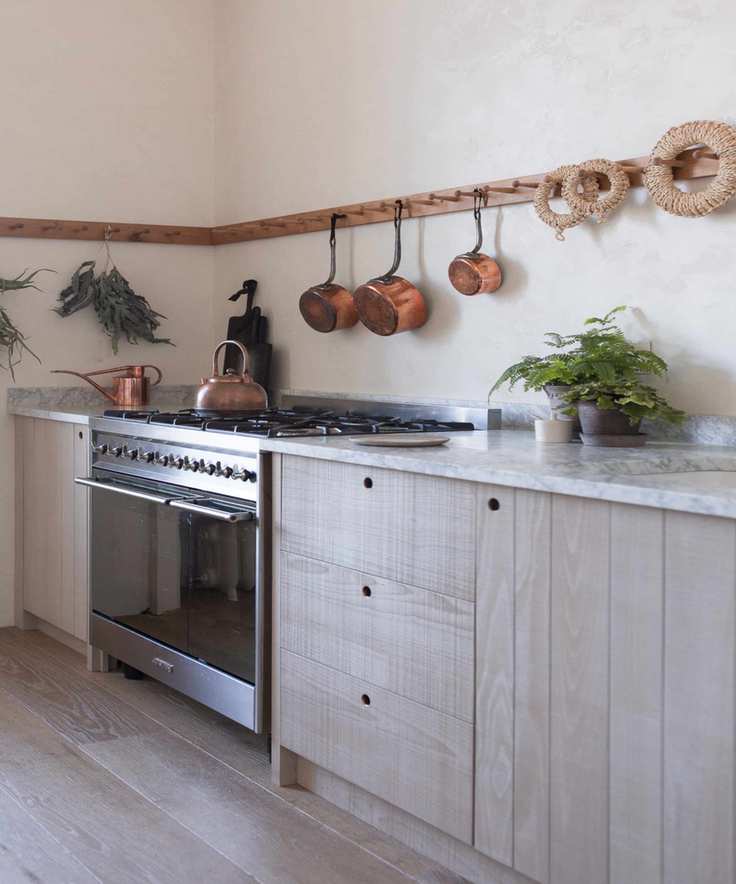
Open shelving is an excellent way to store attractive pots and pans while ensuring easy access. Plus, it can serve as a stylish focal point in your kitchen when arranged thoughtfully.
However, keep in mind that having everything on display requires ongoing organization. Sorting your cookware by size and purpose makes maintenance simple, contributing to a tidy and orderly kitchen. Heather Hoerzen, design editor at Havenly suggests that showcasing good-looking pots and pans on the stovetop can also enhance your kitchen’s aesthetics.
“My Le Creuset pan is visually appealing enough to leave out daily; it adds a touch of design to our stovetop and makes cooking breakfast that much quicker!”
8. Embrace a Professional Approach
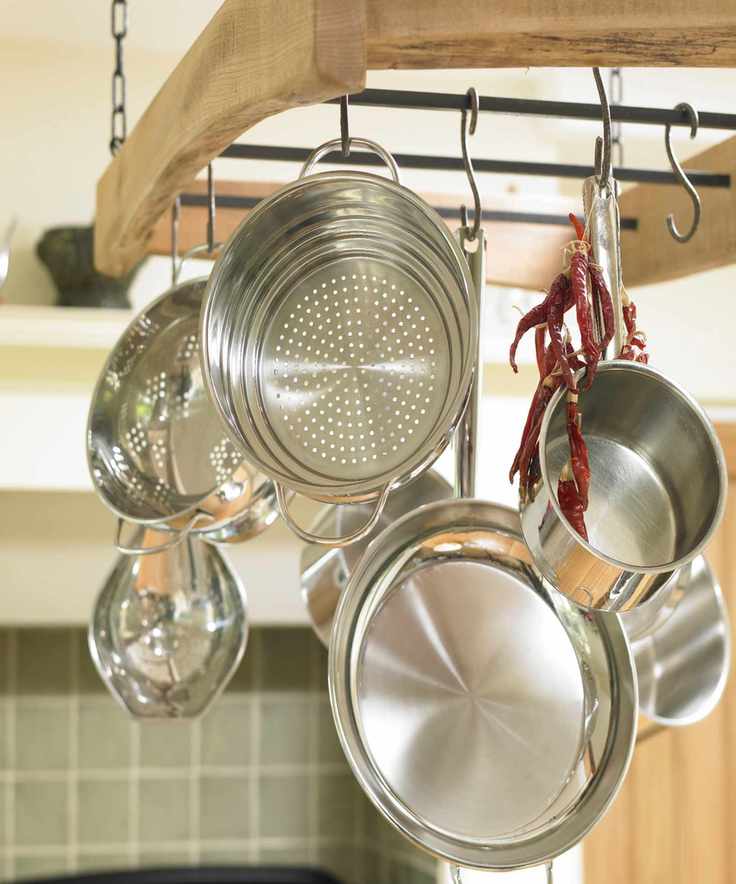
Take cues from a chef’s kitchen by suspending pots and pans from the ceiling. This method not only saves cabinet space but can also become a decorative feature in your kitchen.
“There are numerous options for hanging pots that can serve as a design element in the room. Pot rails can be mounted on walls, cabinets, or islands, while pot racks provide high storage similar to what you’d find in a professional kitchen,” states Daniel Bowler, director of Eggersmann UK.
Organize your cookware by size and function to make it easy to prepare meals for larger groups. However, if you rarely entertain, this may not be the best solution for you — regular use is the best way to keep them dust-free.
9. Store Lids Separately
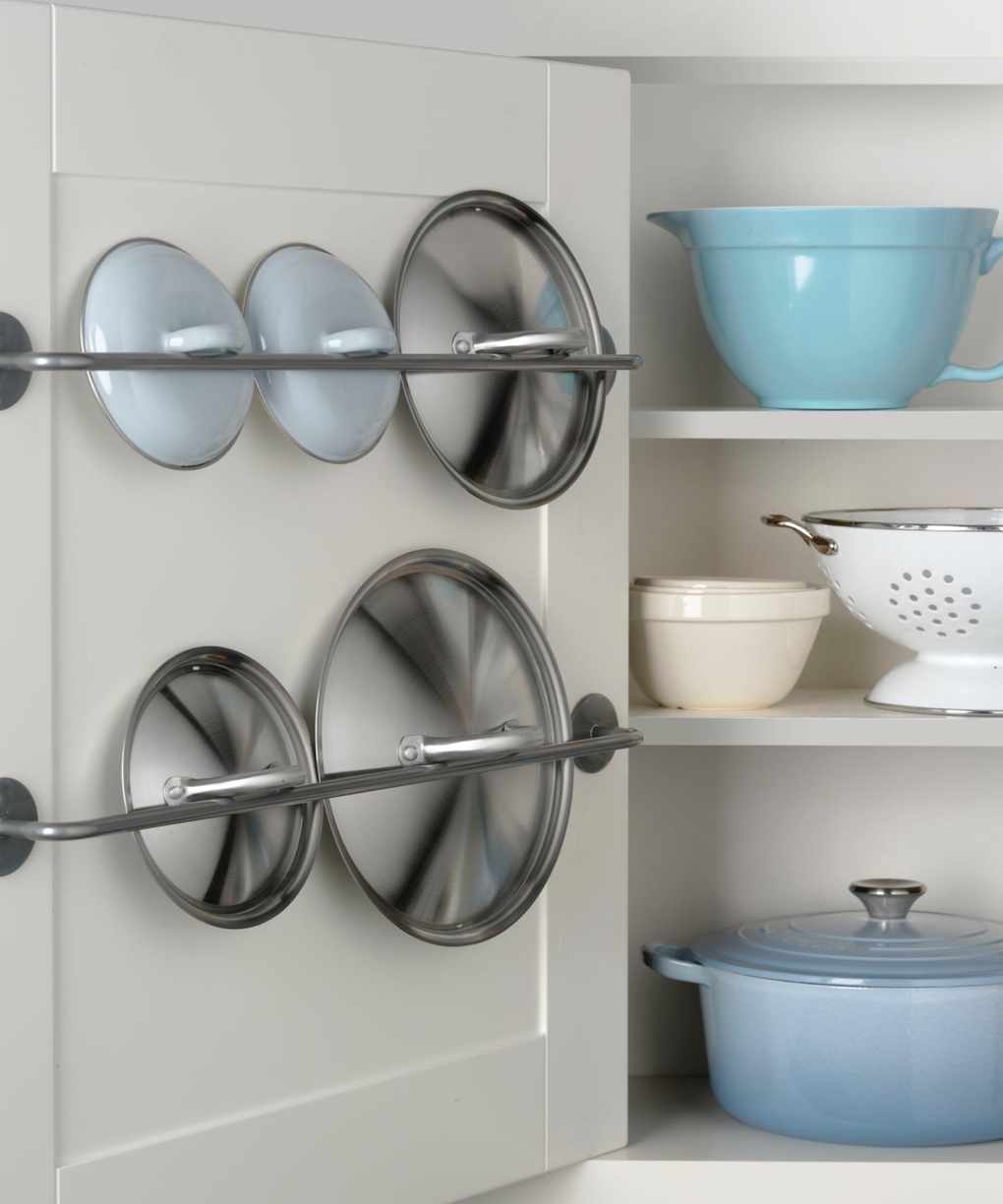
Keeping pots and pans with their lids on is not the most efficient use of space — a consideration worth noting if you're trying to organize a compact kitchen. This method doesn't allow for stacking, and lids can easily get lost or become jumbled in the back of cabinets. Experts recommend storing lids separately for a more manageable organization system.
Consult a kitchen designer about installing custom organizer inserts or inner drawers for lid storage. For a temporary solution, professional organizer Vicky Silverthorn of You Need a Vicky suggests mounting a rack on the back of the cabinet door to hold lids. Position them opposite their corresponding pots for quick matching.
If you keep pots and pans in deep drawers, consider stacking lids vertically on one side, using tension rods to keep them organized.
10. Stack Cookware Wisely
While stacking pots and pans can save space, it can also lead to difficulty in accessing them. Ideally, you should minimize stacking; however, if necessary, establish an effective stacking system.
First, categorize your cookware by type, such as frying pans, saucepans, and casserole dishes, and then stack them by size with the largest on the bottom. You can stack them inside one another or, if you have the vertical space, keep lids on pots upside down to create a flatter surface for the next pot. Use protectors between each pot and pan to prevent scratches.
“Consider investing in multi-functional or stackable cookware sets instead of keeping mismatched pans that don’t fit together, which can save a significant amount of space,” suggests Joanna Thornhill, an interiors stylist, writer, and author of The New Mindful Home (Laurence King Publishing).
How Can You Neatly Organize Pots and Pans?
To neatly organize your cookware, streamline your collection by eliminating duplicates and prioritizing versatile items to create a manageable everyday set. Store less frequently used cookware separately.
Group your pots and pans by type: frying pans, saucepans, casserole dishes, etc., for easy access. Stack them by size, starting with the largest at the bottom. If you have vertical space, flip lids upside down to create a smooth surface for stacking additional pots. Use internal pan racks and risers in cabinets, and line drawers with pegboard to keep everything organized.
Store lids separately. Slim inner drawers above your pots and pans are ideal for this, but if that’s not an option, consider an over-the-door rack for lids or stack them vertically in drawers with dividers or tension rods.
If you choose to display your pots and pans, arrange them by size and function, and maintain organization to avoid a cluttered appearance.
Where Should You Store Pots and Pans?
Your cookware should be stored as close to the stove or cooktop as possible, regardless of whether you’re organizing a small or large kitchen — this is essential for smooth operation, so keep this in mind when deciding on storage locations for your pots and pans.
Deep drawers are often the best storage solution, providing ample space for bulky pots and pans, and they pull out entirely, allowing you to easily see what you have. This space also accommodates organizational tools like risers, dividers, and inserts. Slim inner drawers positioned above are great for storing lids separately.
Pots and pans can also be placed in cabinets, but consider adding pull-out racks that slide all the way out, especially in corner units, for better functionality — no one wants to rummage through the back of a dark cabinet searching for lost lids!
Additionally, you might opt to showcase your pots and pans on open shelves, ceiling-mounted racks, or hanging from rails. Remember, these options require regular organization to ensure your kitchen remains tidy.