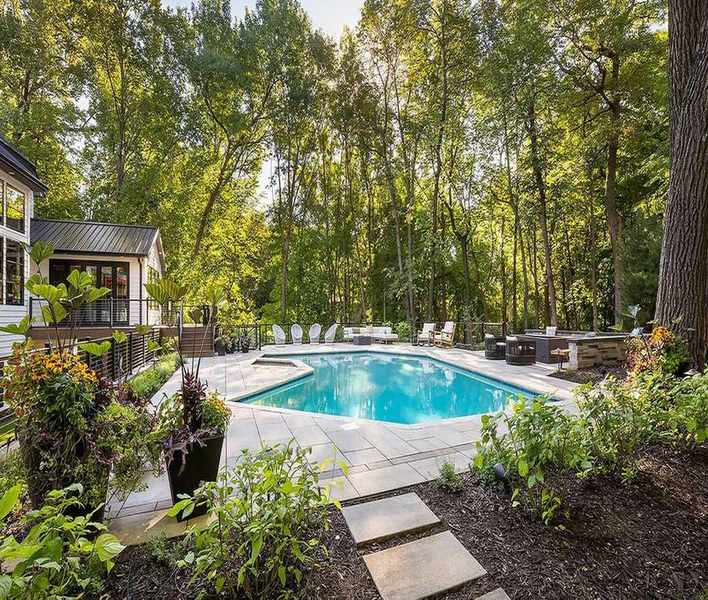
Trees can enhance your poolside with shade and beauty, yet some types are best kept at a distance. They may require excessive upkeep or lead to debris that clutters your pool. In certain cases, they even present safety hazards.
Some tree species require considerable maintenance to keep them manageable. Others generate a lot of litter, meaning you'll constantly be clearing out your pool or cleaning the surrounding patio. Some varieties can also be risky if you have children playing nearby.
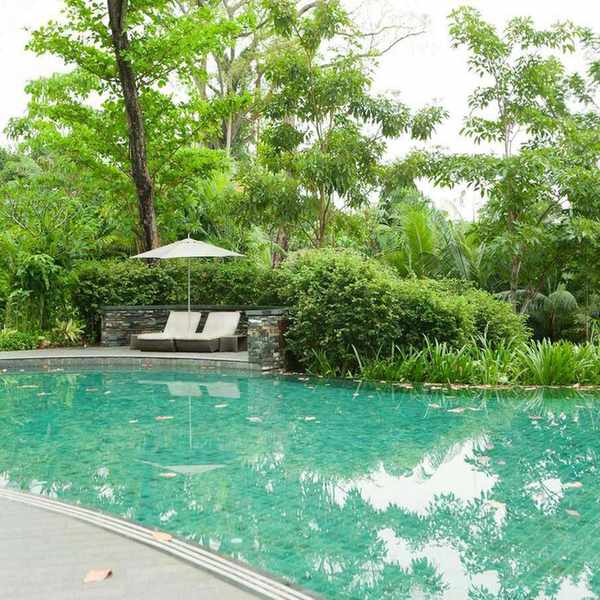
Large trees can shed many leaves into your pool area
5 Trees to Steer Clear of Near Your Pool
If you're considering adding trees to your pool landscaping, here are some types to avoid.
1. Messy Trees
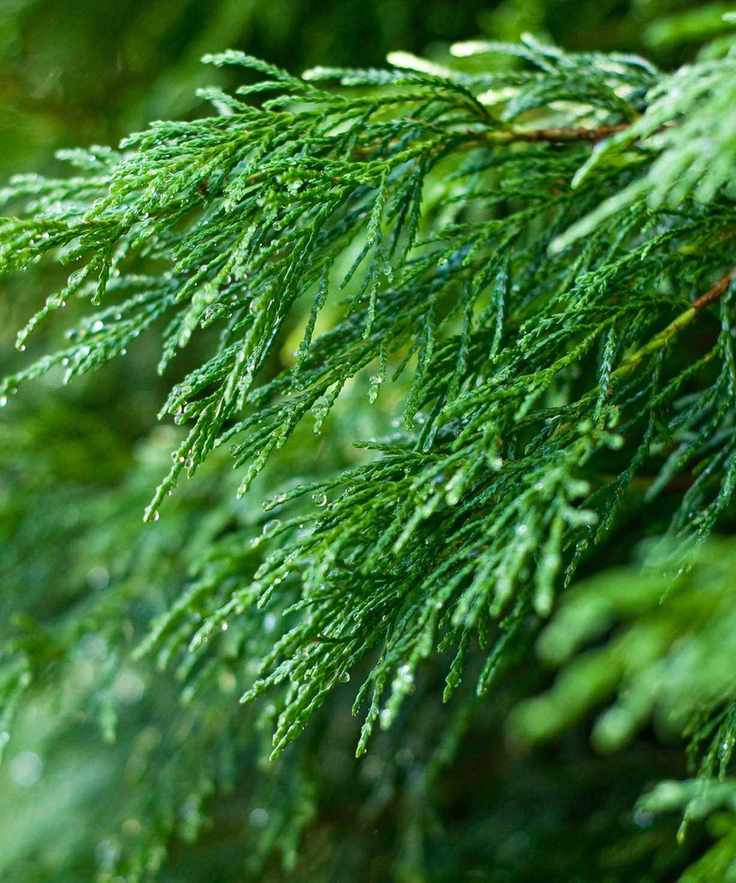
You want your pool to sparkle, but some trees complicate pool maintenance. Leaf drop from coniferous trees like pines and spruces can make cleanup a headache. 'Their needles can slip through skimmer nets and be a tripping hazard,' explains a landscape expert. Additionally, pine trees often produce sticky sap that complicates cleanup.
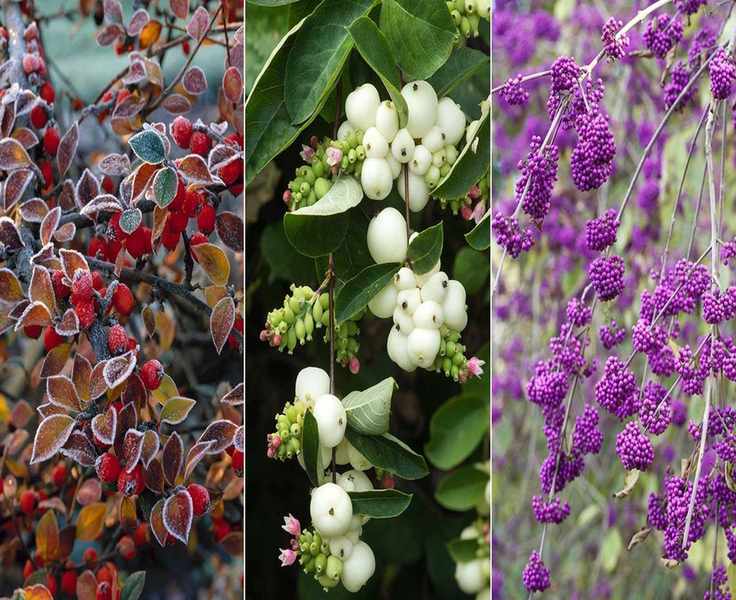
Berry-producing trees can also create issues, as they stain pool surfaces and attract birds. This leads to more droppings around your pool area. Cottonwoods are another no-go, shedding cotton-like seeds everywhere.

2. High-Maintenance Trees
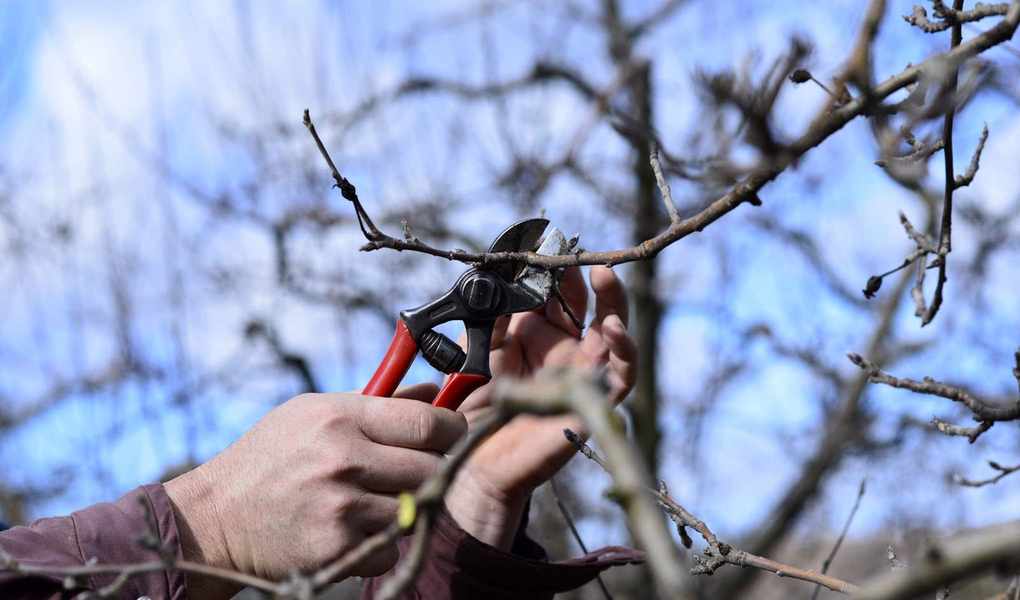
Fast-growing species often require consistent pruning. Leyland cypress, commonly used for hedges, requires trimming at least once or twice annually. Neglecting them can lead to overgrowth, which may necessitate hiring professionals, adding to your costs.
Other trees like poplars and willows aren't suitable near pools or homes due to their rapid growth and high maintenance needs.
3. Safety Risk Trees
Some trees can compromise pool safety for various reasons. Sweet gums drop spiky seed pods that can hurt bare feet. Trees with thorny trunks or sharp leaves, such as acacias and yuccas, should be planted away from lounging areas.
Toxic varieties, including yews with poisonous berries, should also be avoided for family safety. Additionally, trees prone to branch drop, like tulip trees and poplars, shouldn't be planted near pools.
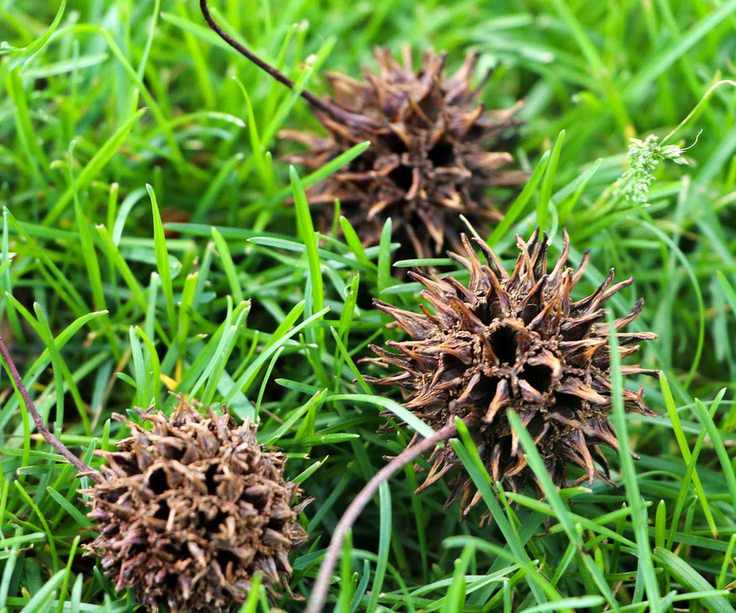
Sweet gum seed pods can be quite sharp
4. Trees with Invasive Roots
Joseph warns that large species like maples, oaks, and sycamores are best kept away from pools. Their roots can invade concrete, damaging walls and plumbing.
Silver maples, American elms, and willows also have aggressive root systems, which continuously seek water, causing potential damage.
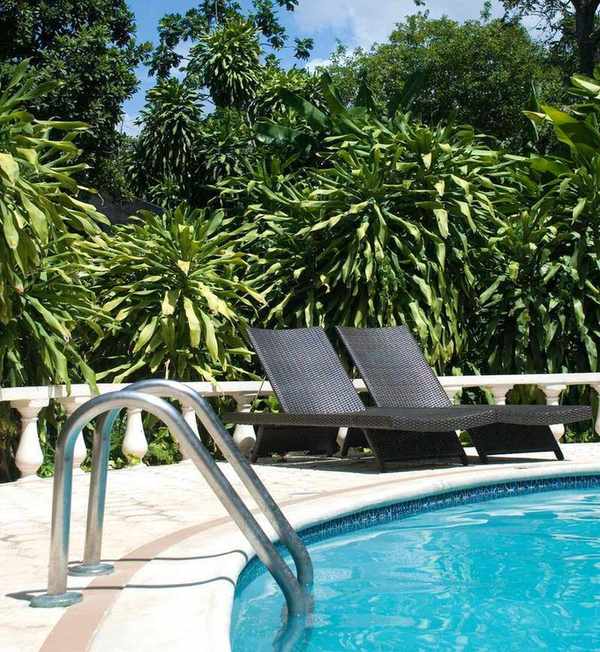
Avoid trees with invasive roots to protect your pool
5. Trees That Cast Too Much Shade
While some shade is beneficial, excessive shade can darken your pool area. Eucalyptus trees, for example, drop debris and can block sunlight as they grow, altering the ambiance.
Consider using patio shade solutions instead of relying solely on trees, as these can provide more versatile coverage.
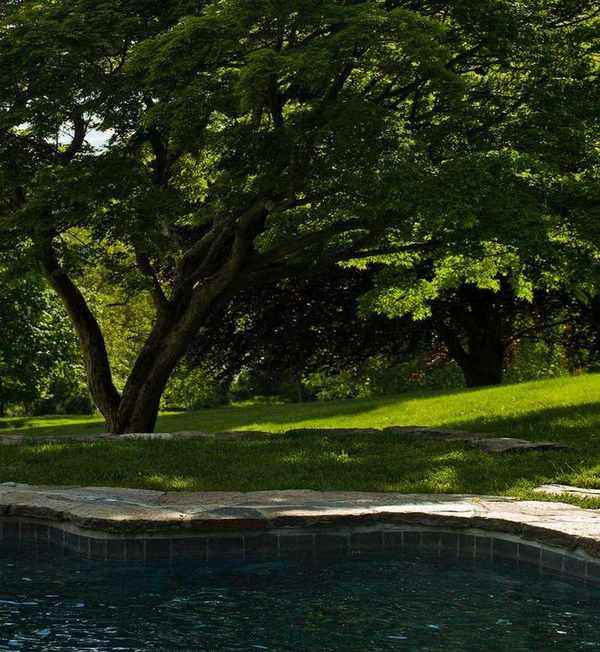
Excessive shade can spoil your pool's inviting atmosphere
FAQs
What Are the Best Trees to Plant Near a Pool?
For a pleasant atmosphere around your pool, opt for smaller tree species and shrubs like kousa dogwood, crepe myrtle, and saucer magnolia.
Alternatively, palms such as the slow-growing sago palm are excellent choices, as they produce minimal debris and have shallow roots. Sago palms can even be potted for flexibility in your pool area. You can find sago palms from Fast Growing Trees.
In addition to trees, consider various plants for your pool area.
How Far Should Trees Be Planted from a Pool?
Generally, it's advised to plant trees at least 5 feet away from the pool's edge, though this can vary based on the species and root aggressiveness. Remember, tree roots often extend as wide as the canopy, so check mature size guides before planting.
If you choose to plant near your pool, regular maintenance is essential. 'Routine pruning and a plant health care regimen are vital to minimize issues,' Joseph suggests.
Also, avoid watering nearby trees with pool water, since pool chemicals can harm them.