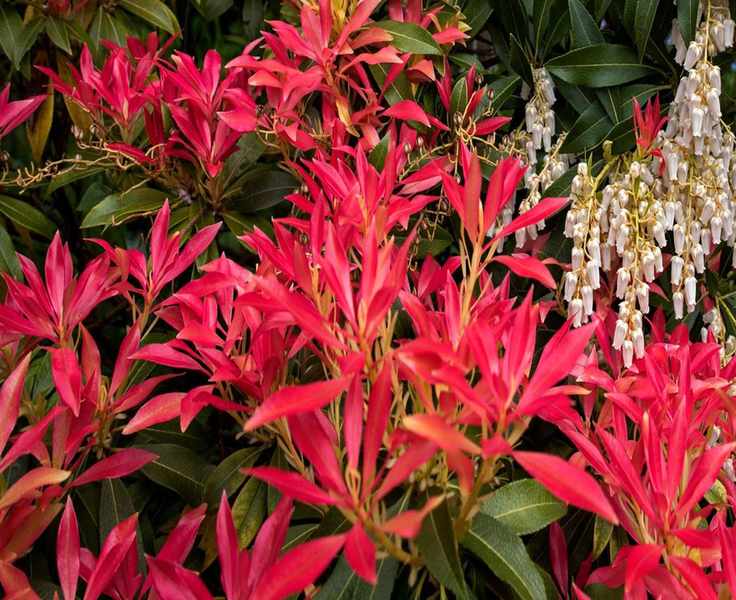
Pieris, or andromeda bushes, are hardy evergreen shrubs known for their striking foliage and year-round appeal. These plants blossom into well-branched shrubs showcasing two colorful features.
During winter and early spring, pieris develop clusters of buds, particularly enchanting in red-tinted varieties. As spring arrives, these buds transform into nodding flowers reminiscent of lily-of-the-valley. Concurrently, many pieris varieties display fresh growth in bright red or rich bronze, creating a captivating spring display.
These adaptable evergreen shrubs thrive in lime-free soil. If you can cultivate rhododendrons, you'll find pieris equally manageable. They shine in mixed borders, modern gardens, vibrant flower beds, and well-placed patio arrangements. Additionally, they flourish in containers when soil conditions are less than ideal.
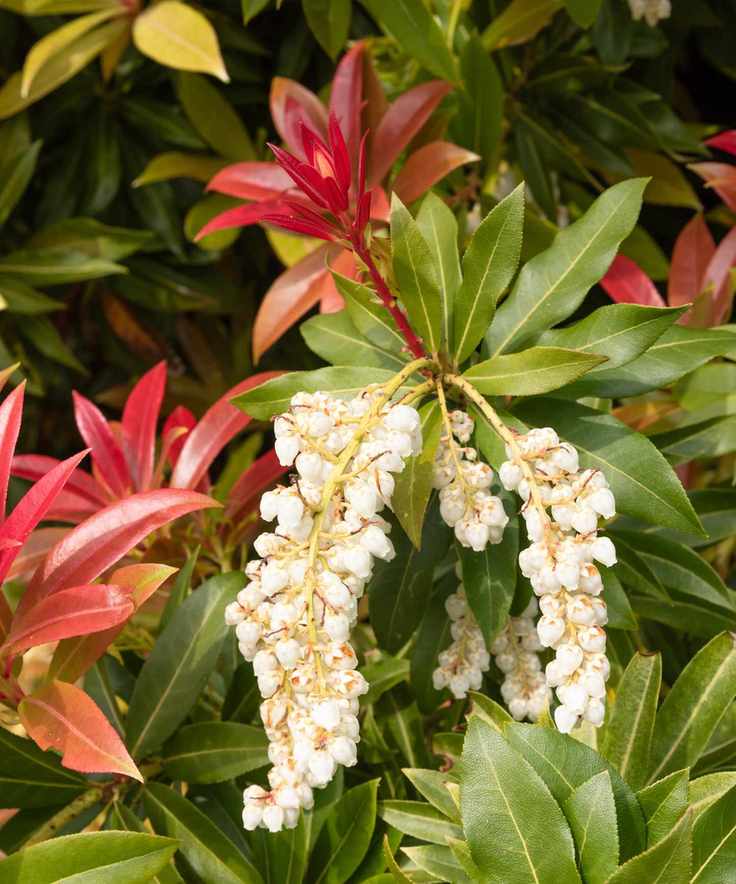
Pieris 'Wakehurst' boasts flowers and red foliage emerging together
Key Facts About Pieris
- Plant type: Evergreen flowering shrub
- Mature size: 3-6ft
- Soil type: Well-drained soils
- Soil PH: Slightly acidic to acidic
- Best planting time: Spring, fall
- Bloom time: Spring
- Flower colors: White, pink, red
- Hardiness zones: USDA Z5-9
- Scientific name: Pieris
- Common names: Andromeda bush, lily-of-the-valley bush, Japanese pieris, mountain pieris
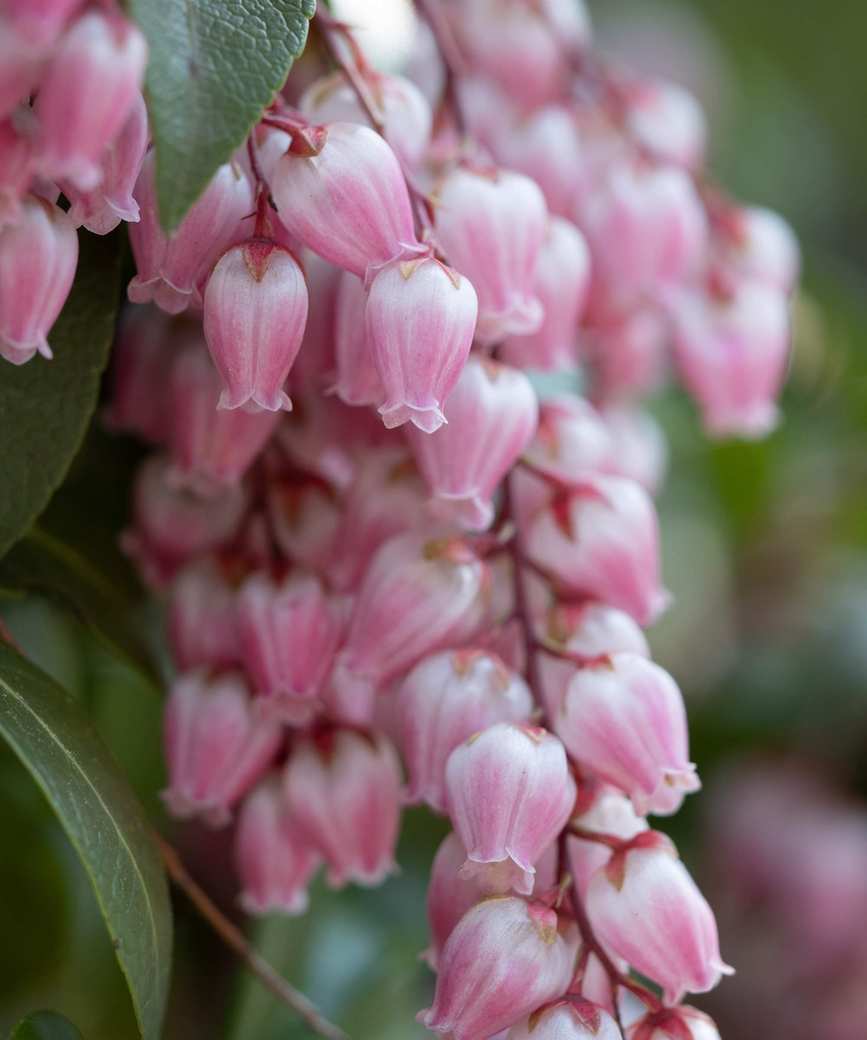
Some pieris varieties produce lovely pink-tinted flowers
Main Types of Pieris
Pieris are excellent for adding drama to your garden, whether planted in groups or as individual specimens. In March and April, plants showcase elegant clusters of bell-shaped flowers in colors ranging from pure white to deep rose-red.
Pieris are categorized into two main types based on their origins.
- Native pieris (fetterbush): The slow-growing Pieris floribunda is native to the east and provides food for local moth caterpillars. This variety resists lacebugs, a common issue for other pieris. Its white spring flowers are either upright or slightly drooping, distinguishing it from the Japanese pieris, whose blooms hang down. A rare climbing relative, P. phillyreifolia, is found in the far southeast.
- Japanese pieris: Two Asian species, P. formosa and P. japonica, are often collectively referred to as Japanese pieris. These varieties boast larger flower clusters and vibrant new growth, making them ideal for low-maintenance border ideas. However, they may face challenges from lacebugs.
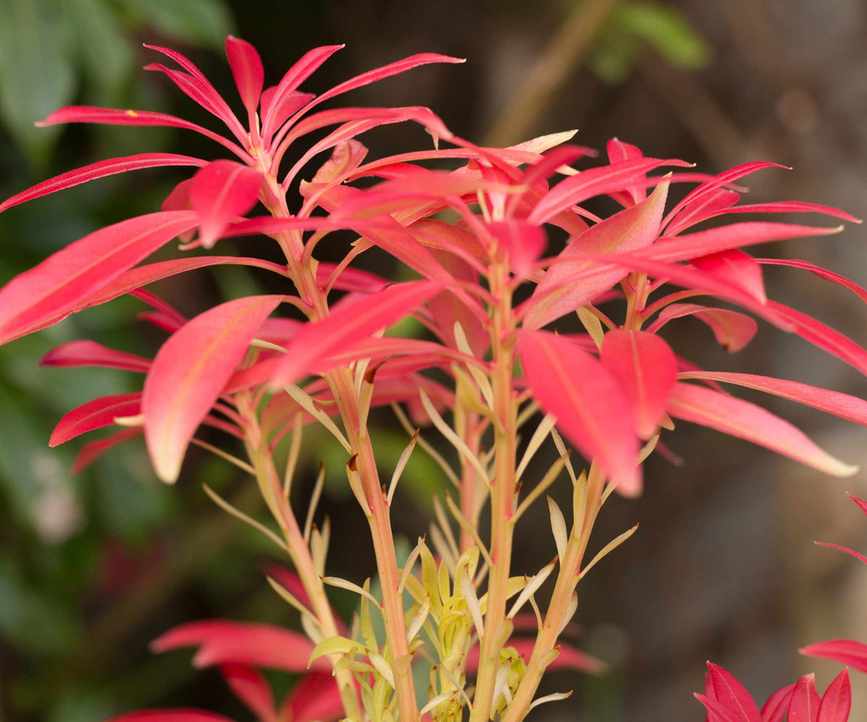
Pieris japonica 'Mountain Fire' features stunning new growth
Selecting the Right Pieris for Your Space
While most pieris produce white flowers resembling lily-of-the-valley, some varieties offer blooms in pale pink, rich pink, or vivid red. Pink and red-flowered andromeda bushes require the same care as white ones.
Consider options like the red 'Interstellar', rich pink 'Enchanted Forest Gay Goblin', and pink-and-white 'Valley Rose'. Think about whether you want pieris for flowers, foliage, garden borders, or pots.
- Pieris for the garden: To achieve dramatic displays, select varieties such as Pieris formosa or P. japonica. 'Wakehurst' features striking white flowers alongside bright red new leaves. Various P. japonica types, including 'Valley Valentine', showcase reddish pink blooms and coppery new growth.
- Pieris for containers: In areas with unsuitable soil, pieris are superb for container gardening. Varieties like 'Flaming Silver' offer year-round variegated foliage and white flowers. 'Passion Party Pink Frost' features creamy variegated leaves and pale pink flowers, while 'Cavatine' is a shorter white-flowered variety. Use a lime-free potting mix.
- Pieris for flowers: For large, eye-catching flower clusters, consider deep red 'Interstellar', rosy red 'Valley Valentine', pink 'Enchanted Forest Impish Elf', white 'Purity', and generous white 'Southern Lady'.
- Pieris for foliage: For colorful new growth during bloom time, explore 'Mountain Fire', which matures to chestnut, and brilliant red 'Forest Flame'. For variegated options, compact 'Little Heath' and 'Flaming Silver' are excellent choices.
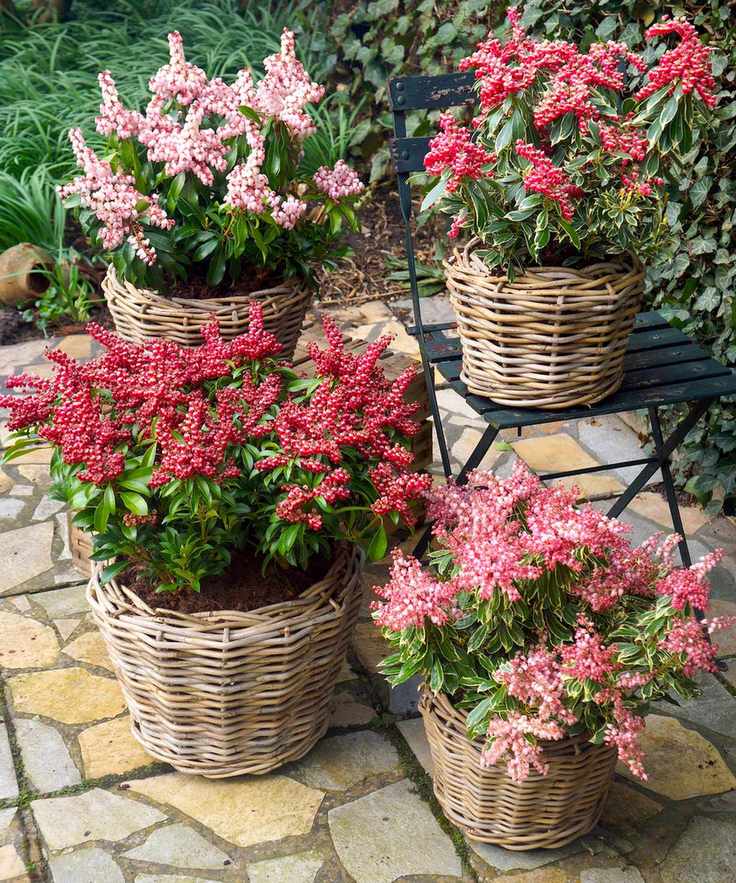
Grow pieris like 'Passion' in pots if your soil isn't acidic
Planting Pieris: Timing and Technique
Growing pieris is straightforward, especially if you have experience with azaleas or rhododendrons. These plants prefer acidic soil. Experts suggest planting in moist, well-drained soil rich in organic matter. Before planting, ensure your soil is healthy and enrich poor-quality native soils with organic compost.
Pieris prefer morning sun with afternoon shade or filtered sunlight. They thrive in full sun in cooler zones (5-7) but benefit from shade in warmer zones (8-9). Mixing pieris with broadleaf evergreens, especially rhododendrons, enhances their growth.
Most pieris are planted in spring when they're most appealing in garden centers. While they don't need special planting care, keep them moist during their first summer. Use lime-free materials for planting, suitable for rhododendrons and azaleas.
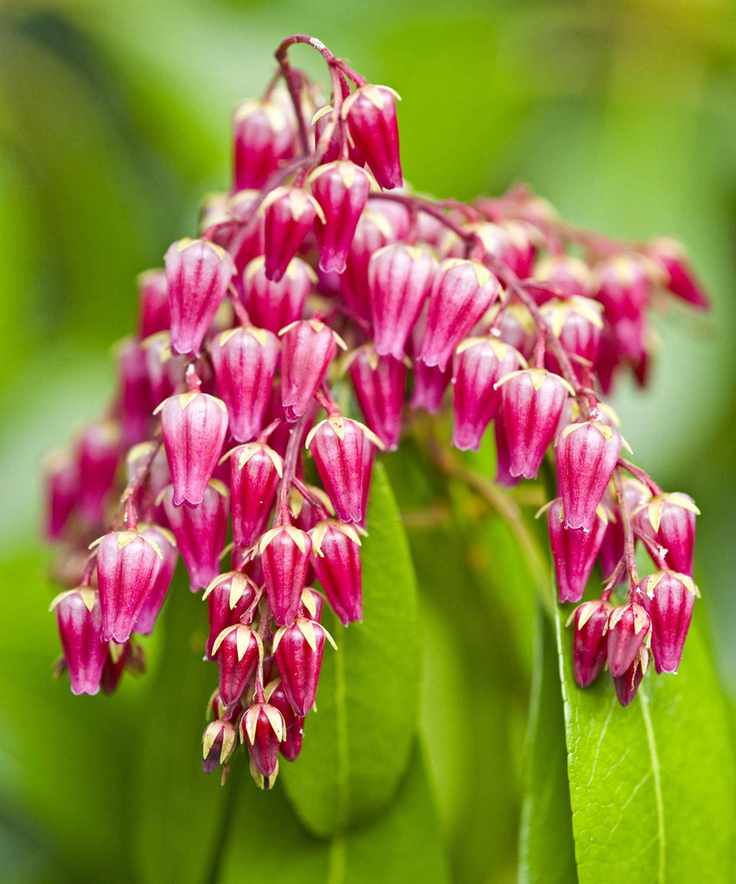
Pieris like 'Valley Valentine' thrive in acidic conditions
Nurturing Your Pieris
Pieris require minimal special care. A spring feed with Holly-tone or another rhododendron-friendly granular feed is recommended in spring or fall. Follow this with a fresh mulch to control weeds and retain moisture during summer.
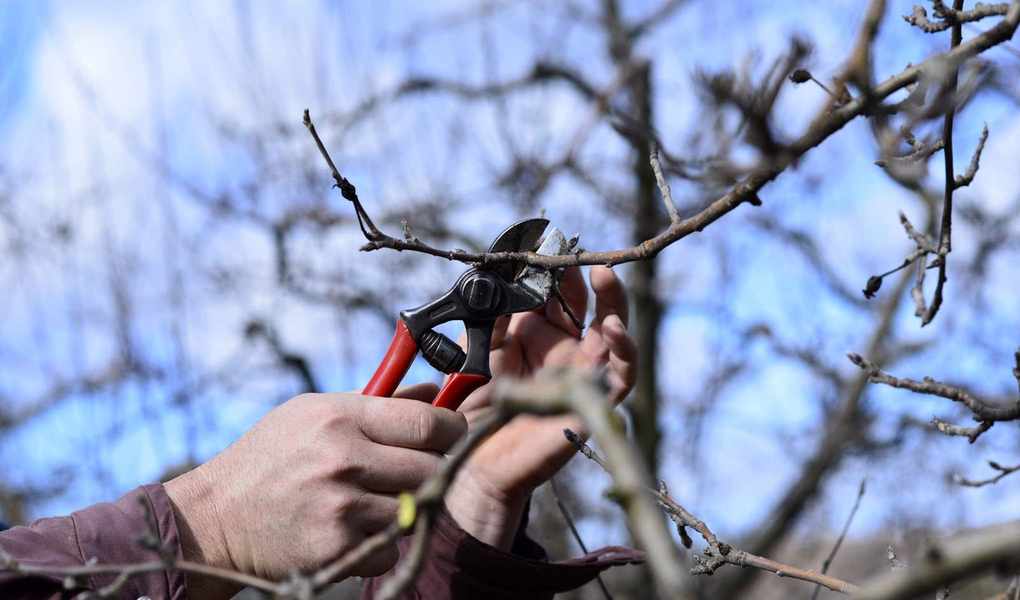
Pieris naturally grow into balanced, bushy shapes, so pruning is seldom necessary. If branches are damaged, trim back to healthy side shoots. Snow may bend branches, requiring some reshaping. Pruning spent flowers improves appearance and conserves energy for growth.
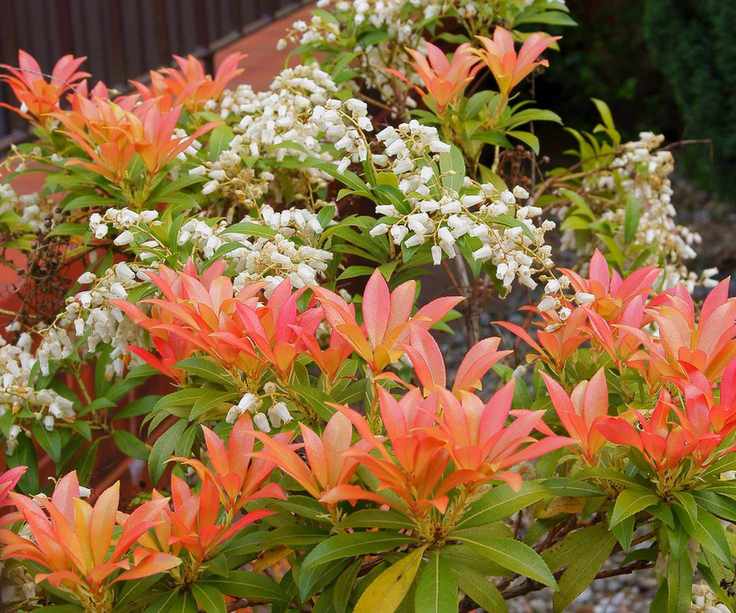
Pieris naturally develop into bushy forms with little shaping needed
Propagating Pieris
For many plants, cuttings are the best way to propagate. However, for pieris, layering is a simple technique to encourage new plant growth while still attached to the parent. This method is ideal for small quantities. Here's how to do it:
- In spring, select a low-growing, pencil-thick branch that touches the ground. Scrape away mulch where it contacts the soil, remove any leaves, and press it into the soil.
- Secure the branch with a bent wire, stone, or half brick. Cover with mulch and water well.
- By fall, roots will form. Cut the stem between the new plant and the parent, and transplant it to a new location.
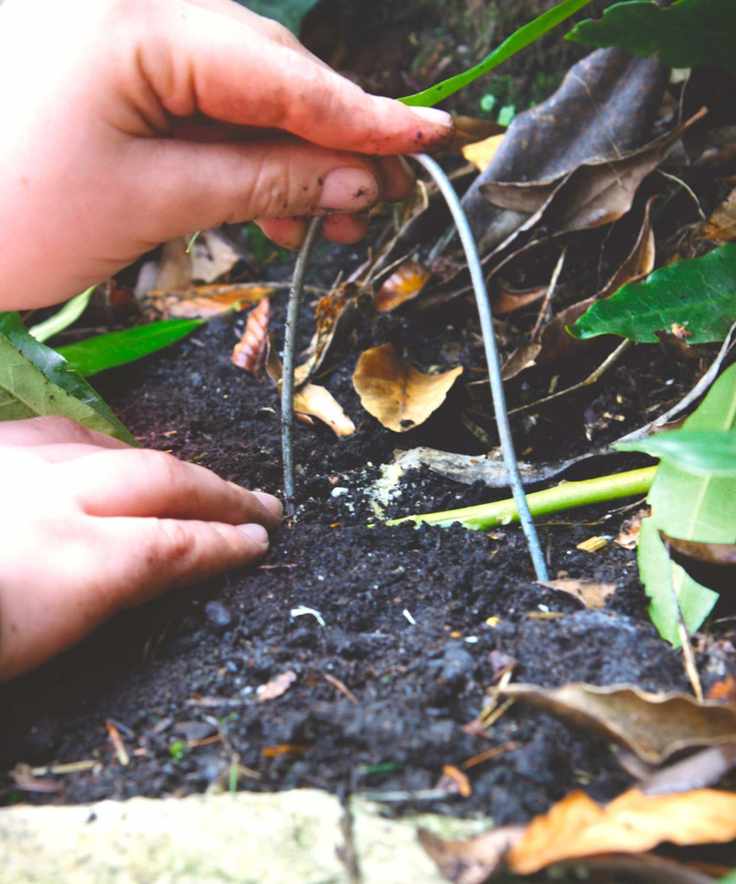
Layering involves securing a stem section just below the soil surface
Common Issues and Solutions
Pieris face few pests or diseases, though the Japanese lacebug has become problematic in recent years. Its larvae feed on sap beneath the leaves, causing pale speckling and discoloration. While affected leaves may drop, plants typically survive, and flowering remains largely unaffected.
To minimize lacebug issues, attract birds and beneficial insects. Insecticides may harm helpful insects as well, so use them cautiously.
Other minor concerns include scale insects and leaf spots, while dieback often results from waterlogged conditions.
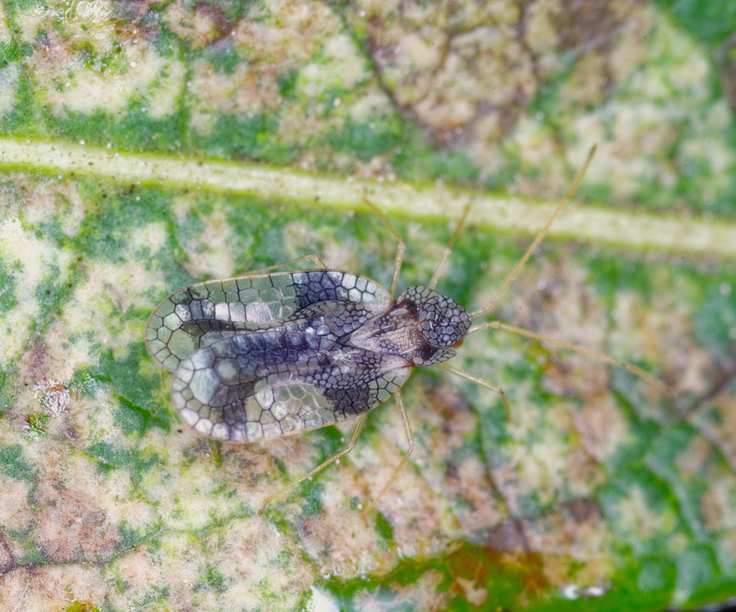
Lacebug damage appears as brown speckles on leaves
FAQs
Do I need to prune pieris?
Pieris typically don't require regular pruning, but rejuvenation may be necessary after significant damage or overshadowing by larger plants. If needed, cut back hard with clean pruning shears in spring, ensuring they don't dry out while new growth emerges.
Can I grow pieris from seeds?
While it is possible to grow pieris from seeds, success isn't guaranteed. In late spring, scatter seeds on the surface of pots filled with lime-free mix, cover lightly, mist with water, and seal in a bag. After a month, seedlings should sprout. Once they reach 2-3 inches, transplant them into larger pots.
Alternatively, if you have a mature pieris, look for tiny plants around your yard that can be moved in spring.
What is the best fertilizer for pieris?
Fertilizers suitable for acid-loving plants work best for pieris. Look for options designed for rhododendrons and azaleas. Holly-tone is widely available online and in stores. Container plants benefit from monthly water-soluble fertilizers during spring and summer.
Are pieris plants deer resistant?
Both native fetterbush and Japanese pieris are considered deer-resistant. Experts at Rutgers University rank them as 'Rarely Damaged', with the native fetterbush (Pieris floribunda) being particularly resilient against deer.
Pieris are available at garden centers and through mail order, often found in spring when in bloom. Retail nurseries typically offer them in gallon containers, while larger specimens may come balled and burlapped.
Mail order options provide a broader selection, with sizes ranging from one to four gallons. Some suppliers allow online orders for local nursery delivery at planting time, making it easier to find the right varieties for your garden.