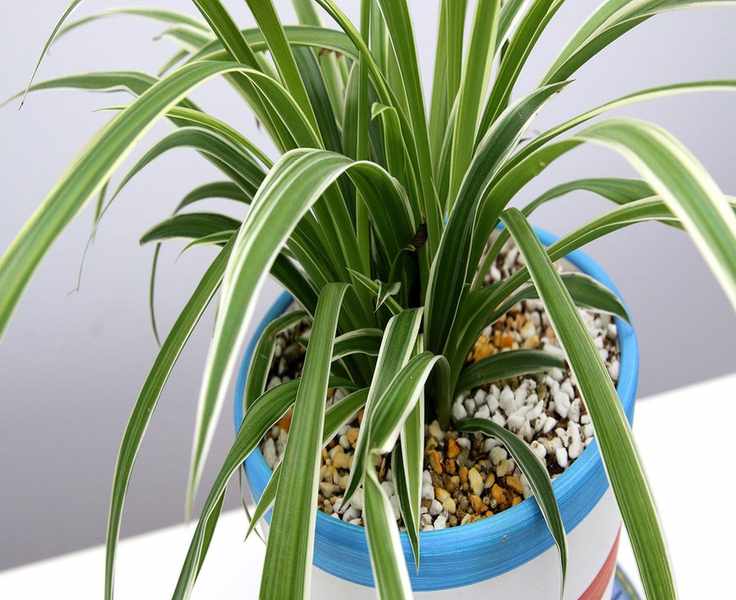
One of the joys of growing spider plants is how effortlessly they can be propagated. These plants naturally produce small offshoots known as plantlets, allowing you to expand your collection with minimal effort.
Simply trim these plantlets, root them, and you'll have a lovely new spider plant to nurture. If your plant lacks visible plantlets, division is another effective method to quickly multiply your stock.
For anyone seeking a resilient, low-light indoor plant that enhances any space year-round, spider plants are an excellent choice. Their scientific name is Chlorophytum comosum, and they've been beloved since the 1970s.
Methods for Propagating Spider Plants
There are two primary approaches for adding to your spider plant collection.
The first method involves plantlets, which are commonly used for indoor plant propagation. In suitable conditions, spider plants produce these small offshoots along their long, arching stems. While they naturally spread in the wild, you can easily snip them off to root them indoors.
When plantlets are unavailable, division can be your go-to option. This technique entails splitting your existing plant into multiple sections, which can be replanted to thrive independently. While it won't yield entirely new plants, it's a fast way to increase your quantity.
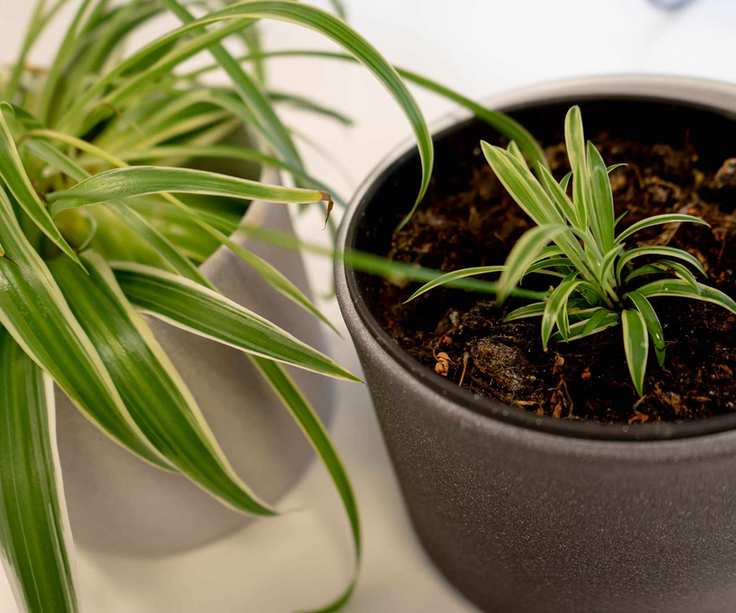
Propagation can result in numerous mini spider plants for your home.
Dividing Spider Plants for Propagation
The easiest method is division. This can even coincide with repotting, accomplishing two tasks at once. You'll need a fresh container (or containers) and suitable potting soil.
- Carefully take the spider plant out of its pot. If it's stuck, squeeze the pot or carefully run a knife along the edges.
- Gently separate the roots and remove some of the old soil.
- Look for sections with a healthy root system to ensure they can survive independently.
- Carefully separate the sections. If they resist, use clean shears to cut tangled roots.
- Replant each section in its own container filled with light, airy potting soil.
- Water each new plant and treat them like mature spider plants.
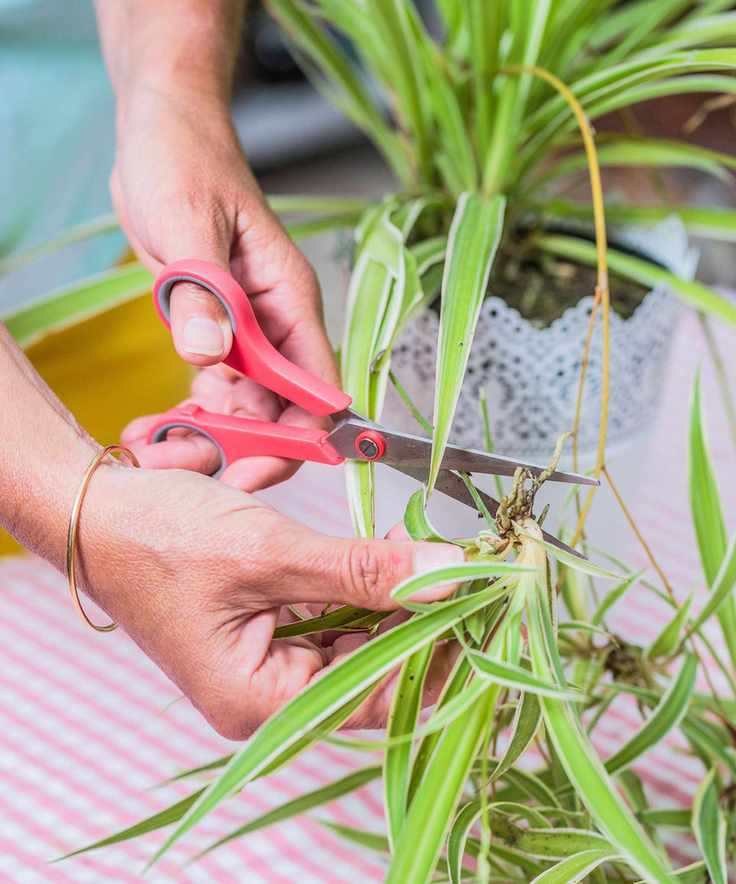
Trim tangled roots when dividing or cutting plantlets.
Propagation of Spider Plants Using Plantlets
1. Remove a Plantlet
Start by using sharp pruning shears. It's wise to sanitize your shears beforehand to prevent the transfer of bacteria.
Next, find arching stems with plantlets. Choose plantlets that are sufficiently large to thrive independently, ideally those with small starter roots, making them perfect for propagation.
You can remove one plantlet at a time or snip an entire stem, keeping in mind that the parent plant can produce more plantlets later. Cut as close to the base of the plantlet as possible, ensuring not to damage it, as this may hinder rooting.
2. Rooting in Water
To promote root development, use a glass of water and place it in a well-lit area. Spider plantlets root effectively in both water and soil, though water is often easier. Just ensure only the bottom of the plantlet is submerged to prevent it from toppling in soil.
To root your spider plantlet, you have two methods. One involves using a narrow glass with a small amount of water. Insert the plantlet, keeping leaves clear of the water to avoid rot.
If you lack a suitable glass, use plastic wrap over a filled glass, making a hole for the plantlet to fit through. This keeps the leaves dry but requires monitoring to replace evaporated water.
Whichever method you choose, ensure that only the base of the plantlet is submerged. Extended exposure of leaves to water can lead to rot.
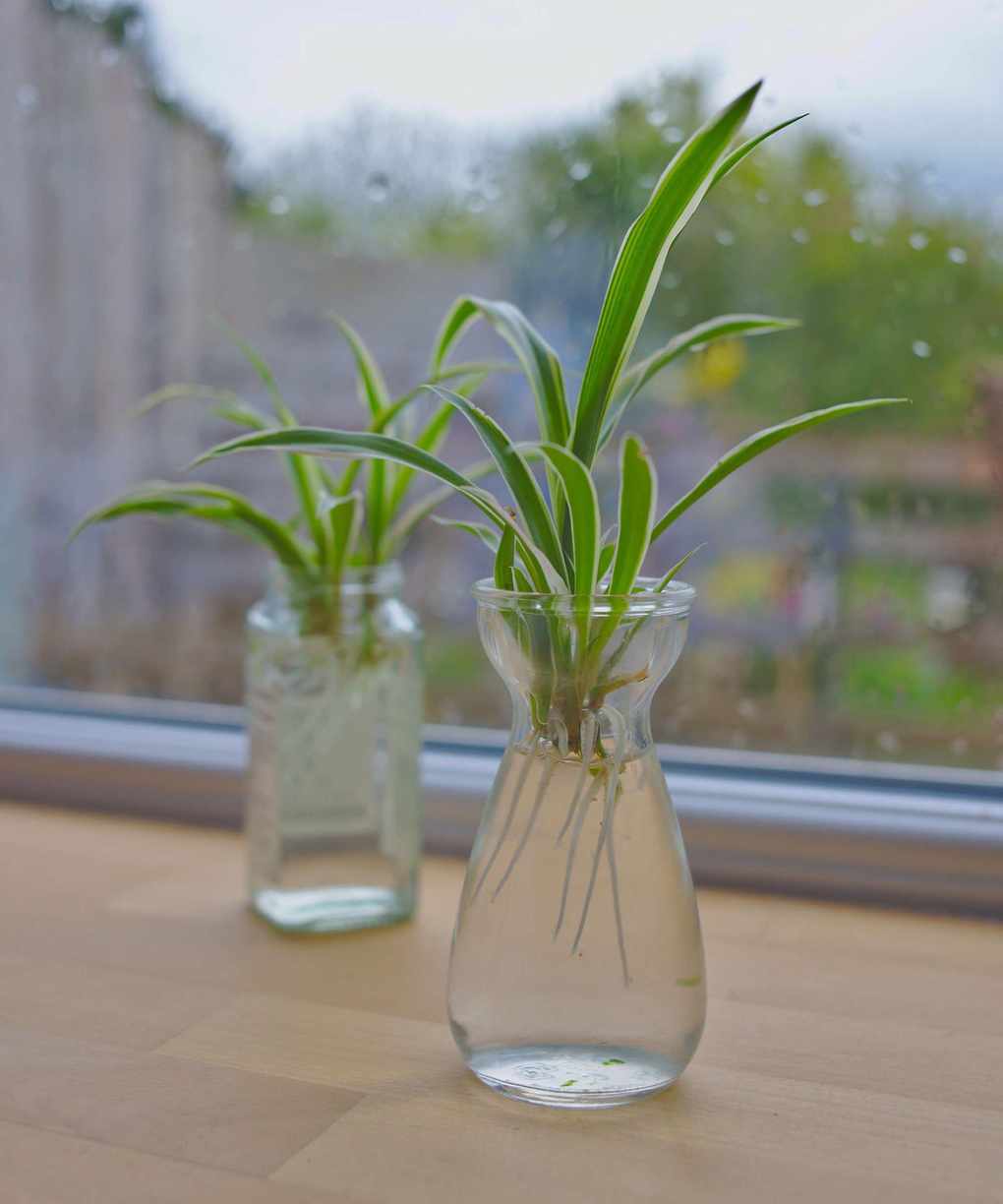
Rooting plantlets in water is a great first step before transferring to soil.
3. Caring for Your Plantlet
Place the glass in a warm, bright spot to encourage root growth. While gentle morning sunlight is beneficial, avoid direct sunlight during peak hours to prevent leaf scorch.
Regularly top up the water to maintain the level just above the plantlet base. Replace the water weekly and clean the glass to deter bacteria.
Within weeks, you'll likely notice roots reaching into the water. For robust plantlets, roots can develop in as little as seven days. Once the roots are several inches long, they're ready for transplanting.
4. Transplanting the Plantlet
Since water lacks nutrients, spider plants can't stay in water indefinitely. They must transition to soil for sustained growth. Waiting too long to transplant can hinder root adaptation to soil conditions. When the roots are long enough to support the plant, it's time to move on.
Prepare a small container with houseplant potting mix, such as Miracle Gro indoor potting mix available on Amazon. If unavailable, a blend of two parts potting soil, one part coconut coir or peat moss, and one part perlite also works well.
Create a small hole in the soil to place the plantlet, burying just the base and roots. Water immediately to encourage downward root growth. Ensure the container has drainage holes to allow excess moisture to escape.
After transplanting, your spider plant may wilt or yellow for a week or two while adjusting to its new environment. Afterward, you can care for your new spider plant just like its parent.
Which Propagation Method is Best?
Both methods are straightforward and yield high success rates. Your choice will depend on your plant's condition and your propagation goals.
Propagation from plantlets is an option only if your spider plant produces sufficiently large plantlets. This typically happens when the plant is well-cared for with adequate light, water, and nutrients.
If your plant lacks plantlets, division is your only choice. As long as it's large enough to split into sections with healthy roots, you should succeed. However, this method limits the number of new plants compared to the potential of multiple plantlets.
Frequently Asked Questions
When is the Optimal Time for Propagation?
Spider plants grow roots fastest during their active seasons in spring and summer. Early spring is prime time for propagation, though any time in the growing season can be effective. If you maintain warmth, propagation is possible in cooler months, but root growth will be slower, increasing the risk of rot.
With many benefits of spider plants, using these methods to generate extra plants for free makes them a fantastic addition to any collection. Whether you choose division or plantlets, you'll soon enjoy a thriving array of mini spider plants in your home. You can also leave some offshoots attached for a cascading spider plant look.