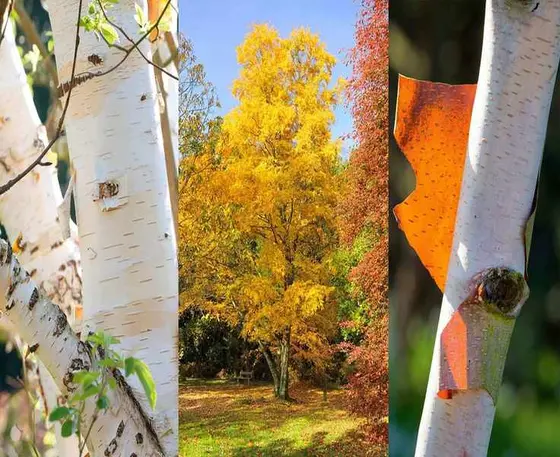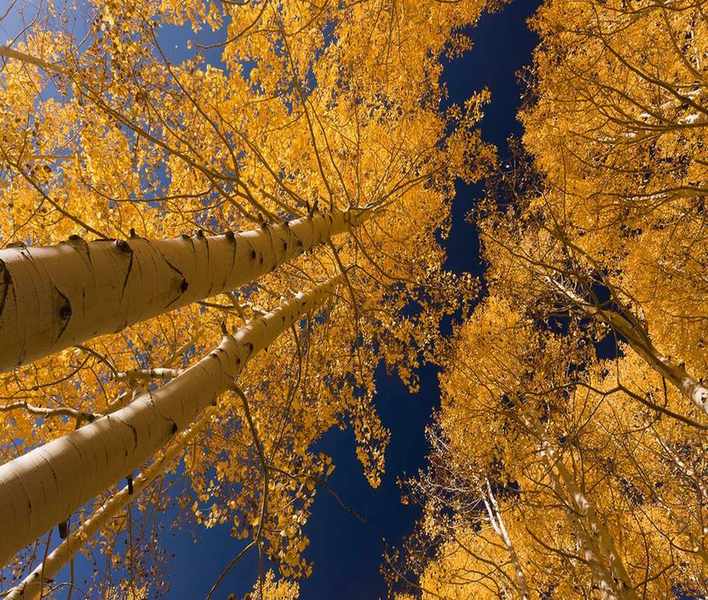
As autumn approaches, the breathtaking sight of golden leaves on white-barked trees can be seen in various U.S. national parks. These magnificent trees are likely Populus tremuloides, commonly known as quaking aspens, native to North America. They flourish in cooler climates, extending from Canada down to central Mexico.
Quaking aspens are tall, eye-catching deciduous trees with pale, birch-like bark that contributes to their radiant appearance in natural landscapes. The name "quaking aspen" derives from the distinctive fluttering of their leaves, which creates a beautiful sensory experience of movement and light. This unique quaking effect is attributed to the slender leaf petiole, making the leaves highly responsive to even the gentlest breeze.
Similar to other members of the Salicaceae family, quaking aspens grow rapidly, gaining up to 6 feet in height each year. However, they have a relatively short lifespan. Fortunately, these trees produce suckering shoots that replace the original tree upon its death. As a native species, quaking aspens are not only visually stunning in the fall but also support various wildlife, serving as a food source for animals such as beavers, deer, moose, elk, rabbits, and a variety of birds, butterflies, and moths.
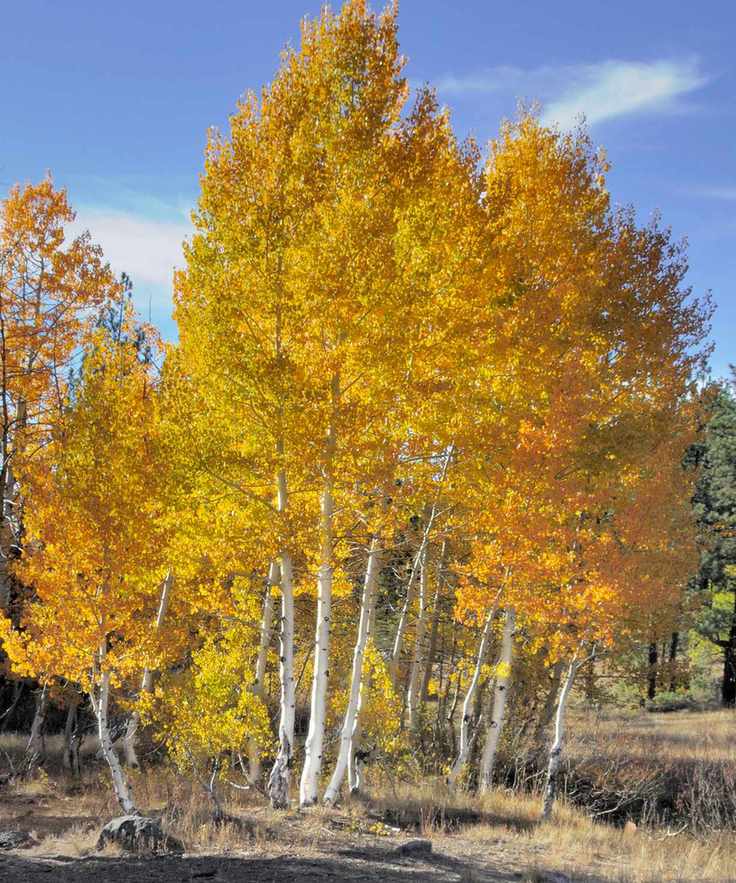
The vibrant autumn foliage of quaking aspens is a striking feature.
Key Facts About Quaking Aspen
- Plant type: Deciduous tree
- Mature size: Height: 50 ft; Spread: 30 ft
- Soil type: Fertile, moist but well-drained woodland soil
- Soil pH: Acid to alkaline
- Best planting time: Fall
- Flowering season: Spring
- Flower color: Pale catkins
- Hardiness zones: USDA 2-8
- Scientific name: Populus tremuloides
- Common name: Quaking aspen
Types of Quaking Aspen
While no specific cultivars of quaking aspen exist, the tree can hybridize with closely related species such as the bigtooth aspen, Populus grandidentata, and white poplar, Populus alba.
When choosing quaking aspens, ensure you do not select the similarly named Populus tremula, a European counterpart better suited to temperate climates across the Atlantic. This species shares many features with its North American relative, including fluttering leaves, vibrant yellow fall colors, and male and female catkins in spring.
A fastigiate cultivar of the European quaking aspen, Populus tremula 'Erecta', exhibits a narrow, upright growth habit, making it ideal for boundaries or urban settings.
Using Quaking Aspen in Your Landscape
Quaking aspens are not suitable for small gardens and thrive best in spacious backyards, especially those with a more natural, woodland character. To fully appreciate their beauty, plant these trees in groups of three or more, spaced approximately 10 feet apart. They can be arranged in a row or as a casual grove to create a stunning display of golden fall colors.
Many nurseries recommend opting for male trees, as the fluffy catkins produced by females can create a mess in neatly kept gardens. Additionally, ensure that the trees are planted away from buildings and garden paths, as their spreading roots may disrupt hardscapes and other structures.
To achieve a naturalistic environment for quaking aspens, consider landscaping around them with native understorey shrubs and perennials typically found alongside wild aspens. Depending on your region, suitable companions may include American hazel, Corylus americana, alders like Alnus rugosa, red-osier dogwood, Cornus sericea, serviceberry, Amelanchier alnifolia, common juniper, Juniperus communis, Oregon-grape, Berberis repens, and elderberries such as Sambucus pubens.
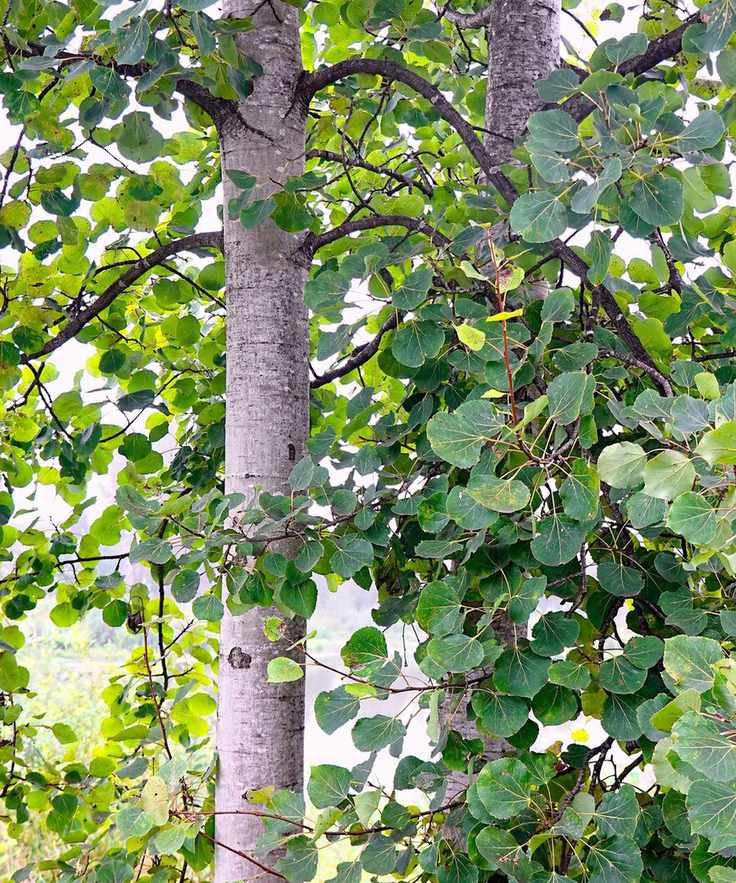
Quaking aspens, being tall and fast-growing, are best suited for larger yards.
Planting, Timing, and Techniques
Quaking aspens typically flourish in damp, sunny areas across the northern and western United States, although they can adapt well to similar conditions in Asia and Europe. However, they do not tolerate extreme summer heat or urban pollution, making them more suitable for expansive landscapes.
The ideal time to plant a bare-root quaking aspen is in the fall, when the soil is warm, soft, and adequately moist, allowing new roots to establish before the growing season. Julie Janoski, a plant clinic manager at The Morton Arboretum in Chicago, notes that these trees can also be planted during spring and fall, as long as weather conditions are favorable due to their fibrous root systems.
To plant your tree, dig a hole that is both wider and deeper than the root ball, incorporate well-rotted compost, and backfill with soil, ensuring it is compacted around the tree's base. A stake may be needed for young saplings, particularly in open areas where they could be susceptible to wind damage. Water the newly planted tree thoroughly and maintain regular watering until it is well-established.
Care Recommendations
After planting your quaking aspen sapling, provide adequate water for the first couple of years, particularly during dry spells, to help the young trees establish themselves. To control growth, remove any suckering shoots that emerge from the roots.
Once established, quaking aspens require minimal maintenance concerning feeding and pruning. However, mulching in the spring can help reduce stress on the tree. Take care not to damage the bark or roots during routine maintenance, as this can lead to fungal diseases.
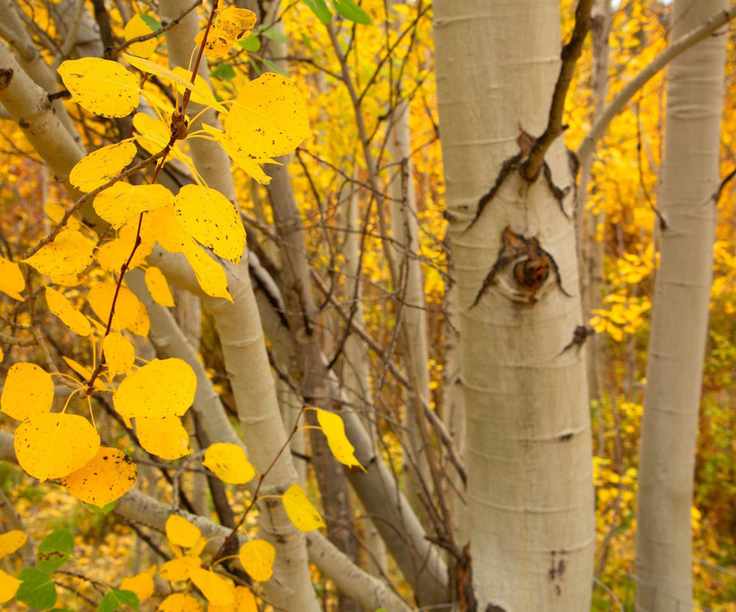
Once established, quaking aspens need little care, but it's important to manage root suckers to prevent unwanted spreading.
Propagation of Quaking Aspen
Quaking aspens reproduce by both seed and asexual methods, sending out root suckers in spring. If growing aspens at home, it is advisable to remove these suckers to prevent the formation of a 'clonal colony,' where older stems are replaced by new genetic clones of the parent tree. This can result in a thicket, making what appears to be a grove of distinct trees actually come from a single stem.
In his book Trees: From Root to Leaf (available at Amazon), tree expert Paul Smith highlights a clonal colony of quaking aspens in Fishlake National Forest, Utah, believed to have originated thousands of years ago. This colony, known as 'Pando,' spans 108 acres and is recognized as the heaviest living organism.
Quaking aspens can also be propagated by taking hardwood cuttings from the plants.
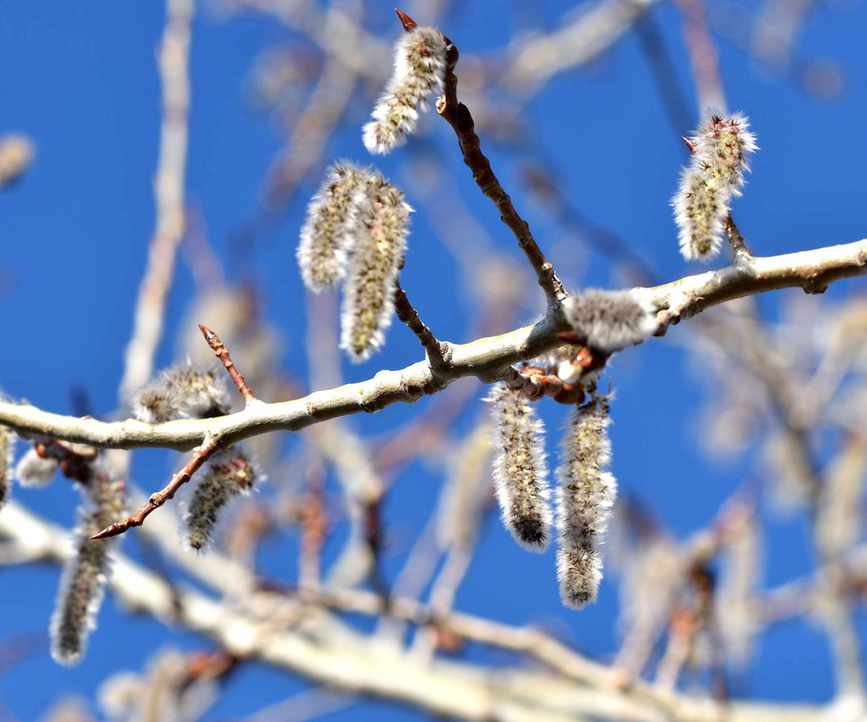
Fluffy catkins bloom on quaking aspens in spring.
Common Issues
Quaking aspens can be susceptible to various problems, including rusts, powdery mildew, cankers, caterpillars, borers, aphids, and scale insects. Additionally, they are prone to black spot, a fungal disease that thrives in damp environments.
At SevenOaks Native Nursery in Albany, Oregon, they cultivate 150,000 bare-root aspens from seed that has demonstrated resistance to black spot. Co-owner Mike Ridling confirms, 'We grow aspen using a Northern Idaho seed source, and we have found that trees from this source exhibit resistance to black spot.'
Pruning Guidance
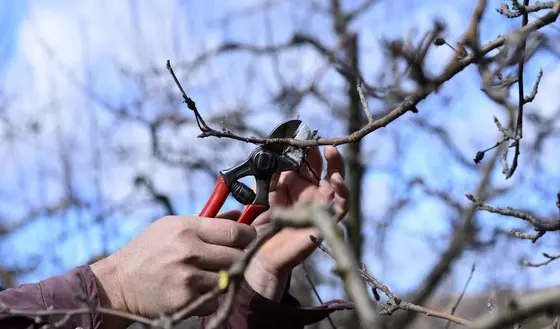
To maintain your quaking aspen, remove suckering shoots that appear at the plant's base. Once the tree is established, you may perform formative pruning to suit the space and location, eliminating any low branches or dead, diseased, or dying limbs.
Frequently Asked Questions
Where is the best place for quaking aspens to grow?
Quaking aspens thrive in woodland areas with sunny, open sites and well-drained fertile soil types. They can tolerate moister, heavier soils and even coastal conditions due to their ability to withstand salty air. However, dry soils and deep shade hinder their healthy growth.
Is there a distinction between aspen and quaking aspen?
The term aspen encompasses a variety of trees, with quaking aspen being just one species within the populus genus. This genus includes other trees, such as poplars and cottonwoods, and you may encounter quaking aspens referred to as aspen poplars. The bigtooth or largetooth aspen, Populus grandidentata, is another naturally occurring variety characterized by more pronounced serrated leaf edges.