

Eucalyptus trees, often referred to as gum trees, are celebrated for their vibrant, peeling bark and fragrant foliage in shades of gray-green and blue-green. These features make them a popular choice for modern gardens, where they harmonize beautifully with grasses, succulents, and palms, and they complement traditional landscapes as well.
Originating from Australia, eucalyptus trees are now widely cultivated around the globe. However, their rapid growth and potential size raise questions about their suitability for average backyards.
A reputable eucalyptus nursery notes that it's a misconception that these trees aren't suitable for gardens: 'eucalyptus is often misunderstood.'
With around 700 species, eucalyptus offers a diverse range of shapes and sizes, so selecting the right species for your environment is crucial. While some varieties can reach towering heights—like the Eucalyptus regnans, the tallest flowering plant on earth at 328ft—many are more manageable, growing to about 32ft, making them ideal for smaller spaces or container gardening. If 32ft seems daunting, remember that regular spring pruning and techniques like pollarding can help control their size.

The resilient Eucalyptus pauciflora niphophila 'Snow Gum' adds a striking element to this garden.
Key Information on Eucalyptus:
- Type: Evergreen trees or shrubs
- Mature Size: Varies; some grow quite large
- Soil Preference: Most types, well-drained
- Soil pH: Neutral to slightly acidic
- Best Planting Seasons: Spring and early fall
- Blooming Period: Varies by species
- Flower Color: Small white or cream pom-poms
- Hardiness Zones: USDA zones 8-11
- Scientific Name: Eucalyptus
- Common Name: Gum tree
Different Eucalyptus Varieties
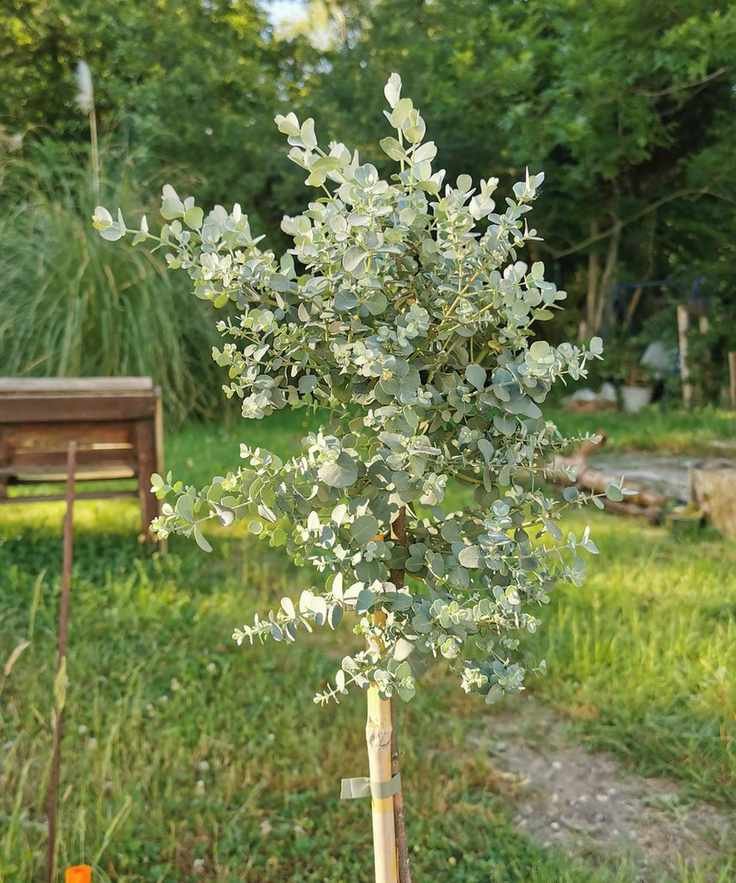
Cider gums are favored for their attractive foliage, often seen in floral arrangements.
The cider gum (E. gunnii) is one of the most commonly available eucalyptus varieties. This tree is beautiful but can grow up to 98ft depending on its environment and age. Unfortunately, it might be marketed as a smaller tree, leading to misconceptions about eucalyptus suitability for compact gardens. While not ideal for small spaces, it can be pollarded, and several dwarf cultivars are becoming available.
Consult a trusted plant nursery for advice on the best species for your garden. Some recommended dwarf varieties include 'France Bleu,' 'Azura,' and 'Silverana,' which are slow-growing and perfect for creating privacy hedges.
In Georgia, a nursery offers Eucalyptus moorei 'Skinny Minny,' touted as the smallest variety. It may reach 12ft in height but is easy to manage and responds well to pruning.
Shopping for Eucalyptus Trees
Rainbow Eucalyptus Tree
A truly unique tree, its bark reveals vibrant rainbow-like stripes as it matures.
Deep Roots Live Aromatic Herb Eucalyptus (4 Plants Per Pack)
Perfect for those starting small, this pack of potted eucalyptus will enhance your garden.
Eucalyptus gunii, Silverdrop
This variety is a favorite for cut flower arrangements.
Incorporating Eucalyptus into Your Landscape

Eucalyptus can grow rapidly and tall.
If you're contemplating eucalyptus for your backyard or as a tree for a front yard, consider the space available, growing conditions, and USDA climate zone.
According to horticulturists, the tree's height should ideally match its distance from the house. Since a tree's roots typically mirror its canopy, it's wise to plant it the same distance away from building foundations.

With a degree in horticulture, one expert has dedicated her career to cultivating a variety of plants, including eucalyptus on a commercial scale.
Optimal Planting Times for Eucalyptus

Mulching young eucalyptus helps protect them from winter's chill.
Spring through mid-summer is the best time to plant eucalyptus, giving it ample time to establish before winter. If planting in summer, be vigilant about watering, especially during dry spells.
Ideal Locations for Eucalyptus

Most eucalyptus species thrive in free-draining soil. If your soil is heavy clay, enhance it by mixing in loamy topsoil and sharp sand. For areas with existing free-draining soil, varieties from the snow gum family will flourish, while E. subcrenulata is suitable for clay soil.
Planting Eucalyptus

The rainbow eucalyptus boasts eye-catching, colorful bark.
For planting, dig a hole three times the container's width and depth, replacing any tough subsoil with sandy loam. 'Sandy loam aids in root establishment,' says an expert.
Cover the rootball with mycorrhizal fungi, avoiding compost or horse manure in the hole but using it in the surrounding soil. Ensure the top of the rootball is slightly below soil level—this protects the lignotuber during colder months.
In colder regions, provide a 'root duvet' of mulch—about 4 inches deep—around the root zone to prevent freezing. Keep mulch away from the trunk.
Water eucalyptus thoroughly in the first few years, particularly during droughts. Fertilize young trees each spring, especially after heavy pruning. Established trees typically don't require fertilization.
Pruning and Shaping Eucalyptus

This Eucalyptus gunnii has been pruned to fit its environment.
Understanding when and how to prune eucalyptus is essential for managing this fast-growing tree. Pollarding involves cutting the tree back to about 3-4ft from the ground, while coppicing reduces it to 4 inches.
Although these methods may seem harsh, they help control size and yield plenty of fragrant foliage, ideal for floral arrangements. Pollarded trees can serve as stunning architectural features, while regular coppicing creates privacy screens or hedges.
These techniques are best executed early in the growing season, ideally when new shoots appear and the weather is stable. After pruning, treat cuts with wound paint to prevent disease.
Pollarding can sap energy, so it's vital to nourish and hydrate the tree afterward to avoid exhaustion. Select vigorous varieties that rebound quickly after heavy pruning.
Common Questions
How Quickly Do Eucalyptus Grow?
Some eucalyptus species are known for their rapid growth, achieving over 3ft annually. Generally, fast-growing varieties will eventually reach substantial heights, while slow-growing species may never grow excessively tall.
Eucalyptus trees have shallow roots, similar to birch, so establishing strong roots is crucial, especially for taller varieties.
An expert recommends selecting trees grown in 'air root' pots rather than conventional smooth-walled pots to avoid root circling, which eucalyptus are prone to. Air root pots support robust radial root systems, preventing tall trees from leaning or toppling.
How to Propagate Eucalyptus?
Propagation from cuttings can be challenging; it's best to start eucalyptus from seeds.
Follow these steps to collect seeds:
- Gather seeds when the capsules on the tree easily split, which may take over a year to ripen.
- Chill seeds of hardy species in the fridge for 2-3 months.
- In late winter, sow seeds in deep pots or modules.
- If available, use a heated propagator to promote germination.
- By mid-summer, transplant seedlings to their final location.
Can You Plant Under Eucalyptus?
Yes, you can underplant around eucalyptus trees. Many well-maintained gardens feature eucalyptus with underplanting.
The key is to plant at the same time as the eucalyptus, while the soil is manageable. Maintain a distance of at least 3ft from the trunk. Choose underplanting that suits your soil type and climate, and ensure it can tolerate partial shade unless planted on the sunnier side.
If planting near grass, prevent it from growing around the tree's base to avoid hindering eucalyptus growth.
Eucalyptus trees can dramatically enhance your garden's appeal. They also serve well as indoor trees, bringing vibrant foliage to living spaces. For something unique, explore rainbow eucalyptus trees, which feature stunning multicolored bark.


